

Thermo-Contact Welding Guide for Leak-Proof Medical Bag Seals | Dizo Sonics

Thermo-Contact Welding for Medical Bags: A Complete Guide to Leak-Proof Seals for Non-PVC Materials
Concerned about seal failures leading to costly recalls or regulatory non-compliance? Struggling to achieve consistent, sterile welds on modern non-PVC materials like polyethylene (PE) and polypropylene (PP) for infusion, ostomy, or drainage bags? You're not alone. Medical manufacturers worldwide face these pressing challenges---where standard welding methods often fall short on safety, consistency, and throughput.
In this comprehensive guide, I'll explain how thermo-contact welding (also called thermal sealing) provides a reliable, adhesive-free solution for creating leak-proof bonds in medical-grade thermoplastics. With over 20 years of experience at Dizo Sonics developing precision welding systems for the medical sector, I'll translate complex engineering concepts into clear, actionable insights. You'll gain a thorough understanding of the process science, see unbiased technology comparisons, access key parameters from our validation tests, and learn how to select and optimize equipment for your production line.
Here's what we'll cover:
- Core Principles & Medical Applications -- Why thermo-contact welding is essential for today's non-PVC medical bags.
- Material Challenges & Solutions -- Addressing compatibility, regulatory, and production hurdles.
- Process Parameters & Control -- Key variables for consistent, validated seals.
- Technology Comparison -- Objective analysis of thermo-contact vs. ultrasonic vs. RF welding.
- Selection Framework & ROI -- A step-by-step guide to choosing the right system.
- Customization for Complex Needs -- Real-world cases where tailored solutions delivered superior results.
- FAQs & Next Steps -- Practical answers and guidance for implementation.
Ready to enhance your sealing reliability and efficiency? Let's begin.

1. Introduction to Thermo-Contact Welding in Medical Device Manufacturing
Thermo-contact welding is a controlled process that joins thermoplastic materials using precisely applied heat and pressure, without adhesives or secondary materials. In the production of medical fluid bags, it creates clean, hermetic seals that meet stringent sterility and durability requirements, making it ideal for sensitive healthcare applications.
What is Thermo-Contact Welding?
The process involves heating the plastic surfaces to be joined---typically using a temperature-controlled platen or sealing bar---until they reach a semi-molten state. Pressure is then applied to fuse the materials molecularly as they cool, forming a permanent, monolithic bond. This method is especially effective for joining films and sheets used in disposable medical devices, offering high strength and consistency without introducing foreign substances.
Why It's Critical for Modern Medical Bags
The shift away from PVC (polyvinyl chloride) to safer materials like PE and PP has improved patient safety by eliminating phthalate plasticizers. However, these polyolefins present distinct welding challenges due to their non-polar nature and varying melt characteristics. Thermo-contact welding is particularly well-suited to these materials because it provides uniform, controllable heat transfer, reducing the risk of weak seams or thermal degradation. This reliability is essential for complying with international standards such as ISO 11607 (packaging for terminally sterilized medical devices) and FDA regulations, directly reducing the risk of field failures and recalls.
Key Medical Bag Applications
- Infusion & IV Fluid Bags: Creates secure, leak-proof seals that maintain integrity under pressure, ensuring safe delivery of parenteral solutions.
- Ostomy & Collection Bags: Produces flexible, comfortable, and odor-tight seams capable of withstanding prolonged body contact and movement.
- Drainage & Irrigation Bags: Delivers robust, puncture-resistant seals for handling biological fluids, enhancing patient safety and device reliability.
2. Key Challenges in Welding Non-PVC Medical Films
Transitioning to PE and PP materials addresses critical safety concerns but introduces significant manufacturing complexities. Common pain points include inconsistent seal strength, low production yield, and difficulty meeting evolving regulatory demands---issues frequently identified in our production line audits at Dizo Sonics.
Material Compatibility & Process Sensitivity
PE and PP have different melting points and melt-flow behaviors. In multi-layer film structures---often incorporating barrier layers like EVOH (ethylene vinyl alcohol)---this mismatch can lead to incomplete bonding, delamination, or weak spots. Even slight variations in film thickness or additive composition can affect thermal conductivity, resulting in non-uniform seals. Unoptimized welding parameters are a leading cause of reject rates, which can exceed 10% in high-volume production.
Regulatory Compliance & Quality Assurance
Medical device manufacturers must adhere to rigorous quality standards. ISO 11607-1 and -2 specify requirements for the development and validation of sterile barrier systems. A welding process must demonstrate consistent performance and provide full traceability---challenges where manual or open-loop systems often fail. The FDA's Quality System Regulation (21 CFR Part 820) further emphasizes the need for validated, controlled processes to prevent contamination and ensure device safety.
Production Efficiency & Cost Control
Sealing defects not only create waste but also cause unplanned downtime for adjustments and revalidation. Our analyses indicate that inefficient welding processes can reduce overall equipment effectiveness (OEE) by 5--15%, directly impacting profitability. The hidden costs of scrap, rework, and potential recall risks make investing in a robust, optimized welding system a strategic priority.
3. The Science of Thermo-Contact Welding: Principles & Parameters
Achieving a perfect seal is a science of balance. Thermo-contact welding depends on the precise interplay of three variables: Temperature, Pressure, and Time. Understanding and controlling this triad is fundamental to overcoming the challenges outlined above and producing seals that match the base material's strength.
The Mechanism of Molecular Bonding
When heat is applied, it creates a "heat-affected zone" where polymer chains gain mobility. Under applied pressure, these chains from the opposing surfaces interdiffuse---they entangle and form new connections across the interface. Upon cooling, this entangled network solidifies, creating a bond whose strength can approach that of the parent material. The goal is to achieve sufficient chain mobility without causing thermal degradation (excessive heat) or leaving a weak, incomplete "cold weld" (insufficient heat).
Critical Process Parameters & Control Ranges
The following parameter ranges, derived from Dizo Sonics' laboratory testing on medical-grade films, serve as a reliable starting point for process development. Optimal settings must be validated for your specific material grade, thickness, and seal geometry.
| Parameter | Typical Range for PE/PP Films | Function & Impact |
|---|---|---|
| Temperature | 150°C -- 250°C | Softens polymer for diffusion; must be material-specific to avoid degradation or weak bonds. |
| Pressure | 0.1 -- 0.5 MPa (15 -- 75 psi) | Ensures intimate contact between surfaces, driving molecular entanglement. |
| Dwell Time | 1 -- 5 seconds | Allows for heat transfer and fusion; too short causes weak seals, too long risks damage. |
| Cooling Time | 2 -- 8 seconds (under pressure) | Solidifies the bond without inducing stress or distortion. |
Advanced Control for Consistency: Modern systems use PID (Proportional-Integral-Derivative) controllers with multi-zone heating to maintain temperature uniformity within ±1°C. For the highest reliability, closed-loop systems that monitor parameters like actual melt depth or seal thickness in real-time offer superior consistency compared to traditional time-based controls.
Material-Specific Guidance
Polypropylene (PP): Has a higher melting point (~160--170°C) than PE. Requires careful temperature profiling to prevent shrinkage or warping.
Polyethylene (PE): More forgiving but can vary widely between LDPE, LLDPE, and HDPE grades. Lower melting points necessitate precise control to avoid overheating.
Multi-Layer Films (e.g., PE/EVOH/PE): The most challenging. Differential heating profiles are often required to adequately melt the sealant layers without damaging the internal barrier layer, preventing delamination and maintaining barrier properties.
4. Technology Comparison: Thermo-Contact vs. Ultrasonic vs. RF Welding
Selecting the optimal sealing technology is a critical decision that impacts product quality, compliance, and total cost of ownership. This objective comparison, informed by ISO 9001 quality principles and real-world application data, evaluates the three primary methods used in medical device packaging.
| Criterion | Thermo-Contact (Heat Sealing) | Ultrasonic Welding | RF (Dielectric) Welding |
|---|---|---|---|
| Primary Mechanism | Conductive heat + pressure | High-frequency vibration + friction | High-frequency electromagnetic field + pressure |
| Ideal Materials | Non-polar thermoplastics (PE, PP, PP/PE blends) | Most thermoplastics (ABS, PC, some PP) | Polar polymers (PVC, PUR, Nylon) |
| Seal Strength & Quality | Very high, consistent, hermetic seals | High, but can be brittle on thin films; risk of particulate generation | Excellent, strong, and hermetic |
| Speed (Cycle Time) | Medium (2--10 seconds typical) | Very Fast (< 1 second) | Medium (3--15 seconds) |
| Upfront Equipment Cost | Low to Medium | Medium to High | High |
| Operational Complexity | Low; easy to validate and operate | Medium; requires horn design and amplitude tuning | High; sensitive to material composition and moisture content |
| Regulatory Fit | Excellent for ISO 11607, FDA validation; simple data logging | Good; but vibration may stress sensitive fluids/films | Good for legacy PVC applications |
| Key Limitation | Requires cooling phase; not ideal for very thick parts | Not ideal for long, continuous seams; can damage delicate films | Only works with polar materials; high energy consumption |
Analysis for Medical Bags: For non-PVC medical bags made from PE or PP, thermo-contact welding consistently emerges as the optimal choice. It offers the best balance of seal integrity, material compatibility, process control, and validation simplicity. While ultrasonic welding is faster for small, discrete parts, it can induce stress in thin films. RF welding is largely irrelevant for non-polar polyolefins. Thermo-contact's strength, reliability, and ease of integration into automated lines make it the foundational technology for modern medical fluid bag production.
5. Applications & Tangible Benefits for Infusion, Ostomy, and Drainage Bags
The theoretical advantages of thermo-contact welding translate directly into measurable performance improvements on the production floor. Here's how it addresses specific application needs and delivers a compelling return on investment.
Infusion Bag Sealing: Ensuring Sterility and Integrity
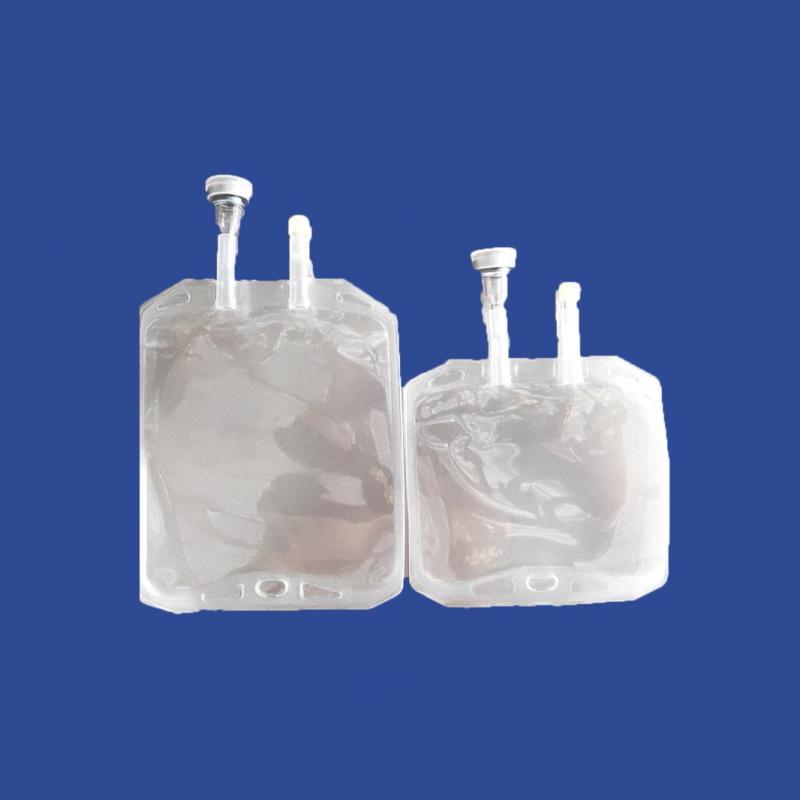
For IV solution bags, the seal is a critical control point. Thermo-contact welding produces a smooth, uniform seam that minimizes stress concentrations. In validation tests using Dizo Sonics equipment on medical-grade PP film, seal integrity success rates consistently exceed 99.9% as verified by burst testing (per ASTM F1140) and dye leak tests. This level of reliability is essential for preventing leaks during transport, storage, and administration, directly supporting patient safety.
Ostomy & Drainage Bag Manufacturing: Comfort and Durability
These bags require seals that are not only strong and leak-proof but also soft and flexible to prevent patient discomfort. Thermo-contact welding allows for fine-tuning of the heat profile to create a supple weld zone that withstands repeated flexing without cracking. The process avoids the hard, rigid seam sometimes produced by ultrasonic methods, thereby improving wearability and quality of life for the end-user.
Quantifiable Advantages & ROI Drivers
- Increased Yield & OEE: Consistent parameters reduce seal defects to below 0.5%, directly increasing output and overall equipment effectiveness.
- Reduced Operational Costs: Energy-efficient designs and minimal maintenance requirements lower the cost per bag. Robust construction, using quality components, ensures a system lifespan often exceeding 10 years.
- Enhanced Compliance & Traceability: Integrated data logging records every weld parameter (temp, pressure, time), simplifying validation (IQ/OQ/PQ) and audit processes for ISO 13485 and FDA 21 CFR Part 11 compliance.
- Sustainability: Eliminating adhesives and reducing scrap contributes to greener manufacturing processes.
6. A Practical Framework for Selecting Your Welding System
Choosing the right thermo-contact welding system requires a structured evaluation of your technical, operational, and business needs. This framework, developed from successful implementations with medical device manufacturers, will guide you to a confident decision.
Step 1: Define Your Specification Checklist
Document clear requirements to narrow your focus:
| Category | Key Questions & Specifications |
|---|---|
| Materials | Film type (PE, PP, co-extrusion), thickness range (e.g., 80--200 µm), number of layers, presence of EVOH barrier. |
| Production | Annual volume (units), required cycle time (seconds per seal), target uptime/OEE, automation level (manual load vs. fully integrated web handling). |
| Seal Requirements | Seal width, strength (N/15mm), required hermeticity (e.g., helium leak rate), visual appearance standards. |
| Compliance | Must the system support validation protocols (IQ/OQ/PQ)? Is full data traceability and electronic signature required? |
| Facility | Available utilities (air pressure, electrical power, footprint constraints), operator skill level. |
| Financial | Budget range, target ROI period (e.g., < 24 months). |
Step 2: Evaluate & Score Technology Options
Create a simple scoring matrix. Assign weights to each criterion based on your priorities (e.g., Seal Reliability: 30%, Cost: 25%, Compliance Support: 20%, Service: 15%, Speed: 10%). Score potential suppliers against these weighted criteria. As our comparison shows, thermo-contact welding typically scores highest for non-PVC bag production across reliability, cost, and compliance.
Step 3: Calculate Total Cost of Ownership (TCO) & ROI
Look beyond the purchase price. A detailed TCO analysis includes:
- Capital Expenditure (CapEx): Equipment, tooling, installation.
- Operating Expenditure (OpEx): Energy consumption, preventive maintenance, spare parts.
- Cost of Quality: Scrap, rework, downtime, and the mitigated risk of recalls.
Example ROI Simulation:
- Assumptions: Current defect rate: 5%. Target with new system: 0.5%. Annual production: 5 million bags. Cost per defective bag (material + labor): $0.40.
- Annual Savings from Defect Reduction: (5% - 0.5%) * 5,000,000 * $0.40 = $90,000.
- Additional Savings: Reduced downtime ($25,000), lower energy use ($5,000).
- Total Annual Savings: ~$120,000.
- System Investment: $150,000.
- Simple Payback Period: ~15 months.
This tangible financial justification, combined with qualitative benefits like risk reduction, makes a compelling case for investment.

7. When Standard Isn't Enough: Customized Thermo-Contact Solutions
While standard thermo-contact sealers handle a wide range of applications, complex real-world challenges often demand tailored engineering. Customization becomes key when dealing with extreme material variability, complex multi-layer films, ultra-high-speed lines, or stringent traceability mandates.
Common Scenarios Requiring a Custom Approach
- High-Variability Material Feeds: When film thickness or composition varies beyond ±10%, standard time/pressure controls struggle. Solution: Implement closed-loop servo-pressures with real-time melt-depth sensors that dynamically adjust parameters for every seal.
- Complex Multi-Layer Films with Barrier Layers: Sealing a structure like PE/tie/EVOH/tie/PE risks damaging the EVOH. Solution: Multi-zone, independently controlled heating bars with a tailored temperature profile that gently seals the outer PE layers while protecting the inner barrier.
- Integration with Industry 4.0 / MES: Full digitization of the manufacturing process requires seamless data exchange. Solution: Welding systems with integrated OPC-UA or Ethernet/IP interfaces, capable of logging 100% of weld data (actual temp, pressure curve, seal quality metrics) to a central Manufacturing Execution System (MES).
Case Study: Infusion Bag Line for a Global Supplier
Challenge: A manufacturer introduced a new 5-layer film for enhanced chemical resistance. Standard sealers caused micro-cracks in the barrier layer, leading to a 12% reject rate and failing oxygen transmission rate (OTR) tests.
Dizo Sonics Solution: We engineered a custom sealer with a patented Multi-Stage Thermal Profile (MSTP). The system applies a lower initial temperature to pre-condition the film, followed by a precise, high-intensity pulse for fusion, and a controlled cool-down phase.
Result: Reject rates dropped to 0.2%, OTR performance exceeded specifications, and the fully validated process accelerated time-to-market for the new product line. The system's integrated SCADA interface provided complete batch traceability.
8. FAQ: Answers to Common Thermo-Contact Welding Questions
Here are answers to questions we often hear from medical manufacturers. These build on the guide's details for quick insights.
What is precise thermal sealing of medical bags?
Precise thermal sealing is another name for thermo-contact welding. It uses controlled heat and pressure to create accurate, leak-free joins in bags---essential for sterile fluid handling.
How does thermo-contact welding work for non-PVC materials?
It heats PE or PP surfaces to soften them, then applies pressure for molecular fusion. This suits non-PVC well, as steady heat avoids damage common in vibration methods---see our principles section for the science.
What are benefits of welding infusion and ostomy bags?
You get sterility without additives, strong yet flexible seals, and lower defect risks. For infusion bags, it ensures safe IV flow; for ostomy, comfort with odor-proof joins.
How to use shuttle table system for PP and PE?
A shuttle table alternates molds for continuous runs, boosting efficiency. It works great for PP/PE by maintaining precise alignment---our systems add sensors for even better consistency.
What challenges in multilayer films welding?
Variability from layers like EVOH can cause cracking or weak spots. Custom temperature profiling solves this, as in our cases---standard setups often struggle here.
How to ensure leak-proof welds?
Focus on three factors: consistent parameters (temperature ±1°C, pressure servo-controlled), depth over time monitoring, and validation like burst testing. Our equipment logs data for easy ISO 11607 compliance.
What's the difference between time-based and depth-controlled welding?
Time-based stops after seconds---simple but sensitive to variations. Depth-controlled measures actual melt, adjusting automatically for uniform strength. We recommend the latter for medical reliability.
How do I validate my welding process for ISO 13485 certification?
Run IQ/OQ/PQ protocols with destructive tests and data traceability. Include worst-case scenarios. Our systems provide full logging to simplify audits---many clients pass faster this way.

9. Conclusion & Next Steps: Building a Foundation for Reliable Medical Bag Production
Throughout this guide, we've explored how thermo-contact welding provides a scientifically sound, commercially viable, and regulatory-compliant solution for joining non-PVC medical films. The journey from understanding material challenges and process principles to evaluating technologies and calculating ROI underscores a central theme: success hinges on precision, control, and the right partnership.
While the core technology is robust, achieving and sustaining leak-proof production at scale often requires moving beyond generic equipment. The difference between adequate and exceptional results frequently lies in the subtle details---how well the system compensates for material variability, integrates into your digital quality landscape, and is supported by deep application expertise.
At Dizo Sonics, we've dedicated over two decades to mastering these details, partnering with leading medical device manufacturers to turn sealing challenges into competitive advantages.
Ready to take the next step? Here's how to proceed:
- Define Your Requirements: Use the framework in Section 6 to document your specific needs.
- Request a Feasibility Review: Share your material samples and specifications with our engineering team for a preliminary technical assessment.
- Schedule a Live Demo: See the technology in action, tailored to your application.
- Discuss a Validation Partnership: Plan for a seamless IQ/OQ/PQ process with full documentation support.
Contact us today at sales@dizo-global.com to start a conversation about securing your medical bag production with confidence. Let's build the reliable, traceable, and efficient sealing process your products---and patients---deserve.
More Reading
- Custom Plastic Welding Solutions for Automotive, Medical, Aerospace & Electronics
- Plastic Welding for Medical Devices: Technologies, Benefits & Selection Guide
- Automatic Welding for Medical Device Precision & Quality - dizo
- Ultrasonic Welding for Medical Devices: Complete Guide & Best Practices
- Ultrasonic Plastic Welding for Medical Devices: Guide & Solutions