

Precision Ultrasonic Welding for Hermetic Seals on Sensitive Electronics
Mastering Hermetic Seals for Electronics: The Ultimate Guide to Precision Ultrasonic Welding
In the high-stakes world of aerospace, medical devices, and advanced automotive systems, sensitive electronics are the beating heart of functionality. These components---from pressure transducers and inertial measurement units (IMUs) to diagnostic sensor housings---demand absolute protection. The primary challenge for engineers is achieving a perfect, hermetic seal around these electronics without introducing thermal distortion that can warp delicate internal parts or create micro-cracks leading to catastrophic failure.
At Dizo Sonics, our two decades of specialized collaboration with Tier-1 manufacturers has centered on solving this precise dilemma. The solution lies not in brute-force thermal processes, but in the controlled, localized energy of precision ultrasonic welding. This guide distills our proven expertise into actionable insights, helping you navigate from understanding core failure modes to selecting and implementing a welding process that guarantees reliability, performance, and yield.
1.The Critical Challenge: Protecting Sensitive Electronics from Heat and Contaminants
The performance and longevity of sophisticated electronic modules are intrinsically tied to the integrity of their enclosure. A failed seal doesn't just mean a damaged component; it can mean a compromised aircraft system, a faulty medical reading, or an autonomous vehicle sensor failure.
The High Cost of Thermal Distortion and Seal Failure
Conventional welding methods that apply broad heat---such as hot-plate or certain laser processes---pose a significant risk. Thermal distortion occurs when uneven heat input causes differential expansion and contraction, warping thin-walled plastic housings. This misalignment can:
- Stress or disconnect internal SMD (Surface-Mount Device) components and wire bonds.
- Alter the precise calibration of sensing elements like MEMS (Micro-Electro-Mechanical Systems) chips.
- Create residual stresses that become leak paths under thermal cycling or pressure differentials.
Data from field failure analyses, corroborated by our own testing, indicates that thermally-induced defects account for over 30% of premature electronic module failures in demanding environments.
Why "Hermetic" is a Spectrum, Not a Binary State
Not all seals are created equal. Defining your requirement is the first critical step:
- Dust & Splash Proof (IP54/IP65): Suitable for consumer electronics or outdoor housings.
- Water & Pressure Resistant (IP67/IP68): Needed for automotive sensors or handheld medical devices.
- True Hermetic (Helium-Leak Tight): Essential for aerospace avionics, implanted medical devices, or vacuum applications, with leak rates often specified below 1x10⁻⁹ mbar·l/s. This level of sealing protects against moisture ingress that can cause corrosion, dendritic growth, and ultimately, short circuits.
The Limitations of Adhesives and Traditional Methods
While adhesives are common, they introduce process variables (mix ratios, cure times, voids) and can outgas contaminants harmful to sensitive optics or microelectronics. Traditional thermal welding often lacks the precision needed for today's miniaturized, complex housings. The industry's shift is toward clean, repeatable, solid-state processes.
2.The Science of Precision Ultrasonic Welding: Localized Energy for Flawless Seals
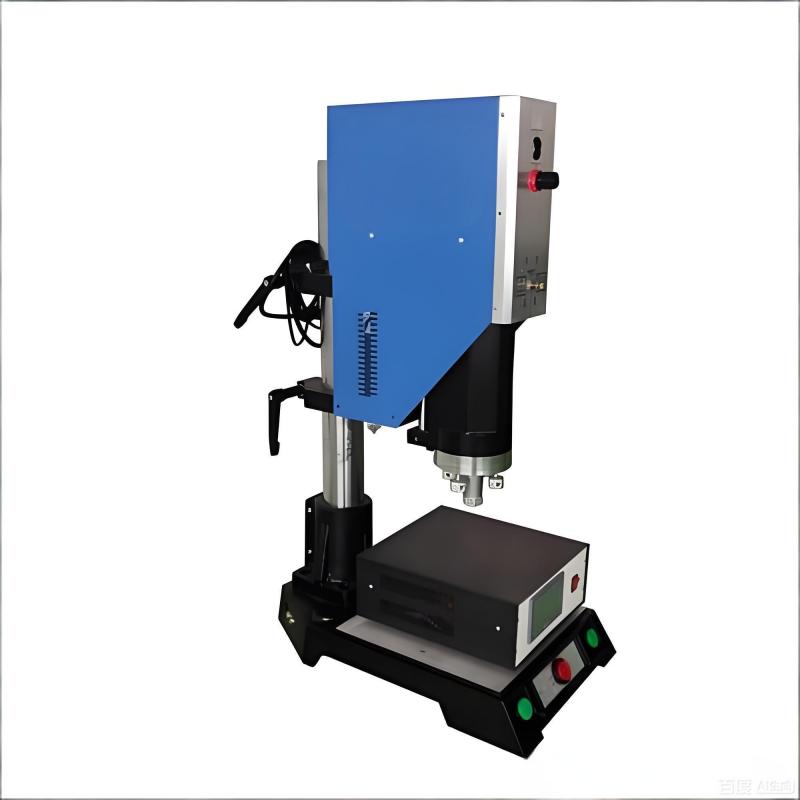
Ultrasonic welding stands apart by generating heat exactly where it's needed---at the joint interface---through mechanical friction, not external heating. This fundamental difference is why it excels for sensitive electronics.
The Mechanism: From Vibration to a Molecular Bond
The process is an elegant conversion of energy:
- A piezoelectric converter transforms high-frequency electrical energy (typically 20, 30, or 40 kHz) into mechanical vibrations.
- These vibrations are amplified and transmitted through a titanium horn (sonotrode) directly to the plastic parts.
- At the joint interface, controlled micrometric movement creates intense intermolecular friction, generating localized heat (typically 200-250°C at the interface, while the bulk part remains near ambient temperature).
- This heat instantly melts a microscopic layer of plastic. Under continued pressure, the materials intermix and solidify as the vibration stops, forming a monolithic, molecular-level bond within 0.1 to 2.0 seconds.
The result is a weld with a Heat-Affected Zone (HAZ) often confined to less than 0.5mm, virtually eliminating bulk thermal distortion.
Advanced Control Systems for Unwavering Consistency
Modern precision welders are defined by their control capabilities, which are non-negotiable for hermetic sealing:
- Absolute Distance Control: The machine welds until the parts have collapsed by a pre-set, precise distance (e.g., 0.15mm). This compensates for minor part tolerance variations, ensuring consistent melt volume---the key to a reliable seal---every single time.
- Energy Control with Real-Time Monitoring: The system delivers a specific amount of energy (Joules) to the joint. Advanced units provide real-time graphs of force vs. distance, creating a unique "weld signature" for every part. Deviations outside set limits trigger a reject, providing 100% in-process quality assurance.
- Automatic Frequency Tracking (AFT): Maintains optimal resonant frequency despite load changes, ensuring stable energy delivery throughout the weld cycle and the tool's lifetime.
Optimized Parameters for Electronics Housings
Successful welding is a symphony of parameters. Based on thousands of documented trials in our application laboratory, here are proven starting points for common engineering plastics:
| Parameter | Typical Range for Electronics | Rationale & Impact |
|---|---|---|
| Frequency | 35 - 40 kHz | Higher frequencies allow lower amplitudes, ideal for small, delicate parts and minimizing particulate generation. |
| Weld Time / Energy | 0.2 - 1.5 sec (or 50 - 500 J) | Short, controlled bursts prevent excess heat buildup and "flash" (excess melted material). |
| Pressure | 0.2 - 1.2 MPa | Provides sufficient clamping for energy transfer without deforming thin walls or crushing internal components. |
| Amplitude | 15 - 50 µm (peak-to-peak) | The "intensity" of the vibration. Lower amplitudes are used for rigid plastics like PC or ABS to prevent cracking. |
Joint Design: The Blueprint for Success
The weld is only as good as the joint design. For hermetic seals, two designs are predominant:
- Shear Joint: Ideal for cylindrical or rectangular housings. Features an interference fit where one part telescopes into the other. The shearing action along the vertical wall creates a long, reliable melt path perfect for airtight seals.
- Energy Director Joint: A small, triangular protrusion molded onto one joint surface. This point concentrates the ultrasonic energy, initiating melt quickly and efficiently. It's often used for complex geometries or where a shear joint is not feasible.
3.Technology Comparison: Choosing the Right Seal for Your Application
Selecting a welding process is a strategic decision balancing performance, cost, and design constraints. Here is an objective analysis of the primary technologies for sealing plastic electronic enclosures.
| Technology | Thermal Input / Distortion Risk | Hermetic Seal Capability | Cycle Time | Cost (Equipment & Operational) | Best Application Fit |
|---|---|---|---|---|---|
| Precision Ultrasonic Welding | Very Low / Minimal | Excellent (Achieves <10⁻⁹ mbar·l/s) | Very Fast (0.1 - 2 sec) | Moderate (Low energy use, no consumables) | Small-to-medium thermoplastic housings with sensitive internals. The benchmark for reliability. |
| Laser Welding (Through-Transmission) | Low / Moderate | Excellent | Fast (2 - 10 sec) | High (Laser source, precise optics) | Complex 2D/3D seams where no contact is allowed. Requires one transparent and one absorbing layer. |
| Vibration Welding | Medium / Moderate | Excellent | Fast (3 - 10 sec) | Moderate-High | Large, linear seals on robust housings where some internal heat is acceptable. |
| Hot-Plate Welding | High / Significant | Good to Very Good | Slow (15 - 60 sec) | Low-Moderate | Very large parts or materials difficult to weld with other methods. High thermal load is a major drawback for electronics. |
| Adhesive Bonding | None (Ambient/UV cure) | Good (Dependent on process control) | Very Slow (Cure time minutes/hours) | Low (Material cost) / High (Rework & Yield Loss) | Multi-material assemblies (e.g., plastic to metal). Process variability and outgassing are critical concerns. |
Key Insight: For the majority of sensitive electronic thermoplastic housings, precision ultrasonic welding offers the best combination of seal integrity, speed, low distortion, and total cost of ownership. It is the most robust and forgiving process for high-volume manufacturing.

4.A Practical 5-Step Framework for Process Selection & Validation
Moving from concept to production requires a disciplined approach. This framework, refined through countless client projects, ensures no critical factor is overlooked.
Step 1: Define Performance Requirements & Standards
Begin with the end in mind. Quantify your needs:
- Seal Level: Target IP rating or maximum allowable helium leak rate.
- Environmental Specs: Operating temperature range, pressure cycles, fluid exposure.
- Regulatory Compliance: Must the process itself comply with standards like IATF 16949 (automotive) or ISO 13485 (medical)?
- Volume & Yield: Required production rate and acceptable First Pass Yield (FPY).
Step 2: Conduct a Design for Manufacturing (DFM) Analysis

Analyze the component with welding in mind:
- Material Selection: Confirm weldability of the chosen plastic (e.g., ABS, PC, PPS). We offer complimentary material compatibility testing.
- Joint Design Review: Optimize the joint geometry (Shear vs. Energy Director) early in the CAD stage. This is the single most impactful factor on success.
- Internal Component Audit: Identify the location of fragile wires, chips, or lenses to define "no-go" zones for heat and pressure.
Step 3: Prototype, Test, and Optimize
"Test early, test often" is the mantra.
- Build Prototype Tools: Create simple horns and fixtures for functional testing.
- Design of Experiments (DOE): Systematically weld samples across a range of parameters (pressure, time, amplitude) to find the optimal, stable "process window."
- Validate with Destructive & Non-Destructive Testing (NDT):
- Helium Leak Test (per MIL-STD-883 or ISO 14997): The definitive seal test.
- Cross-Sectional Analysis: Visually inspect the weld for completeness and voiding.
- Pull/Tensile Test: Verify mechanical strength meets spec.
Step 4: Design the Production System
Translate lab success to the factory floor:
- Machine Specification: Select a welder with the necessary control modes (distance/energy), force capacity, and data logging.
- Tooling Design: Engineer production-grade horns and kinematic fixtures for repeatable part placement.
- Automation Integration: Plan for manual loading, robotic cell, or inline integration with vision inspection for closed-loop control.
Step 5: Validate, Qualify, and Document
The final gate before ramp-up:
- Process Qualification (PQ): Run a production batch under controlled conditions to prove consistency.
- Create Control Plan: Document all critical parameters, maintenance schedules, and quality checkpoints.
- Operator Training: Ensure technicians understand both operation and basic troubleshooting.
5.Beyond Standard: Custom Solutions for Extreme Applications
While standard ultrasonic welders solve 80% of challenges, the remaining 20%---the most critical applications---demand tailored engineering. This is where deep expertise separates functional prototypes from production-ready solutions.
Pushing the Limits: Multi-Material and Micro-Welding
Some projects defy conventional wisdom:
- Welding Dissimilar Plastics: Joining semi-crystalline (e.g., PEEK) to amorphous (e.g., PC) plastics for specialized sensor bodies requires proprietary horn designs and tailored amplitude profiles to manage different melt temperatures.
- Micro-Welding for Miniaturization: Sealing housings under 10mm in diameter for next-gen IoT sensors or endoscopic cameras demands ultra-high frequency (70 kHz+) systems and micro-scale joint features we develop in-house.
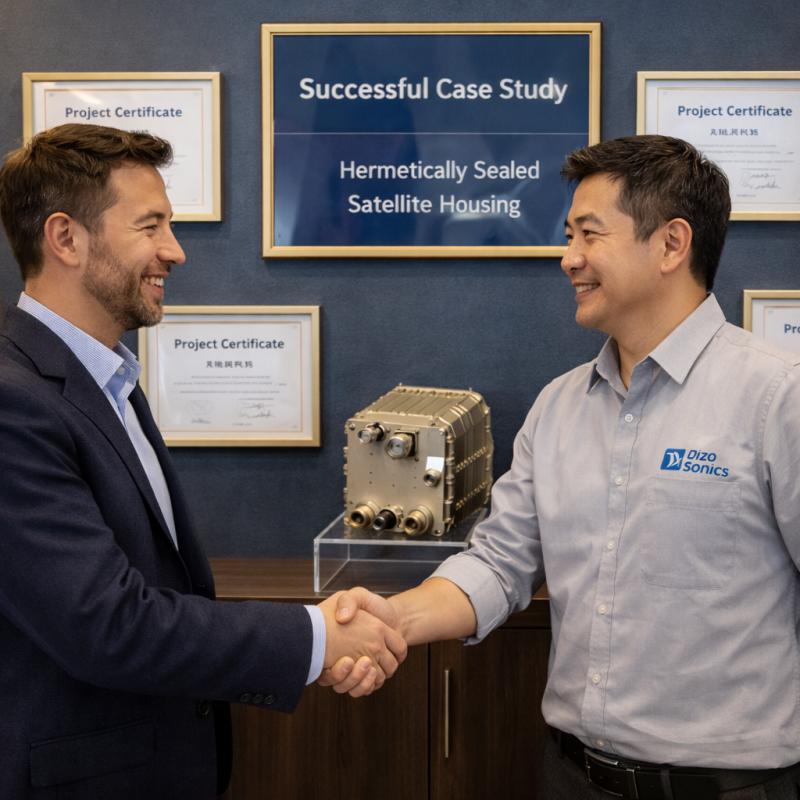
Case Study: Hermetic Sealing for a Satellite Altimeter Housing
Challenge: A space technology company needed to hermetically seal a titanium-filled PPS housing for a radar altimeter. The seal had to survive launch vibration, thermal vacuum cycling from -55°C to +125°C, and maintain a leak rate below 5x10⁻¹⁰ mbar·l/s. Any particulate generation from the weld process was unacceptable.
Our Custom Solution: Dizo Sonics engineered a solution using a 40 kHz welder with a patented radial friction horn that applied energy uniformly around the circumference. We developed a cleaning protocol for the joint area and implemented a non-contact laser measurement system integrated into the weld cell to verify pre-weld part flatness within 5 microns.
Result: The system achieved a 100% success rate in qualification testing, exceeding the leak rate spec by an order of magnitude. It has been in production for 3 years with zero welding-related failures, a critical contribution to the mission's success.
The Cleanroom and High-Volume Paradigm
For medical or semiconductor components, the welding cell itself must be a source of quality:
- Cleanroom-Compatible Systems: We build welders with smooth, sealed exteriors, low-particulate pneumatics, and HEPA-compatible exhausts for Class 8 (ISO 7) or cleaner environments.
- High-Availability Robotic Cells: For automotive radar module production, we design cells with dual robot stations, allowing one to weld while the other loads/unloads, achieving cycle times under 4 seconds with 99.8% uptime.
6.FAQs: Common Questions on Precision Ultrasonic Welding for Sensitive Electronics
These frequently asked questions address real concerns from engineers working on hermetic sealing and distortion-free joins. Answers draw from our practical experience at Dizo Sonics.
What Is Precision Ultrasonic Welding for Sensitive Electronics?
It's a solid-state process using high-frequency vibrations---typically 20-40 kHz---to create friction heat only at the joint interface of thermoplastic parts. This localized energy melts and fuses the material without heating the whole component, making it ideal for sensitive electronics like sensors where excess heat could damage internals.
How Does Hermetic Sealing of Electronic Components Work with Ultrasonic Welding?
The vibration generates precise melt at the joint, and controlled pressure ensures molecular fusion for an airtight bond. With proper joint design and parameters, it achieves helium-tight seals reliably. We often see leak rates below 10^-9 mbar l/s in production.
How Is Distortion-Free Welding Achieved in Sensors?
By controlling energy delivery accurately. Features like Automatic Frequency Tracking keep vibrations stable, while depth or energy modes ensure consistent melt volume despite small part variations. This prevents over-welding and keeps distortion minimal---often under 0.1 mm.
What Plastics Are Best for Ultrasonic Welding in Sealing Applications?
Amorphous plastics like ABS, polycarbonate, and PMMA weld easily and form strong seals. Semi-crystalline ones like polypropylene need careful parameter tuning. Our lab runs free material compatibility tests to confirm suitability for your project.
How Do You Test If an Ultrasonic Weld Is Truly Hermetic?
For critical applications, helium leak testing per standards like ISO 14997 or MIL-STD-883 is definitive. In production, our machines monitor welding curves and parameters in real-time, correlating them to seal quality for 100% traceability without offline testing.
What Are the Benefits of High-Value Markless Welding for Consumer Electronics Shells?
It produces clean, invisible joins with no flash or marks, improving aesthetics while maintaining strength. Cycle times under 2 seconds support high volume, and low energy use cuts costs---perfect for power adapters, TV housings, or portable devices.

7.Conclusion: Engineering Certainty into Every Seal
For engineers working on sensitive electronics, the goal is clear: create strong, hermetic seals that protect components without risking thermal distortion or failure. As we've seen throughout this guide, precision ultrasonic welding delivers a controllable, repeatable way to achieve this---especially for thermoplastic housings in sensors and devices.
With minimal heat input, advanced controls, and proven parameters, it consistently meets demanding requirements like helium-tight performance while keeping costs and cycle times low. Backed by our 20 years of experience solving complex challenges in aerospace, medical, and automotive industries, this approach has helped clients eliminate defects and streamline production.
The best way to know if it's right for your project is to test it. At Dizo Sonics, we offer a free application assessment and sample welding service. Send us your parts or drawings, and our team will develop optimized parameters and provide real results---no obligation.
Ready to move forward with confidence? Contact us today at sales@dizo-global.com or visit dizo-global.com to get started.
More Reading
- Ultrasonic Welding for Electronics: Fast, Clean & Reliable Plastic Joining
- Automatic Welding Solution for Electronic Components - dizo
- Bluetooth Ultrasonic Welding - Dizo
- Plastic Welding Breakthroughs for Electronics Manufacturing
- Ultrasonic Welding for Electronics Assembly: 2025 High-Volume Manufacturing Solutions
- Plastics in Consumer Electronics 2025: Materials, Welding & Sustainability Guide