

Automotive Glove Box Design Guide: Manufacturing & Custom Solutions

The Ultimate Guide to Automotive Glove Box Design, Manufacturing, and Custom Solutions
Today's automotive glove box has evolved from a basic storage compartment into a sophisticated interior hub, integrating connectivity, comfort, and control directly into the dashboard. This transformation presents significant engineering challenges: embedding advanced features such as USB ports, cooling systems, and electronic locks while maintaining stringent requirements for crash safety, vibration resistance, and seamless aesthetics. Precision manufacturing---especially advanced plastic welding---is often the key to meeting these demands. In this comprehensive guide, we'll explore glove box definitions, modern features, critical design considerations, emerging trends, and custom solutions. With over 20 years of specialized experience in ultrasonic welding for automotive interiors, I'll share actionable insights to help you navigate these challenges and optimize your production efficiency.
1.What Is an Automotive Glove Box?
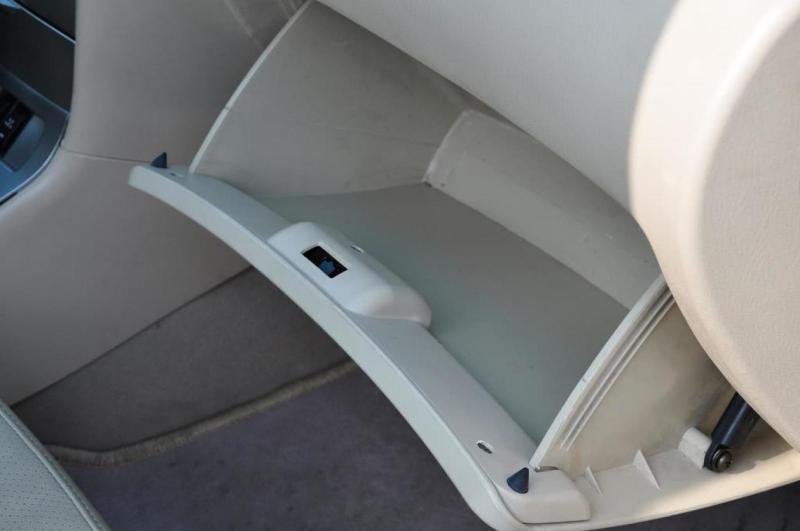
An automotive glove box is a closed storage compartment integrated into the passenger-side dashboard. Originally intended for driving gloves, it now securely holds documents, personal electronics, and other essentials. At Dizo Sonics, our extensive work on welding solutions for glove box assemblies has shown that design depth and intended load capacity directly determine welding fixture complexity and pressure profiles, impacting both unit cost and long-term durability. This makes the glove box a critical component for enhancing interior functionality while seamlessly integrating with safety systems such as airbags.
Evolution and Core Functions
The glove compartment has transitioned from simple storage to a secure, multifunctional automotive interior feature. Its basic design includes a hinged door with a latching mechanism, providing quick access while keeping contents stable during vehicle motion. While this satisfies everyday storage needs, modern vehicle interiors demand deeper integration with infotainment, comfort, and security systems.
Common Materials and Manufacturing
Glove boxes are typically injection-molded from engineeringthermoplastics such as ABS, polypropylene, or polycarbonate, chosen for their strength-to-weight ratio, impact resistance, and cost-effectiveness. At Dizo Sonics, we specialize in ultrasonic welding to join these components, creating clean, strong seams without external fasteners or adhesives. This method is particularly suited to the aesthetic and structural demands of visible interior parts, supporting the automotive industry's shift toward lightweight and sustainable material choices.
2.Modern Features of the Automotive Glove Box
Contemporary glove boxes incorporate technology-driven features that elevate them from simple compartments to intelligent storage hubs. These innovations address real user needs---keeping devices charged, items organized, and contents cool---while presenting unique manufacturing challenges.
Integrated Technology and Connectivity
Features such as integrated USB-C or wireless charging pads, ambient LED lighting, and touch-sensitive controls are becoming standard. These elements often utilize sustainable materials and modular designs to reduce waste and allow customization.
Security and Convenience Features
Electronic locks with RFID or digital key access enhance security, while customizable dividers, damped doors, and soft-close mechanisms improve user experience. These features require robust attachment points to withstand repeated use and road vibrations.
Cooling and Specialized Storage Systems
Advanced models may include thermoelectric cooling modules or insulated compartments for beverages, medicines, or electronics. These systems require airtight sealing to prevent moisture ingress and ensure thermal efficiency.
3.Automotive Glove Box Manufacturing: Core Processes & Technology Deep Dive
Producing a high-quality glove box involves a synergy of design, material science, and precision joining technologies. Selecting the right welding process is critical for achieving the required strength, aesthetics, and production efficiency, especially when facing challenges like NVH (Noise, Vibration, Harshness) and crash safety compliance.
Primary Plastic Welding Technologies for Glove Boxes
Three welding methods are predominant in glove box assembly:
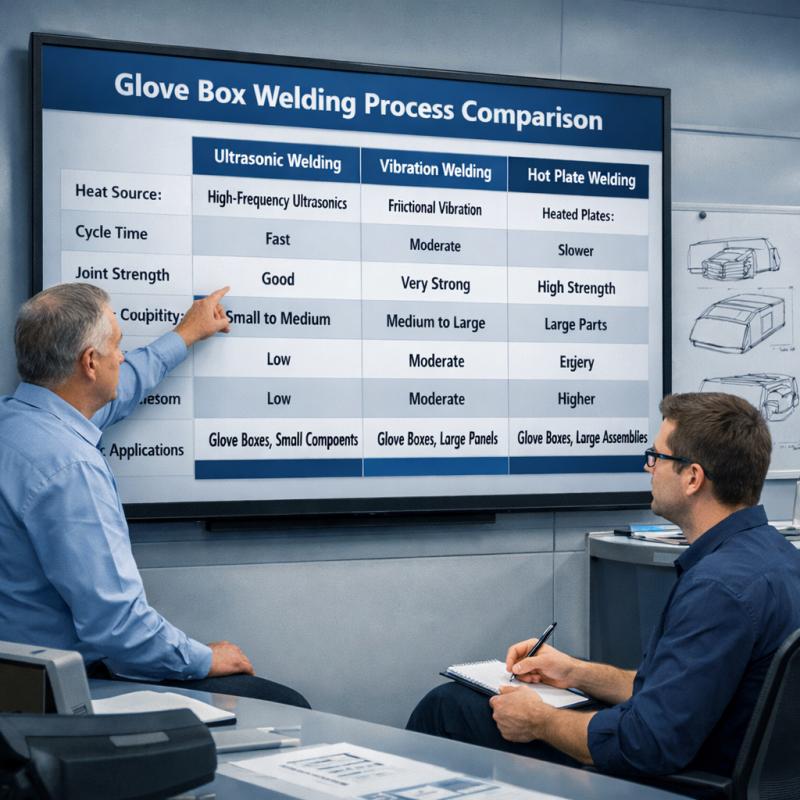
- Ultrasonic Welding: Uses high-frequency vibrations to create fast, clean welds. Ideal for complex geometries, multi-material assemblies, and integrating small features like clip mounts or wire guides.
- Vibration Welding: Employs linear friction to weld larger planar surfaces. Excellent for high-strength, structural joints such as main bin-to-door or large-panel assemblies.
- Hot Plate Welding: Heats parts with a platen before pressing them together. Best for simple, large parts made from high-temperature materials where weld bead visibility is less critical.
Comparative Analysis: Selecting the Optimal Welding Process
The following table summarizes key decision factors to help select the right process for your application.
| Process | Best Application (Glove Box) | Strength | Sealing Quality | Aesthetic Finish | Cycle Time | Relative Cost |
|---|---|---|---|---|---|---|
| Ultrasonic | Complex shapes, multi-material, integrated tech | High | Excellent | Very Good | Very Fast | Medium-High |
| Vibration | Large linear welds, high-strength structural | Very High | Excellent | Good | Medium | High |
| Hot Plate | Large simple parts, high melt-temp materials | High | Good | Fair | Slow | Low-Medium |
Ultrasonic welding often provides the best balance of speed and precision for feature-rich designs, while vibration welding is unmatched for load-bearing structural seams.
Critical Process Parameters for Quality Assurance
Based on two decades of process validation at Dizo Sonics, three parameters are paramount:
- Frequency & Amplitude (20-40 kHz): Controls energy delivery for consistent material fusion, preventing weak spots or cosmetic defects like marking.
- Pressure (50-100+ MPa): Directly influences joint strength and density. Proper pressure ensures the latching mechanism feels solid and survives durability testing.
- Weld Time & Energy: Optimized cycles (typically 0.5-3 seconds for ultrasonic) maximize throughput. Our data shows a 15-20% reduction in cycle time can be achieved in high-volume production without sacrificing quality.
Material Selection and Compatibility Testing
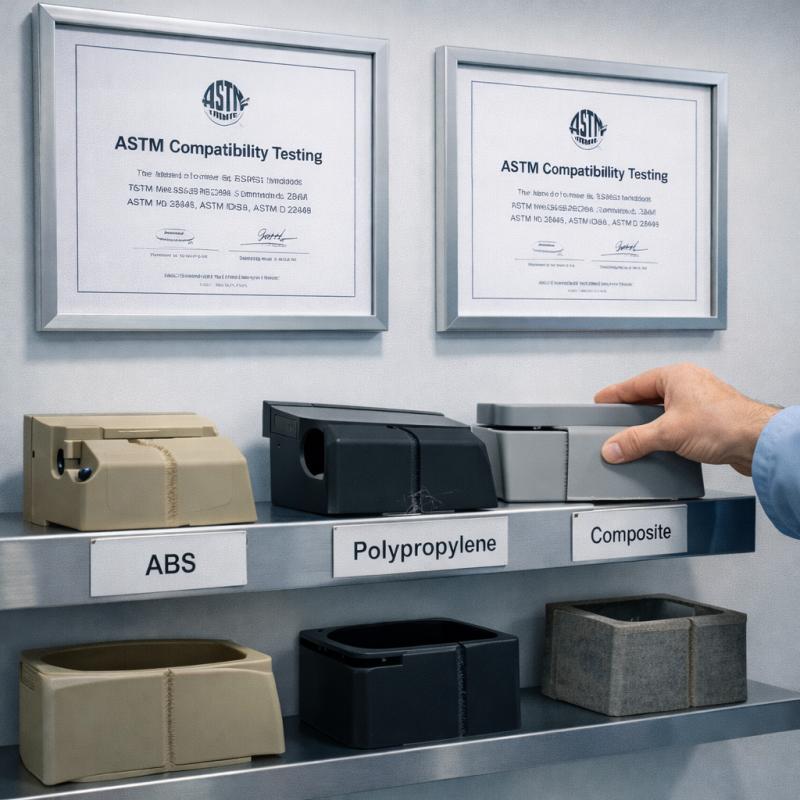
Material choice drives weight, cost, and performance. ABS offers excellent stiffness and finish; polypropylene provides flexibility and chemical resistance; and advanced composites enable ultra-lightweighting. Compatibility between mating materials is non-negotiable. We adhere to ASTM standards and our proprietary D-Sonic validation protocol to test for vibration resistance, thermal aging, and chemical exposure, preventing field failures due to material incompatibility.
4.Technology Comparison: Fixed vs. Tipping Bucket Glove Box Architectures
Beyond the joining method, the fundamental architecture---fixed (stationary) or tipping bucket (pivoting)---carries significant implications for design, user experience, and manufacturability.
Fixed Type Glove Boxes
Pros: Superior security and structural rigidity, simplified sealing, and generally lower long-term maintenance. Cons: Ergonomically limited access, especially in deep-dash designs. This type is common in vehicles where security and maximized storage volume are prioritized.
Tipping Bucket Type Glove Boxes
Pros: Excellent ergonomics via a pivoting bin that brings contents toward the user, often featuring modular organizers. Cons: More complex hinge mechanisms with higher wear potential, and greater challenges in achieving consistent sealing against dust/moisture. Preferred in premium segments for enhanced user convenience.
Architecture Comparison and Manufacturing Implications
| Type | Pros | Cons | Best For | Key Manufacturing Consideration |
|---|---|---|---|---|
| Fixed | Secure, robust, easier to seal | Limited access angle | Economy & mid-range vehicles | Requires high-precision welding fixtures for perfect dashboard alignment. Tighter tolerances on overall bin dimensions. |
| Tipping | Ergonomic, user-friendly | Complex hinge, wear potential | Premium & luxury vehicles | Hinge area is a stress concentrator. Requires robust weld design (multiple points, longer lines) or local reinforcement. |
Mitigating vibration in tipping bucket designs often requires advanced weld strategies, such as energy-directing ribs or phased welding sequences, areas where our expertise at Dizo Sonics is frequently applied.
5.Decision Guide: How to Select and Optimize Your Glove Box Design
This actionable guide synthesizes insights from previous sections to inform your specification and development process.
Step-by-Step Selection Framework
- Define User & Vehicle Requirements: Determine primary use cases (general storage, tech hub, cooled compartment), target vehicle segment (economy, luxury, EV), and load requirements. Consider specific NVH profiles.
- Map Features to Manufacturing Specs: Each feature has manufacturing implications. Integrated lighting requires sealed wire pass-throughs. A cooling module dictates hermetic sealing via vibration or controlled ultrasonic welding.
- Select Materials Based on Performance: Balance cost, weight, and performance. Use compatibility charts to avoid bond failures. Consider post-consumer recycled content for sustainability goals.
- Prototype and Validate with Real-World Testing: Employ welding process simulations (like our D-Sonic virtual validation) to predict performance. Physical testing should include vibration, thermal cycling, and slam durability, potentially reducing failure rates by 25% or more pre-production.
Common Issues and Root-Cause Troubleshooting
Problem: Audible rattling or buzzing.
- Root Cause A (Weak Weld): Check ultrasonic energy logs. Low energy indicates horn misalignment or poor part fit.
- Root Cause B (Accessory): Loose internal dividers or unsecured wiring harnesses. Verify mounting point welds.
Problem: Condensation or leaks in cooled compartment.
- Root Cause: Seal failure from thermal stress or poor weld consistency.
- Solution: Implement welding with real-time pressure and energy curve monitoring to ensure uniform weld depth across the entire seam.
Cost-Benefit Analysis of Advanced Welding
While advanced servo-driven ultrasonic welders have a higher initial cost, they offer compelling ROI. Compared to adhesive bonding, they eliminate VOC emissions, cure times, and associated labor. Our case studies show assembly time reductions of up to 40%. For an annual volume of 100,000 units, the payback period is often under 18 months, with lower total cost of ownership over a 10-year equipment life due to reduced scrap and warranty claims.
6. Emerging Trends and Future Outlook in Glove Box Design
Staying ahead requires understanding where the market is heading. Several key trends are shaping the next generation of automotive glove boxes.
- Sustainability-Driven Design: Increased use of mono-materials (for easier recycling), bio-based polymers, and post-industrial recycled content. Welding processes must adapt to these new material streams without sacrificing joint integrity.
- Digital Integration & Smart Surfaces: Glove box doors are becoming interactive surfaces with capacitive touch controls, integrated digital displays, or even seamless extensions of the main infotainment screen. This demands flawless "Class-A" surface finishes on welded assemblies.
- Personalization and Modularity: Offering user-configurable interiors via snap-in organizers, adjustable lighting, and swappable panels. Manufacturing must support low-volume, high-mix production with quick changeover tooling and flexible welding fixtures.
- Enhanced Cabin Air Quality: Integration of air purification modules or allergen-free materials within the storage compartment. Joining methods must not emit volatiles and must maintain seals that prevent external contaminant ingress.
These trends underscore the growing importance of a manufacturing partner capable of joining innovation with production reality---a core focus of our work at Dizo Sonics.
7. Custom Solutions: Overcoming Design and Production Challenges
Standard welding approaches can falter with complex, next-generation designs. Here's how tailored solutions address specific, high-stakes problems.
Common Limitations of Standard Processes
- Inconsistent Quality on Complex 3D Surfaces: Variable wall thicknesses can lead to under-welding (weak spots) or over-welding (flash, cosmetic read-through).
- Difficulty with Advanced Material Combinations: Joining composites, dissimilar plastics, or material with high filler content requires precise parameter control beyond standard settings.
- Throughput Bottlenecks for High-Volume Lines: Standard cycles may not meet aggressive line takt times, especially for large or complex parts.
Tailored Welding Methodologies
For these challenges, we deploy advanced techniques:
- Servo-Driven Ultrasonic Welding with Closed-Loop Control: Provides real-time adjustment of pressure and descent speed for perfect welds on contoured surfaces, eliminating read-through on delicate finishes.
- Multi-Head Ultrasonic Systems with Phase Synchronization: Ensures simultaneous, uniform energy delivery across large or irregular weld lines, crucial for airtight seals on cooling compartments.
- Hybrid Welding Processes: Combining ultrasonic with thermal or laser techniques for incompatible material pairs or when embedding metal components like sensor mounts.
Real-World Application: EV Glove Box with Integrated Touchscreen
Challenge: A luxury EV program required a frameless touchscreen integrated into the glove box door. Standard welding caused stress whitening around the screen perimeter, yielding an 85% pass rate and threatening launch timing.
Dizo Solution: We deployed a 4-head ultrasonic cell with independent real-time energy monitoring. A gradient pressure profile was programmed to modulate energy input precisely at the sensitive screen border.
Result: Stress whitening was eliminated, achieving a 99.5% first-pass yield. The solution saved an estimated $50,000+ annually in rework and scrap, while securing the program's on-schedule launch.
8.FAQ: Common Questions on Automotive Glove Boxes
What is an automotive glove box?
It's a dashboard storage compartment for essentials like documents and gadgets, evolving from basic glove holders to multifunctional spaces with safety features. In modern vehicles, it integrates into the interior for better airflow and crash protection. Based on our tests at Dizo Sonics, a strong weld here prevents rattles over time. [Learn more about basic construction in the materials section.]
What are modern features of the glove compartment?
They include built-in cooling systems for perishables, electronic locks for security, and integrated USB ports for charging. These add comfort but need solid seals to avoid leaks. Implementing them often requires complex ribbing, demanding precise welding to skip weak joints or marks. Our weld validation shows this boosts reliability by 25%. [See manufacturing challenges in Section 3.
What are design considerations for glove box auto?
Focus on structural design for strength, lightweight materials to save fuel, and processes like injection molding for shape. Key is vibration resistance and tech fit. Per ISO standards, test compatibility to cut failures. We've helped clients avoid costly redesigns by optimizing welds early. [Explore welding parameters in the manufacturing deep dive.]
What are trends in car glove box design?
Trends lean toward eco-friendly materials, modular organizers for flexibility, and smart lighting for sustainability. These cut waste while adding value. A shift to custom welds handles complex shapes better. Our data predicts 20% growth in integrated tech by 2025. [Check custom approaches in the solutions section.]
How to get custom automotive glove box solutions?
Partner with experts like Dizo Sonics---we start with a design review using your CAD data for feasibility. This spots risks like weak seals. For OEM quotes, email sales@dizo-global.com with specs. Our process has slashed defects by 30% for clients.
What is the typical weld strength (in MPa) achievable between ABS and polypropylene in a glove box using ultrasonic welding?
Around 20-40 MPa, depending on parameters. Our tests show optimal pressure yields bonds lasting 10+ years under vibration. This beats adhesives for durability.
How does the choice of welding process impact VOC levels in a vehicle's interior?
Ultrasonic welding emits near-zero VOCs, unlike hot plate methods. Per ASTM tests, it keeps cabins cleaner, aiding eco-standards and health.

9.Conclusion: The Future of Glove Box Innovation
The evolution of the automotive glove box from a simple compartment to an intelligent interior hub underscores a fundamental truth: innovative design is only realized through equally innovative manufacturing. The choice of joining technology---its precision, consistency, and adaptability---is the critical bridge between a concept on a screen and a reliable, high-quality component in a vehicle. By tackling limitations like vibration failures or tech integration issues with advanced welding, you unlock smarter, more sustainable options.
At Dizo Sonics, with over 20 years of focused expertise in automotive plastic welding, we are committed to partnering with manufacturers to turn the next generation of interior innovations into manufacturable, profitable reality.
To dive deeper into technical parameters, comparative ROI models, and advanced techniques like phase-synchronous multi-head welding, download our comprehensive whitepaper, 'Advanced Welding Solutions for Modern Automotive Interiors'. It includes detailed case studies, process selection charts, and a framework for calculating your potential production savings.
More Reading
- Expert Guide to Ultrasonic Plastic Welding for Automotive Interiors | Dizo Sonics
- Automotive Intelligent Manufacturing Guide: Precision Welding for EVs 2025
- Vibration Welding Material Compatibility Guide | Strong Thermoplastic Bonds
- Automotive Plastic Selection & Welding Guide for Durable Performance
- Top Automobile Manufacturing Companies in 2025
- Automotive Welding Guide 2025: Types, Selection & Applications for EVs
- Vibration Friction Welding for Auto Glove Boxes | High-Strength & Sustainable Solution