

Ultrasonic Welding for Mask Production: Efficient, Hygienic & Scalable Guide

1. Introduction to Ultrasonic Welding for Protective Masks
Are you facing production bottlenecks, inconsistent seal quality, or rising labor costs in protective mask manufacturing? In today's demanding medical supply environment, these issues can limit scalability---especially for small and medium-sized enterprises. Ultrasonic welding offers a proven alternative, using high-frequency vibrations to create strong, hygienic bonds between nonwoven layers without adhesives or threads. This makes it ideal for producing FFP, N95, and surgical masks that meet stringent medical standards.
This guide is designed as a practical decision-making toolkit. It moves beyond basic explanations to deliver actionable insights---from core operating principles and technology comparisons to equipment selection and custom integration. Whether you are an engineer optimizing a production line or a manager evaluating long-term investments, the following sections will help you understand how ultrasonic welding can address key pain points in mask manufacturing.
Drawing on two decades of industry application experience---including patented developments and collaborations with global precision engineering firms---we'll provide data-backed guidance to help you improve efficiency, ensure consistency, and scale confidently.
2.Core Principles and Mechanisms of Ultrasonic Welding
How Frictional Heat Enables Hygienic Bonding
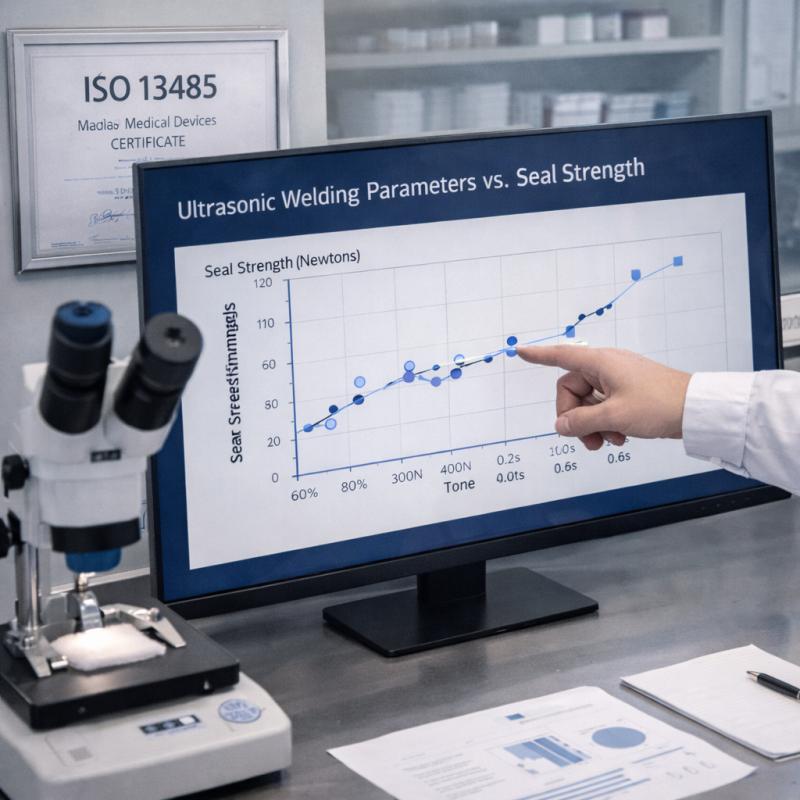
Ultrasonic welding operates on three controllable parameters: time, energy, and pressure. High-frequency mechanical vibrations generate localized frictional heat at the interface of thermoplastic materials, such as polypropylene used in nonwovens. This process melts the materials only where they meet, forming a molecular-level bond as they cool. Think of it like rubbing your hands together rapidly to create warmth---the friction itself produces the heat, with no external heating elements required.
Because no adhesives, solvents, or threads are used, the resulting seams are clean, particle-free, and inherently hygienic, complying with ISO standards for medical device manufacturing. Material compatibility is critical: optimal bonding occurs when both layers have similar melting points, ensuring uniform fusion without weak spots or gaps.
The Science Behind Frequency and Heat Generation
In mask production, frequencies between 20 kHz and 40 kHz are commonly used. This range provides sufficient energy to create heat quickly while minimizing thermal exposure to delicate nonwoven fabrics. Lower frequencies (under 20 kHz) are suitable for larger, thicker parts but can cause uneven melting in fine mask materials. Higher frequencies offer greater precision but must be carefully controlled to avoid material degradation.
The system consists of a generator that produces a high-frequency electrical signal, a converter that transforms it into mechanical vibrations, and a sonotrode (or horn) that transfers these vibrations to the workpiece. Together, they maintain stable frequency output, which is essential for consistent weld quality. Well-tuned systems significantly reduce waste, especially in high-volume production runs.
Key Components: Sonotrodes, Generators, and Converters
Each component plays a specific role:
- Generator: Supplies the electrical power and controls frequency.
- Converter: Changes electrical energy into linear mechanical motion.
- Sonotrode: Transmits vibrations to the exact welding area. Its shape is often customized for specific mask features such as ear loops, nose bridges, or perimeter seals.
For most mask applications, a 35 kHz system offers an effective balance of precision and power. Controlled industrial tests indicate that maintaining pressure between 0.1 MPa and 0.5 MPa typically yields strong, reliable seals while preserving the integrity of the nonwoven structure.
Essential Parameters for Optimal Welding
- Frequency: 20--35 kHz for nonwoven fabrics. Going lower may cause incomplete bonds; higher frequencies risk burning or weakening the material.
- Time: 0.5--2 seconds per weld cycle. Too short a time prevents proper fusion; too long may overheat the material.
- Pressure: 0.1--0.5 MPa ensures adequate molecular interaction without crushing lightweight nonwovens.
These parameters should be adjusted based on material thickness, layer composition, and desired seam strength. Documented settings from field applications show that consistent results depend heavily on fine-tuning these variables.
Common Misconceptions and Practical Tips
A frequent oversight is assuming that higher pressure always improves bond strength. In reality, excessive pressure can displace molten material and weaken the seam. Another misconception is that ultrasonic welding cannot handle multi-layer composites; with proper tuning and customized sonotrodes, even complex material stacks can be joined reliably. Always validate parameters with a material sample before full-scale production.
3.Technology Comparison: Ultrasonic vs. Traditional Methods
The table below summarizes how ultrasonic welding compares to sewing and heat sealing in mask manufacturing:
| Aspect | Ultrasonic Welding | Traditional Sewing | Heat Sealing |
|---|---|---|---|
| Materials | Excellent for nonwovens, no additives | Good, but thread adds bulk & contamination risk | Limited to films & certain coated fabrics |
| Speed | High (~1 sec/cycle) | Medium | Low to medium |
| Bond Strength | High (molecular fusion) | Medium (depends on stitch) | High but can be inconsistent |
| Hygiene | Excellent (no foreign materials) | Risk of fiber & particle release | Good (sealed seam) |
| Automation Ease | Easy to integrate | Complex, often manual | Moderate |
| Operational Cost | Lower long-term (energy & labor) | High (labor-intensive) | Medium (energy & maintenance) |
| Best For | High-volume medical masks, hygiene-critical items | Prototypes, fabric-based masks | Simple film-based products |
Why Ultrasonic Welding is Preferred for Mask Production
Ultrasonic welding is particularly suited to medical mask manufacturing for several reasons:
- Hygiene: The process uses no adhesives or threads, eliminating potential contamination sources---critical for FFP and N95 respirators.
- Speed & Consistency: Rapid cycle times support high output, and automated systems ensure repeatable seam quality.
- Material Efficiency: Minimal waste compared to thread-based methods.
- Design Flexibility: Can create complex seam patterns (curved, contoured) that are difficult to achieve with sewing or heat sealing.
Limitations and Realistic Considerations
While advantageous, ultrasonic welding requires proper setup and is not universal. It works best with thermoplastics; non-thermoplastic materials or blends may not bond well. Initial equipment investment can be higher than basic sewing machines. However, operational savings---through reduced labor, lower rework rates, and higher throughput---typically deliver ROI within 6--12 months for small to medium operations. Modern systems also include safeguards such as automatic frequency tracking (AFT) and real-time monitoring to prevent defects and ensure process stability.

4.A Practical, 4-Step Guide to Selecting Your Mask Ultrasonic Welder
This framework helps you match equipment to your production needs while avoiding common specification mismatches.
Step 1: Define Your Production Profile (Volume, Mask Types, Materials)
Start by outlining:
- Mask types: FFP2/FFP3, N95, surgical, KN95.
- Daily output targets: small batches (<10,000/day) vs. high-volume lines.
- Materials: types of nonwoven, melt layers, any reinforcements.
- Key challenges: sealing consistency, hygiene compliance, rapid
changeover.
This profile will steer you toward machines with appropriate speed, flexibility, and automation levels.
Step 2: Match Technical Specifications to Your Needs
Evaluate:
- Frequency: 20--35 kHz systems are standard; higher frequencies suit finer details.
- Power output: Match to material thickness and production speed.
- Pressure control: Look for adjustable systems capable of maintaining 0.1--0.5 MPa.
- Tooling: Ensure compatibility with custom sonotrodes for nose bridges, ear loops, or contour seals.
Reference technical data sheets and, if possible, request material trials to confirm performance.
Step 3: Prioritize Control and Monitoring Features
For medical-grade production, consistency is non-negotiable. Key features include:
- Automatic Frequency Tracking (AFT): Compensates for tool wear and material variations.
- Real-time production monitoring: Tracks energy, time, pressure per weld for full traceability.
- Data logging: Essential for quality audits and process validation.
Systems with these capabilities can reduce defect rates significantly and support compliance with ISO 13485 and other medical standards.
Step 4: Assess Integration Support and Total Cost of Ownership
Consider:
- Ease of integration: Modular designs or ready-to-use work cells shorten implementation time.
- Supplier support: Availability of training, technical assistance, and spare parts.
- Long-term value: Service life (often 10+ years), energy efficiency, and upgrade paths.
A thorough ROI analysis should include not only purchase price but also savings from reduced labor, higher yield, and lower maintenance.
5.Customized Solutions for Complex Production Challenges
While standard ultrasonic welders handle most routine tasks, some situations demand tailored approaches---such as bonding new multi-layer composites, achieving zero-defect rates at high speeds, or integrating with Industry 4.0 smart factories.
Tailored Integration for SMEs and Specialized Lines
Smaller producers often need flexible solutions that accommodate varying batch sizes and material grades. Custom sonotrodes, for example, can be designed to seal complex 3D shapes like respirator nose bridges without manual rework. Integrated feeding and stacking modules can turn a manual station into a semi-automatic cell, boosting output by 30% or more while maintaining strict hygiene.
Case Studies: Solving Real Production Issues
Case 1: Improving N95 Nose-Bridge Seal Consistency

A medical manufacturer experienced inconsistent sealing on N95 nose bridges, with only 85% of masks passing leak tests. The requirement was to achieve >99% consistency without slowing line speed. A multi-point ultrasonic system with real-time pressure feedback was implemented. Result: pass rate increased to 99.5%, rework was eliminated, and per-unit cost dropped by 25%. ROI was realized within 8 months through waste reduction and higher throughput.
Case 2: Flexible Automation for FFP Mask Production
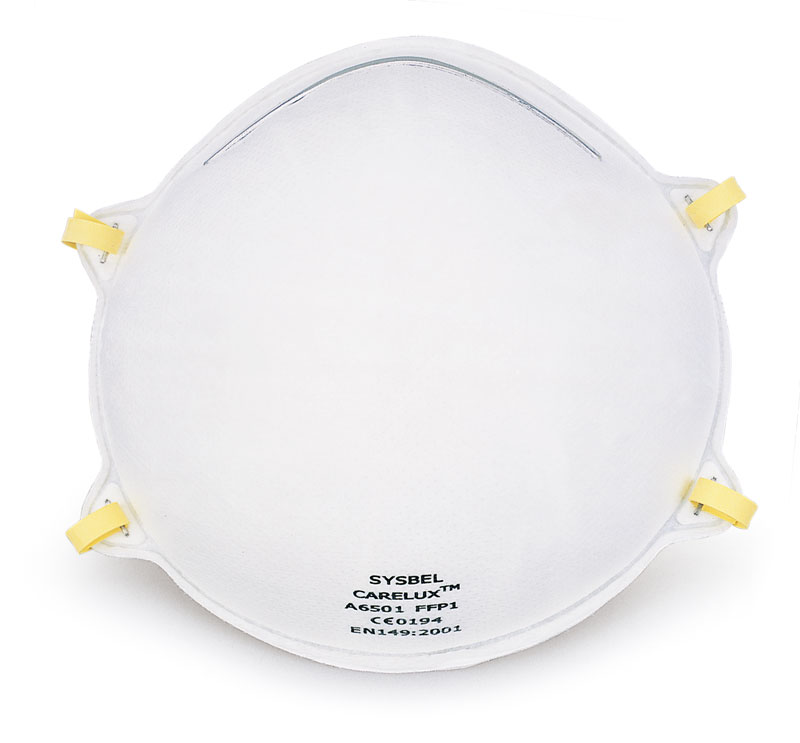
An SME needed to automate FFP mask assembly but faced challenges with< variable nonwoven thickness and long changeover times. A customized ultrasonic work cell was developed, featuring quick-change anvils and production monitoring software. Result: setup time was cut by 50%, allowing efficient small-batch production, and overall equipment effectiveness (OEE) increased by 20%.
ROI Insights and Extended Applications
- High-volume scenarios: ROI often achieved in 6--12 months via labor savings and reduced scrap.
- Special materials: Reinforced nonwovens or biodegradable layers may require custom tuning but offer market differentiation.
- Beyond masks: The same ultrasonic principles apply to other medical disposable items such as surgical gowns, drapes, and sterile packaging, where hygienic, particle-free seams are essential.
6.FAQ: Common Questions on Ultrasonic Mask Welding
Q1: What equipment is needed for ultrasonic mask production?
A basic system includes a generator, converter, and sonotrode. For production lines, modules often include feeding mechanisms, stackers, and PLC controls. Manufacturers like Dizo Sonics offer ready-to-integrate units suitable for surgical, FFP, and N95 masks.
Q2: How does ultrasonic welding bond nonwoven materials without adhesive?
High-frequency vibrations create localized frictional heat at the material interface, melting the thermoplastic fibers in the nonwoven. As the vibrations stop, the material solidifies, forming a clean, strong, and monolithic seam.
Q3: Can ultrasonic welding be used for low-volume or prototype production?
Yes. Benchtop or manual ultrasonic welders allow small-scale production and prototyping without major investment. They are ideal for R&D, pilot batches, or businesses with fluctuating demand.
Q4: How do you ensure consistent quality in continuous production?
Automated systems with closed-loop controls monitor key parameters (energy, time, pressure) for every weld. Alerts flag deviations immediately, and data logging supports quality audits and process optimization.
Q5: What maintenance does an ultrasonic welder require?
Regular checks include sonotrode tip condition, generator calibration, and air pressure supply. Proper maintenance schedules---often provided by the supplier---maximize uptime and extend equipment life.
Q6: Can ultrasonic welding join different types of materials?
It works best with compatible thermoplastics. Dissimilar materials may require intermediate layers or specific surface treatments. Material testing is recommended before process design.
Q7: Is the process compliant with medical standards?
Yes, when correctly validated. Ultrasonic welding is recognized in medical device manufacturing standards (such as ISO 13485) for creating contaminant-free seams. Documentation of process parameters is key for regulatory submissions.

7. Conclusion: Implementing the Right Solution for Your Production
This guide has outlined the principles, advantages, and practical steps for adopting ultrasonic welding in protective mask manufacturing. From understanding the science behind vibration-based bonding to selecting equipment and integrating custom solutions, you now have a structured approach to address production challenges, enhance hygiene, and improve scalability.
Successful implementation relies on choosing a partner with proven expertise and support capabilities. With over 20 years of focused experience in ultrasonic welding technology---including ISO 9001-certified development, multiple patents, and collaborations with global industrial leaders---our team provides not only equipment but also engineering partnership to ensure your production goals are met.
Next Steps for Your Project
To move forward, consider the following actions:
- Request a technical review: Share your production profile for a tailored feasibility assessment.
- Review case studies: See real-world applications on our medical welding solutions page.
- Obtain detailed specifications: Contact us for datasheets, validation protocols, and reference materials.
- Arrange a sample trial: Test your materials with recommended settings to verify performance.
We are here to help you build a more efficient, reliable, and scalable manufacturing process. For direct assistance, reach out via email at sales@dizo-global.com or through our technical support channels.
More Reading
- Best Ultrasonic Welding Machine for Medical Devices: 2025 Technical Guide & Selection Strategy
- Ultrasonic Welding for Medical Devices: Complete Guide & Best Practices
- Ultrasonic Welding for Medical Devices: 2025 Guide to Clean, Adhesive-Free Assembly
- Automatic Welding for Medical Device Precision & Quality - dizo