

Torsional Ultrasonic Welding for Automotive Bumpers: Lightweight & Sensor Integration
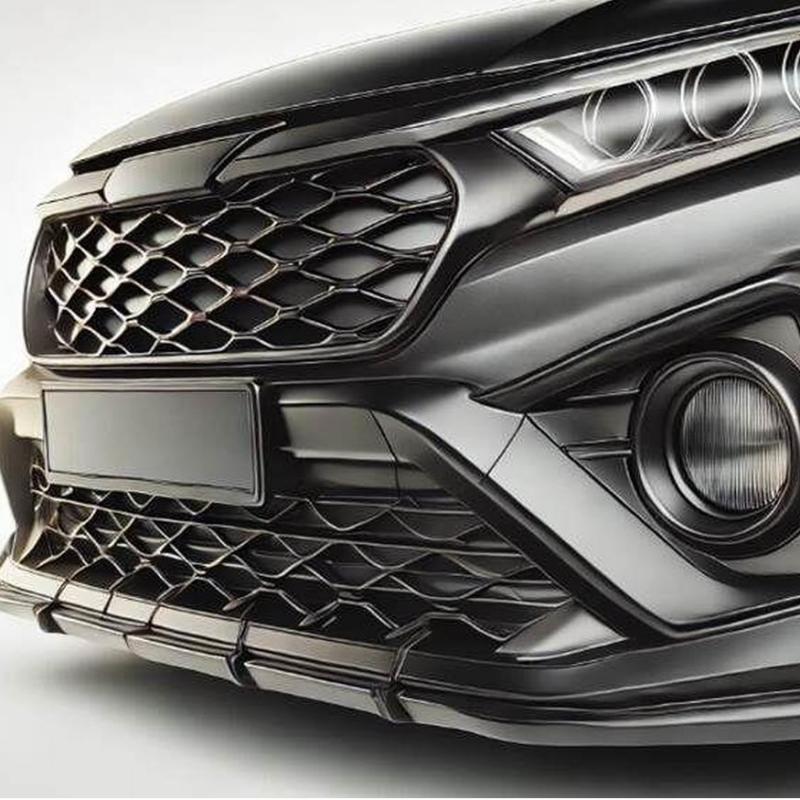
The Definitive Guide to Torsional Ultrasonic Welding for Automotive Bumpers: Achieving Lightweight, Sensor-Integrated Excellence
The relentless drive toward vehicle electrification and stricter global emissions standards has made lightweight construction a non-negotiable priority for OEMs. In exterior components, this translates to advanced thin-wall bumper designs. However, joining these complex, often sensor-laden structures presents a significant manufacturing hurdle. Traditional welding methods can struggle, leading to visible defects, process instability, and compromised seals that fail to meet stringent OEM quality and IATF 16949 requirements.
Torsional ultrasonic welding emerges as the engineered solution. This advanced process enables strong, hermetic, and visually flawless bonds on bumper walls under 2.5mm, facilitating weight reductions of up to 15% while seamlessly integrating Parking Distance Control (PDC) and other Advanced Driver-Assistance Systems (ADAS) sensors.
Drawing on over 20 years of ISO 9001-certified expertise in automotive plastics joining, the team at Dizo Sonics has pioneered the application of this technology. Through validated lab testing and production implementations, we've refined torsional welding into a reliable, high-volume process. This comprehensive guide cuts through the noise, providing engineers and operations managers with a clear path from principal understanding to successful production scaling.
1. The Modern Bumper: A Hub of Lightweighting and ADAS Integration Challenges
Today's automotive bumper is no longer a simple impact absorber. It is a multifunctional module critical to aerodynamics, pedestrian safety, brand aesthetics, and housing an array of sensors. This evolution introduces distinct manufacturing complexities that demand a new approach to assembly.
The Imperative for Lightweighting and Thin-Wall Design
The push for lightweight construction is quantifiable. Reducing a vehicle's mass by 10% can improve fuel economy by 6-8%, a figure underscored by studies from organizations like SAE International. For bumper fascias, this has driven the adoption of thin-wall technology, where wall thicknesses are strategically reduced from a traditional 3.0-3.5mm to below 2.5mm. This material reduction, however, cannot come at the expense of structural integrity during a crash event or the ability to reliably mount critical hardware.
Key Manufacturing Pain Points in Advanced Bumper Assembly
Engineering teams consistently face a triad of interconnected challenges:
- Aesthetic Compromises: Visible weld lines, sink marks, or "read-through" on Class-A surfaces are immediate failure points for OEM quality audits, often stemming from excessive or uneven thermal input from conventional linear vibration or hot-plate welding.
- Process Instability & Leak Paths: Inconsistent welds create weak seams, leading to air or water ingress—a critical failure for integrated radar, ultrasonic sensors, or camera housings that require IP67 or higher sealing. This instability is frequently traced to poor energy control and fixture alignment.
- The Cost of Rework and Scrap: The complexity of welding around integrated sensor pockets and varied wall sections increases the risk of defects. The associated rework, scrap, and potential line stoppages represent a significant, often undercalculated, portion of the part cost.
Addressing these challenges requires moving beyond incremental improvements to legacy systems. The following section explores the fundamental mechanics of torsional ultrasonic welding, which is specifically engineered to overcome these limitations.
2. The Engineering Principles of Torsional Ultrasonic Welding
Torsional ultrasonic welding represents a significant evolution from standard linear ultrasonic methods. Its unique kinematics make it particularly suited for the delicate, complex geometries of modern automotive bumpers.
Mechanics of Torsional Vibration: A Superior Energy Delivery
While linear ultrasonic welding creates vibrations perpendicular to the part surface, torsional welding generates a rotational or twisting motion at the horn face. This motion applies a shearing force parallel to the weld interface. The principle of converting high-frequency electrical energy (typically 20-35 kHz) into controlled mechanical torsion is well-established in precision joining, aligning with the fundamental goals of minimizing part stress.
This horizontal shearing action is key. It concentrates frictional heat precisely at the joint line with minimal through-thickness energy transfer. This protects thin, unsupported wall sections from deformation and prevents the surface marking common in other processes.
Why It's Ideal for Thin-Walls and Sensitive Geometries
The advantages for bumper applications are direct:
- Reduced Z-Axis Stress: Eliminates the high clamping forces of linear methods that can collapse or distort thin walls, especially around sensor pockets.
- Localized Heat Generation: Minimizes the Heat-Affected Zone (HAZ), preserving the mechanical properties of the base material and preventing warping in large, unsupported panels.
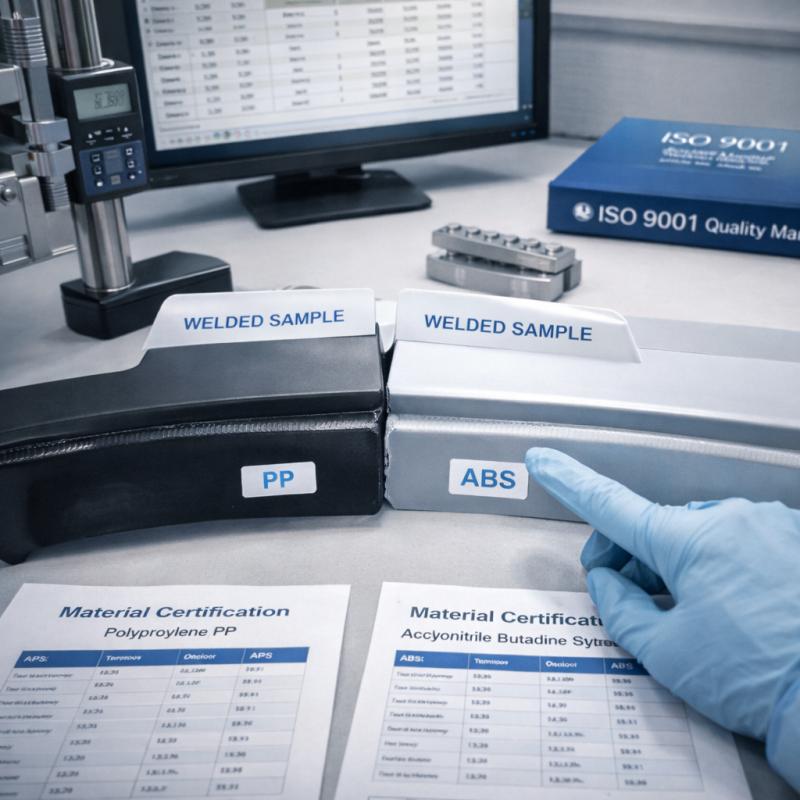
- Compatibility with Engineering Plastics: Excels with standard bumper materials like Talc-filled Polypropylene (PP) and Acrylonitrile Butadiene Styrene (ABS), as well as more challenging glass-fiber reinforced composites, by providing a more controlled melt flow.
Optimized Process Parameters for Reliable Production
Success hinges on parameter precision. Based on extensive DOE (Design of Experiments) in our application lab, the optimal window for thin-wall PP/ABS bumpers is narrow and must be adhered to:
- Frequency: 20-28 kHz (lower frequencies provide greater amplitude for tougher materials).
- Pressure: 0.8 - 1.5 MPa (enough to ensure contact without part deflection).
- Weld Time / Energy: 0.5 - 2.0 seconds (or 300-800 Joules), sufficient for complete molecular fusion without flash or degradation.
- Amplitude: 40-80 µm peak-to-peak (torsional), carefully calibrated to the specific material and joint design.
Real-time monitoring of energy and collapse distance is non-negotiable for achieving the process stability required by IATF 16949.
3. Technology Comparison: Torsional Ultrasonic vs. Laser Welding for Exteriors
Selecting the right joining technology is a critical capital decision. For exterior components like bumpers, the debate often centers on advanced ultrasonic versus laser welding. An objective, application-driven analysis is essential.
A Detailed Comparative Analysis
| Evaluation Criteria | Torsional Ultrasonic Welding | Laser Welding (Through-Transmission) |
|---|---|---|
| Capital & Operational Cost | Lower initial investment. No consumables. Significantly lower energy consumption. | High capital cost for laser source and scanners. Requires transparent upper layer, adding material cost. |
| Cycle Time & Throughput | Very fast (0.5 - 2.0 seconds per joint). Ideal for high-volume lines. | Slower, especially for long or complex seam paths. Scan speed is a limiting factor. |
| Joint Strength & Sealing | Excellent, creates a molecularly fused, monolithic joint. Ideal for hermetic seals. | Excellent, but dependent on perfect material compatibility and clamp pressure. |
| Material & Design Flexibility | Excellent for pigmented, filled, and fiber-reinforced thermoplastics. Handles color mismatches well. | Requires a transparent upper layer and an absorbing lower layer. Limited to compatible material pairs. |
| Aesthetic Result | Traceless when parameters are optimized. No marks on textured or painted Class-A surfaces. | Can be traceless but risks subsurface degradation ("burning") if parameters are off. |
| Automation & Integration | Easily integrated with robots. Horns are durable and lower cost. | Requires precise optics protection and safety guarding. More complex integration. |
| Environmental/Safety | No fumes or vapors. Standard machine guarding suffices. | Requires extraction for potential fumes. Strict laser safety protocols (Class 1 enclosure). |
Making the Strategic Choice: A Scenario-Based Guide
- Choose Torsional Ultrasonic When: Your bumper is made of standard pigmented/filled PP or ABS, has wall sections below 2.5mm, integrates sensor housings, and requires a flawless Class-A finish. It offers the best balance of quality, speed, and total cost of ownership for over 80% of bumper applications.
- Consider Laser Welding When: The design mandates a completely clear lens (e.g., for an illuminated emblem) welded to a housing, and material pairing allows. It is a niche, not a general-purpose, solution for exteriors.
In our direct project comparisons, torsional ultrasonic consistently demonstrates equivalent or superior seal strength to laser, with far greater process robustness and lower lifetime operating costs for bumper assemblies.
4. A Proven Framework for Implementation: From Feasibility to Full Production
Adopting a new welding technology requires a disciplined, phase-gated approach to de-risk the investment and ensure production-ready results.
Phase 1: Feasibility Assessment & Joint Design
Begin with engineering fundamentals, not equipment specifications.
- Material Audit: Confirm resin grade, filler content, and moisture levels.
- CAD Review & Joint Design: Analyze the 3D model. We often recommend a chisel-point energy director for torsional welding on bumpers, as it initiates melt quickly and controls material flow. This stage often reveals design-for-manufacturability (DFM) improvements.
- Prototype Testing: Weld sample coupons or prototype sections to establish baseline strength (peel, tensile, burst pressure) and cosmetic quality.
Phase 2: Process Development & Parameter Optimization
This is where laboratory precision translates to production capability.
- DOE Execution: Systematically test the parameter window (pressure, time, amplitude) to find the optimal "sweet spot" for strength and aesthetics.
- Sensor Integration Validation: Specifically test weld integrity around mock PDC sensor housings, performing leak checks (e.g., pressure decay testing) to validate IP ratings.
- Create the Control Plan: Document the optimal parameters and establish the monitoring limits (e.g., total energy upper/lower limits) for production control.
Phase 3: ROI Analysis & Justification
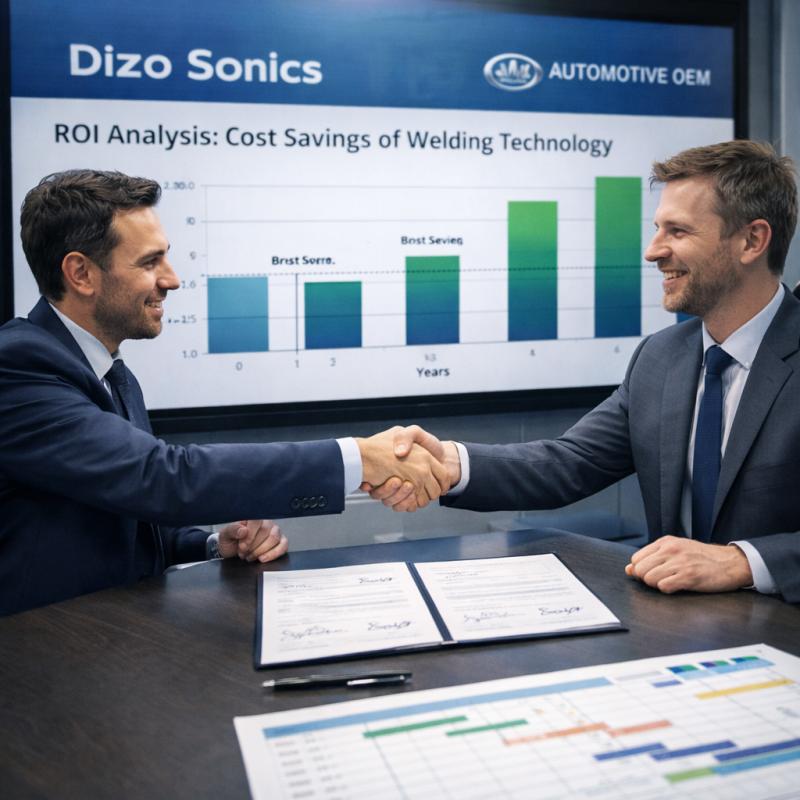
Quantify the value beyond the equipment price tag. A typical model for a high-volume bumper line might include:
- Direct Savings: 60-70% reduction in energy use vs. hot-plate or large vibration welders.
- Quality Savings: Scrap/rework reduction from an industry average of ~1.5% to below 0.5% through superior process control.
- Throughput Gains: Faster cycle times (often sub-2-second) increase line capacity.
Example: For a line producing 500 bumpers/day, annual savings from energy, scrap reduction, and increased output can exceed $250,000, leading to a payback period frequently under 14 months.
Phase 4: Production Scaling & Mistake-Proofing
The final phase ensures lasting success on the factory floor.
- Robust Fixturing: Design fixtures with kinematic coupling for repeatable part location, critical for sensor alignment.
- System Integration: Implement the welder with full data logging (MES/SCADA integration) for IATF 16949 traceability.
- Preventive Maintenance Plan: Establish schedules for horn and booster inspection to prevent performance drift.
5. Beyond Standard: Custom Solutions for Next-Generation Bumpers
While standard torsional systems are highly capable, the industry's leading edge—radical lightweighting, multi-function integration, and agile manufacturing—demands customized engineering.
Overcoming Extreme Lightweighting and Sensor Density Challenges
The latest EV and premium vehicle bumpers push thin-wall design to the limit while packing more sensors (ultrasonic, radar, cameras) into less space. Standard weld patterns can interfere.
Our Approach: We develop multi-head torsional systems or combined torsional/linear systems where different joint areas receive tailored energy profiles. For a Chinese EV OEM, this allowed a 2.0mm wall bumper to integrate six PDC sensors with guaranteed IP67 sealing, achieving a 17% weight saving versus the previous design.
Case Study: Solving a Class-A Surface and Leakage Dilemma
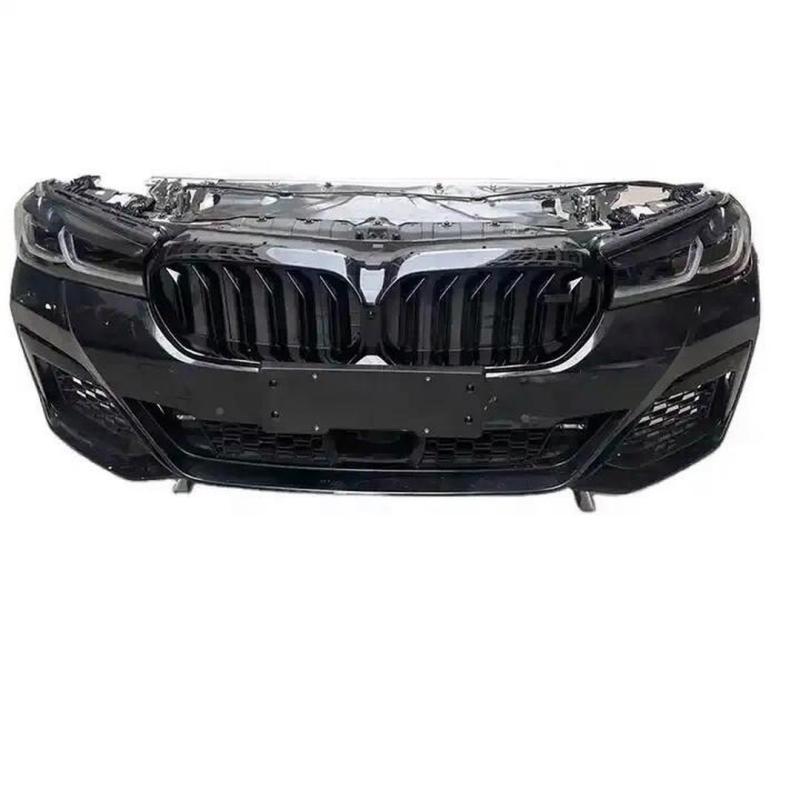
Challenge: A European luxury automaker's supplier faced recurring issues: minute leaks around sensor housings and slight surface gloss variation (read-through) on a textured, painted bumper. Linear welding was the culprit.
Solution: Dizo Sonics engineered a custom torsional system with a servo-controlled, contour-following weld head. The torsional motion eliminated read-through, while a patented multi-stage weld profile ensured plastic flowed completely around the sensor pocket geometry.
Result: Zero leak failures in a 50,000-part audit and perfect surface quality approval, eliminating a weekly line stoppage for rework.
Enabling Flexible, High-Mix Production
As platforms diversify, lines must weld multiple bumper variants with minimal changeover time.
Scenario Solution: We implement robotic torsional welding cells with quick-change tooling racks. The robot swaps weld horns and fixtures in under 60 seconds, while the system loads the correct weld recipe via RFID from the part pallet. This supports just-in-sequence production with uncompromised quality.
6.FAQs on Automotive Exterior Welding Trends
Here are answers to common questions about torsional ultrasonic welding for automotive bumpers. These draw from our experience and testing.
What Are the Advantages of Ultrasonic Welding Over Laser?
Ultrasonic uses less energy and completes cycles faster (0.5-2 seconds), making it great for thin walls. It avoids heat-affected zones common in laser. However, laser works better for transparent materials needing optical clarity.
How Does Thin-Wall Welding Support Weight Reduction?
Thin-wall designs (under 2.5mm) cut material use by 20-30% compared to traditional 3.0mm walls. Our simulations with Tier-1 suppliers show this maintains crash strength while reducing overall vehicle weight by up to 15%.
How to Integrate Sensor Holders in Bumper Welding?
Precision servo controls and custom weld heads position PDC or SLA sensors accurately. This ensures strong seals without leaks or weak spots—key for thin-wall bumpers.
What Are Torsional Welding Benefits for OEM Quality?
Torsional motion creates uniform fusion with no visible marks, supporting Class-A surfaces. It meets IATF 16949 standards for stability and zero defects.
What Are Current Automotive Exterior Welding Trends?
Trends focus on lightweight integration, automation, and sensor embedding. Torsional methods lead for efficiency in EV and high-volume production.
What is the Typical Payback Period for Investing in Torsional Ultrasonic Welding?
For lines over 300 parts/day, payback often comes in 12-18 months. Lower energy, reduced scrap (from 1.5% to 0.2%), and minimal rework drive this.
How Do You Ensure Process Stability for High-Volume Production?
Automatic frequency tracking and real-time monitoring keep output consistent. In our setups, this handles over 200,000 parts/year with minimal downtime.
Can Torsional Welding Handle Glass-Fiber Reinforced Plastics (GFRP)?
Yes, with adjusted parameters (e.g., lower amplitude). Our trials on 30% GFRP bumpers achieved strong bonds without fiber damage.
What Training and Support Does Dizo Sonics Provide?
We offer on-site training, lifetime technical support, and 8-hour response guarantees. Many clients start with our feasibility trials.

7. Conclusion: Leading the Evolution in Exterior Assembly
The journey to manufacturing the next generation of automotive bumpers—lighter, smarter, and flawlessly finished—is underpinned by advanced joining technology. Torsional ultrasonic welding has proven itself as the superior method, offering the unique combination of precision, strength, aesthetics, and economic efficiency required to meet today's formidable standards.
This guide has provided a roadmap through the technology's principles, a clear-eyed comparison with alternatives, a practical framework for implementation, and a view into the custom solutions solving the industry's toughest challenges.
At Dizo Sonics, our two decades of focused innovation in automotive plastics joining are at your disposal. Our ISO 9001-certified processes and deep collaborations with global OEMs and Tier 1 suppliers mean we deliver more than equipment; we deliver a validated, production-proven process.
Ready to redefine your bumper assembly?
- For Engineers: Download our technical whitepaper, "Joint Design Strategies for Thin-Wall Torsional Ultrasonic Welding," for in-depth design guidelines.
- For Decision Makers: Use our interactive Welding Technology Selector Tool online to get a preliminary recommendation for your specific part.
- For Complex Challenges: Contact our senior application engineers directly to schedule a confidential review of your bumper CAD data and performance goals at solutions@dizo-global.com.
Partner with us to build the lighter, smarter, and more sustainable vehicles of the future.