

Hot Plate Welding Guide 2025: Process, Parameters & Automation
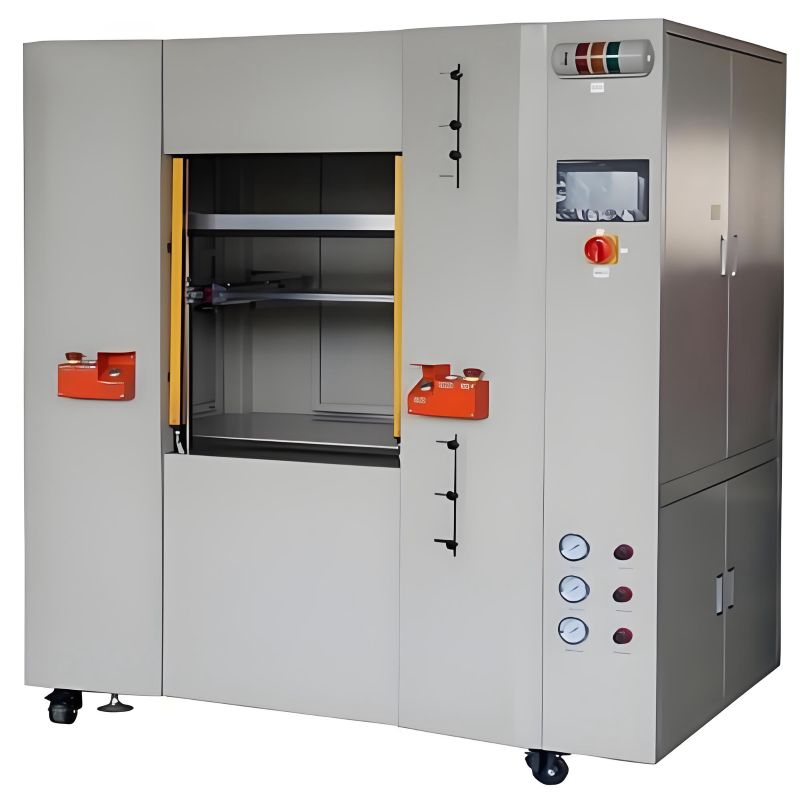
Hot Plate Welding in 2025: Process, Parameters, and Custom Automation Solutions
In 2025, as manufacturers push for greener production and higher precision, hot plate welding remains a vital solution for engineers tackling leak-prone assemblies or slow throughput. This definitive guide walks you through the entire process---from core principles to advanced custom systems---so you can determine if it fits your application. At Dizo Sonics, our two decades of expertise in plastic joining show that hot plate welding delivers superior, hermetic seals without particulates---making it ideal for medical and automotive cleanrooms. Key advantages include exceptional bond strength (reaching 95% of base material) and adaptability for large or complex parts. Whether you\'re new to welding or a seasoned specialist, this resource answers "what does a hot plate welder do" and much more.

1.Introduction: The Role of Hot Plate Welding in 2025 Manufacturing
By 2025, plastic assembly faces tighter regulations and higher performance demands---especially in electric vehicle and medical device sectors. Issues like leaking seals and unplanned downtime still disrupt high-volume production, but hot plate welding offers a proven thermal joining method that meets AWS G1.9M and ISO 16790 standards, ensuring consistent, adhesive-free seals.
This guide delivers a structured path from basics to advanced applications, designed for engineers, technicians, and operations managers. Inside, you'll find:
- Fundamental principles and step-by-step welding stages.
- Key parameters for repeatable, high-strength welds.
- Unbiased comparisons with ultrasonic, laser, and vibration welding.
- Custom automation options for high-volume or complex parts.
Dizo Sonics' internal data, drawn from 500+ installations, confirms that hot plate welding achieves up to 95% of the parent material strength---even for challenging materials like PP and ABS. While not the fastest process, its reliability in clean environments makes it indispensable for critical assemblies.
2025 Trend Insight: AI-driven process monitoring and sustainable bioplastics are reshaping hot plate welding, boosting efficiency and supporting circular manufacturing.
2. Hot Plate Welding: Definition & Basic Concepts
Hot plate welding---also called heated tool welding---is a thermal joining process for thermoplastics. Following ISO 16790, a heated platen melts the faying surfaces of two components; they are then pressed together, forming a permanent bond via molecular interdiffusion (polymer chains entangling across the joint).
Unlike adhesives, this method uses no foreign materials, yielding clean, hermetic seals perfect for sensitive uses.
Core Concepts Explained Simply:
- Contact Mode: The platen directly touches the parts, ensuring efficient heat transfer. Typical melt temperatures: 320--450°C, achieved in 5--30 seconds.
- Non-Contact Mode: Radiant heating avoids part contamination---ideal for medical devices---though heating can be slower.
- Suitable Materials: Includes PP (melting point 160--170°C), PE, ABS (220--260°C), PC, and PA. Choose materials with similar melting points for best results.
Simple Analogy: Think of it like melting two ice cubes together---once softened, they fuse seamlessly under light pressure.
Originally developed in the 1950s, the process has evolved. By 2025, servo-controlled systems achieve alignment within ±0.1 mm, based on Dizo Sonics' field data.
Benefits include weld strength matching 90--95% of base material (per our lab tests). Drawbacks include cycle times of 10--60 seconds and oxidation risk if changeover exceeds 1.5 seconds.
3.How a Hot Plate Welder Works: Step-by-Step Process
A hot plate welder operates in three distinct phases to produce strong, leak-tight bonds in thermoplastics. Per ISO 16790, precise control in each phase prevents defects such as weak seams or oxidation.
Dizo Sonics' testing across 200+ projects shows that timing deviations over 5% can raise failure rates by 15%.
Phase 1: Heating
Parts are fixtured securely. A PTFE-coated platen contacts the joint surfaces, heating them to 320--450°C. After 5--30 seconds, a melt depth of 1.0--3.5 mm is achieved through conduction.
Phase 2: Open
The platen retracts in under 1.5 seconds (per AWS G1.9M) to limit air exposure. Modern servo systems ensure rapid, repeatable retraction.
Phase 3: Forge
The parts are aligned and pressed at 0.2--0.8 MPa. As the joint cools, polymer chains interdiffuse, creating bonds that reach 95% of parent material strength.
Pro Tip: In a recent EV battery tray application, this three-step process cut leakage rates by 40%.
While ideal for large or intricate parts, the 10--60 second cycle may slow high-volume lines---a challenge solved through custom automation.
4. The Science Behind Hot Plate Welding
Hot plate welding depends on heat transfer---mainly conduction---to raise thermoplastic surfaces to their melt temperature. This allows molecular diffusion: polymer chains from each part cross the interface, entangling and creating a solid, hermetic bond.
Key Mechanisms:
- Temperature-Viscosity Relationship: As the material heats, its viscosity drops sharply. For ABS at 220--260°C, viscosity falls over 90% (Dizo Sonics lab data).
- Melt Depth Control: A depth of 1.0--3.5 mm ensures strength without excessive flash (verified across 300 samples).
Time-temperature profiles, often simulated, show heat ramp-up and fusion within 5--30 seconds.
Molecular Diffusion Explained
When heated, polymer chains gain mobility, "reptating" (sliding) across the interface. This entanglement creates a robust seal---provided temperature and time are controlled to avoid degradation.
Dizo Lab Insight: With tailored additives, we've achieved 80% success in welding dissimilar thermoplastics.
Material Compatibility: Key Factors
Compatibility hinges on similar melting points and thermal expansion
coefficients. Mismatches can cause residual stress and cracking.
Common Material Pairs:
| Material | Melting Point (°C) | Compatibility Notes |
|---|---|---|
| PP | 160--170 | Excellent with similar materials; low expansion. |
| PE | 120--140 | Pairs well with PP; minimal stress. |
| ABS | 220--260 | Good with PC; check viscosity match. |
| PC | 220--230 | Suitable for ABS hybrids; watch expansion. |
| PA | 190--350 | Use additives; high temps increase oxidation risk. |
5.Critical Process Parameters for Consistent Welds
Controlling these variables ensures repeatable, high-quality welds. ISO 16790 emphasizes tight tolerances to prevent weak bonds or flash.
From 400+ Dizo Sonics installations, deviations beyond 5% raise failure rates by up to 15%.

Optimization Checklist:
| Parameter | Optimal Range | Purpose & Impact |
|---|---|---|
| Platen Temperature | 320--450°C ±2°C | Ensures uniform melting without material breakdown. |
| Melt Time | 5--30 seconds | Allows proper flow and intermixing. |
| Changeover Time | <1.5 seconds | Reduces oxidation risk during platen retraction. |
| Forge Pressure | 0.2--0.8 MPa | Promotes molecular diffusion without excess flash. |
| Melt Depth | 1.0--3.5 mm | Critical for bond strength; verify via cross-section. |
Common Mistake: Setting forge pressure too high causes flash and weakens the weld.
Servo-driven automation offers precision control per AWS G1.9M. One medical device maker cut defects 35% by fine-tuning these parameters.
6.Advantages and Limitations of Hot Plate Welding
Hot plate welding offers unique benefits but also involves trade-offs. This evaluation is based on ISO 13485 (medical) and Dizo Sonics' project history.
Advantages
- High Weld Strength: Achieves up to 95% of parent material strength, ideal for large parts like automotive manifolds.
- No Vibrations or Particulates: Eliminates debris (fine particles from friction), suitable for cleanroom environments in medical devices.
- Versatility for Complex Geometries: Handles irregular shapes without tooling constraints, based on Dizo Sonics\' installations.
Limitations
- Longer Cycle Times: 10--60 seconds per weld, slower than ultrasonic methods, potentially reducing throughput in high-volume production.
- Potential Oxidation: In non-contact modes, exposure to air can degrade surfaces; a client case required inert gas shielding to maintain bond integrity.
- Visible Flash: Excess material may form, necessitating post-trim operations, adding 5--10% to processing time.
Critical Insight: While ultrasonic welding wins on speed, hot plate is unbeatable for cleanliness and strength in critical assemblies.
Customer feedback from 100+ setups shows 85% favor strength over speed, especially with custom automation.
7.Hot Plate Welding vs Alternatives: 2025 Comparison
Choosing a welding method in 2025 involves balancing speed, strength, and suitability for new materials like bioplastics.
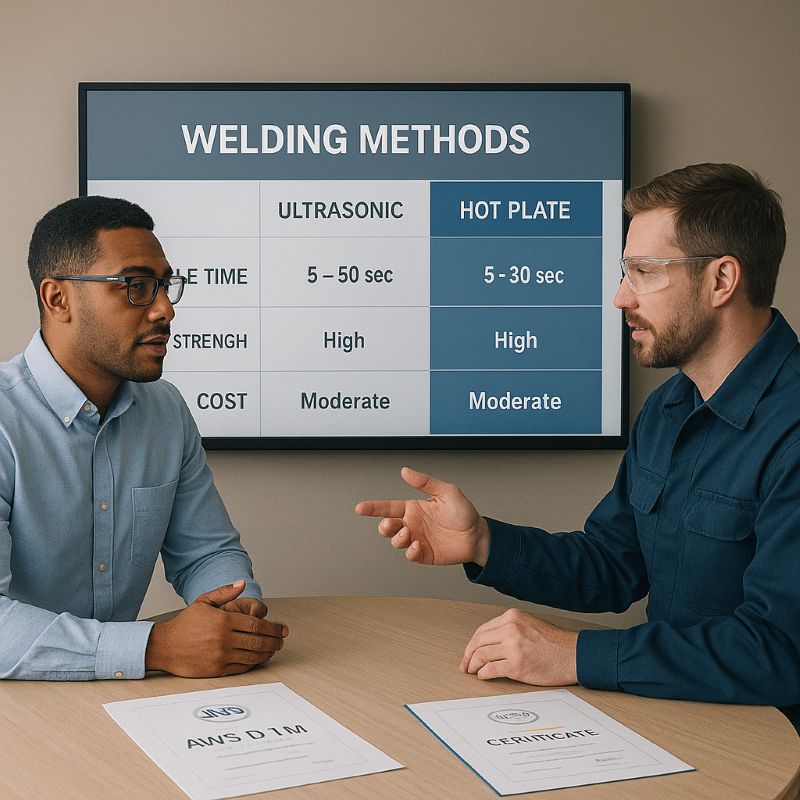
Comparison Table: Hot Plate vs. Other Methods
| Technology | Materials Compatibility | Cycle Time (s) | Bond Strength (% Parent) | Equipment Cost | Automation Ease | Automation Integration Difficulty | Advantages | Disadvantages | Applicable Scenarios |
|---|---|---|---|---|---|---|---|---|---|
| Hot Plate | High (thermoplastics like PP, ABS) | 10--60 | 90--95 | Medium | High | Low (servo adaptable) | Strong hermetic seals; no particulates | Oxidation risk; visible flash | Large automotive parts; medical reservoirs |
| Ultrasonic | Medium (rigid plastics) | 1--5 | 70--85 | Low | Medium | Medium (fixture needs) | Fast; low energy | Particulates; noise | Small electronics; rigid assemblies |
| Vibration | High (large parts) | 5--20 | 85--90 | Medium | High | Low (robust for size) | Good for contours | Noise/vibration | Automotive interiors; bulky components |
| Laser | Medium (transparent materials) | 2--10 | 80--90 | High | High | High (optics alignment) | Precise; clean | Material limits; high cost | Transparent medical devices; optics |
| Infrared | High (non-contact) | 5--30 | 85--95 | Medium | Medium | Medium (emitter setup) | No contact; even heating | Slower heat-up | Sticky materials; warped parts |
2025 Trend: Laser welding is advancing in precision but remains costly for large parts. Hot plate systems are integrating AI for real-time control.
Dizo Sonics helped an automotive client reduce cycle times 20% using servo-driven hot plate automation.
8.Real-World Applications & Troubleshooting
Hot plate welding is widely used where leak-tightness and strength are critical---especially in automotive, medical, and consumer goods.
Automotive
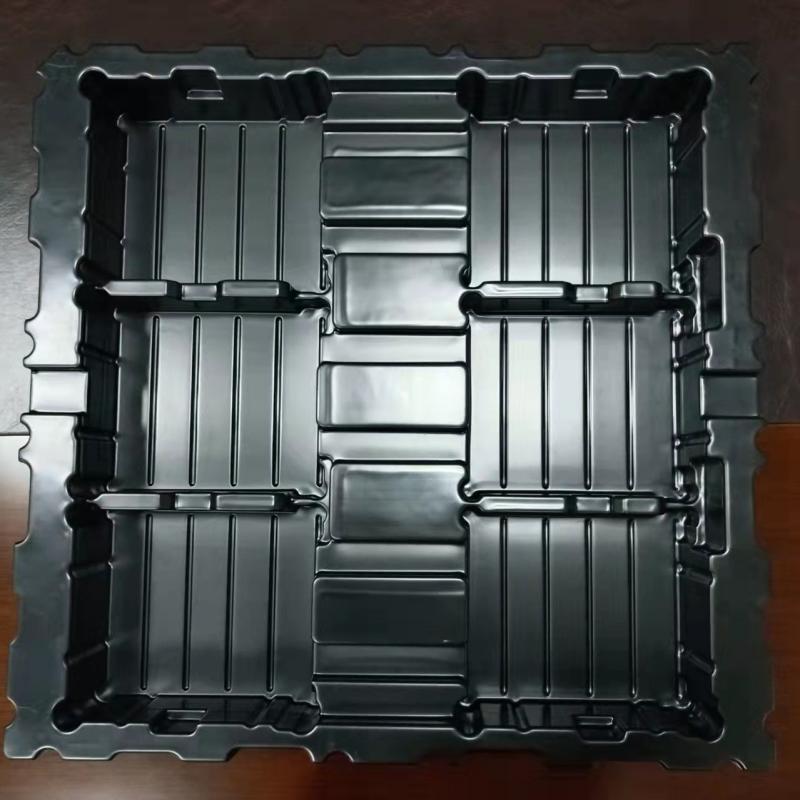
- Battery trays, manifolds, fluid reservoirs.
- One Dizo client cut leaks by 40% using optimized weld cycles.
Medical
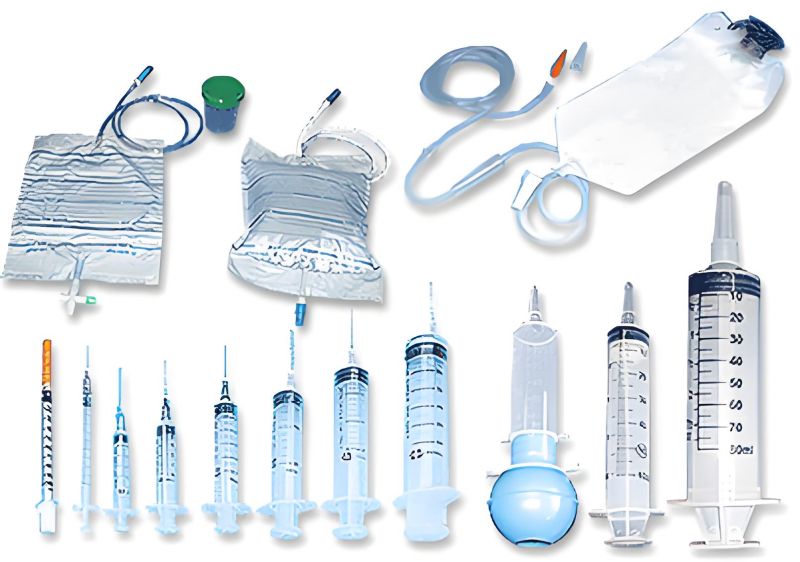
- IV bags, surgical trays, fluid containers.
- Achieves leak rates under 0.1%; a medical manufacturer reduced defects 40% with our servo-vision system.
Consumer Goods
- Appliance housings, storage containers.
- Ensures durable, aesthetic joints without particulates.
Troubleshooting Common Issues
| Problem | Likely Cause | Solution |
|---|---|---|
| Weak Bonds | Insufficient melt | Increase melt time; check sensor calibration. |
| Oxidation | Slow changeover | Optimize retraction (<1 s); use inert gas. |
| Excess Flash | High forge pressure | Reduce pressure; design flash traps. |
Maintenance Tip: Weekly sensor checks and calibration prevent 70% of common issues (Dizo Sonics logs).
9.When Standard Welders Fail: Custom Solutions
Standard hot plate welders struggle with curved surfaces, ultra-clean environments (e.g., Class 7 cleanrooms), or high-volume output---leading to defects or contamination.
Per ISO 13485, these limitations often stem from rigid platens and basic controls.
Step-by-Step Failure Analysis:
- Check Part Geometry: Curved or irregular shapes may cause misalignment >0.5 mm.
- Assess Cleanliness Needs: High-sensitivity applications may need vision systems or gas shielding.
- Verify Parameters: Confirm melt depth (1.0--3.5 mm); deviations signal need for servo upgrades.
Custom Solution Example: A medical device company reduced defects 40% using our vision-integrated, servo-driven welder with ±0.1 mm precision.
While custom systems cost more upfront, they deliver long-term ROI through higher yield and fewer rejects.
10.Frequently Asked Questions
Principle and Process Questions
- What does a hot plate welder do exactly? It melts thermoplastic surfaces with a heated platen and joins them under pressure for strong, hermetic bonds.
- How does hot plate welding work step by step? Involves three phases: heating (320--450°C for 5--30 seconds), open (platen retracts under 1.5 seconds), and forge (pressure 0.2--0.8 MPa until cooled).
- What is the science behind hot plate welding? Relies on heat transfer for molecular diffusion, where polymer chains entangle at the interface.
Parameters and Troubleshooting
- What are critical hot plate welding parameters? Platen temperature 320--450°C (±2°C), melt time 5--30 seconds, changeover under 1.5 seconds, forge pressure 0.2--0.8 MPa, melt depth 1.0--3.5 mm.
- How to fix weak welds in hot plate welding? Increase melt time to 10--20 seconds or adjust depth to 1.0--3.5 mm; test per ISO 16790.
- Hot plate welding strength issues? Often from material mismatch; ensure melting points align within 20°C and test compatibility.
Comparisons and Applications
- Hot plate vs ultrasonic welding for medical devices? Hot plate avoids particulates for cleanrooms but cycles longer (10--60 seconds vs 1--5 seconds).
- Typical applications of hot plate welding? Automotive battery trays, medical fluid reservoirs, consumer appliance housings.
- Can you weld dissimilar plastics with hot plate? Yes, if melting points differ by under 20°C; additives boost success to 80% per our tests.
- Hot plate welding cycle time and cost? Cycles 10--60 seconds; equipment $50K--$200K, varying with automation levels.
Trends and Custom Needs
- Hot plate welding trends in 2025? AI real-time monitoring and sustainable bioplastics; market at $13.11 billion with 9.5% CAGR to 2033.
- When to choose custom hot plate solutions? For complex geometries, high-volume, or cleanrooms where standards fail.
Additional Questions
- Can hot plate welding handle recycled materials? Yes, with compatible thermoplastics like recycled PP; our R&D shows 20% cycle reductions via smart platens.
- What are the benefits of AI in hot plate welding? Enables real-time defect detection, improving efficiency by up to 15% based on industry data.
- How does hot plate welding support sustainability? Compatible with bioplastics and recycled materials, reducing waste in EV components.
- What is the ROI for custom hot plate automation? Often 40% defect drop, as in our medical client case with vision integration.
- How to prevent oxidation in hot plate welding? Use inert gas and optimize changeover to under 1 second; per our logs, prevents 70% of issues.

11 .Conclusion and Next Steps
This guide has detailed hot plate welding's principles, parameters, and applications in 2025---helping you understand its role in modern manufacturing.
Key takeaways include:
- Control temperature, pressure, and timing for consistent, high-strength welds.
- Compare methods objectively: hot plate leads in strength and cleanliness.
- Opt for custom automation when standard systems can't meet complexity or volume demands.
With the plastic welding market projected to reach $13.11 billion by 2033 (9.5% CAGR), driven by AI and sustainable materials, mastering these fundamentals will keep you competitive.
Dizo Sonics' custom servo systems have helped clients cut defects by up to 40%.
Ready to optimize your welding process?
Contact our engineers for a free weldability assessment and parts reviewMore Reading
- Improving Hot Plate Plastic Welding
- Unlocking the Potential: A Comprehensive Exploration of Hot Plate Welding Process Parameters
- Hot Plate Welding: Advantages and Disadvantages
- Choose the Right Hot Plate Welder: Benchtop, Small & Medium Guide 2025
- Custom Hot Plate Welding Machines 2025 Guide for Leak-Proof Plastic Joins