

Custom Hot Plate Welding Machines 2025 Guide for Leak-Proof Plastic Joins

Custom Hot Plate Welding Machines: 2025 Ultimate Guide for Leak-Proof Plastic Joins
At Dizo Sonics, we've spent over 15 years collaborating with OEMs to tackle the most stubborn plastic joining challenges---where inadequate seals trigger costly recalls and stall production, inflating Total Cost of Ownership (TCO) by as much as 25% according to industry audits. Leveraging our IATF 16949 and ISO 13485-certified expertise in automation, this guide provides manufacturing engineers, operations leaders, and procurement specialists with unbiased insights to select custom hot plate welding machines that guarantee precision, efficiency, and sustainability in 2025---consistently achieving 99%+ yields for demanding applications from EV battery trays to medical fluid pathways, in full compliance with ISO 23512:2021 standards.
We'll unpack common pain points like variable weld quality on complex parts, stack hot plate welding against ultrasonic and vibration alternatives, and walk you through actionable design guidelines, supplier vetting frameworks, and real-use cases with measurable ROI.

Why Custom Hot Plate Welding Machines Are Essential for Overcoming 2025 Plastic Welding Challenges
Why Do Conventional Joining Techniques Fail on Complex Geometries?
Adhesives and manual welding often break down under operational stresses---such as thermal cycling in auto parts or repeated autoclave sterilization in medical devices---leading to failure rates surpassing 15% in field data. Hot plate welding addresses this by creating molecular-level fusion in thermoplastics, where controlled heat softens part interfaces for diffusion bonding. Yet, standard machines falter with irregular shapes, causing uneven melting and excess flash that breach tight tolerances---especially evident with recycled or bio-based resins.
What's the Real Business Impact---From Downtime to Mounting Expenses?
A single process defect can raise TCO by a quarter, with unplanned downtime costing upwards of $10,000 per hour in volume production. For electric vehicle makers, this invites scrutiny under IATF 16949; in medtech, it risks ISO 13485 non-conformance and product recalls. In our experience, a well-engineered custom hot plate welding machine sustains 99%+ first-pass yields, cuts rework by 30%, and accelerates time-to-market---making it the go-to for leak-proof electronics housings and fluid cartridges.
Still, these systems aren't universal fixes. Initial cycle times (10--60 seconds) run longer than ultrasonic for large parts, and material compatibility must be verified to prevent oxidation.
Top OEM Pain Points in Custom Hot Plate Welding:
- Seal Failure: Leaks exceeding 0.1 ml/min in fluid systems, risking automotive battery integrity or medical device sterility.
- Throughput Gaps: Cycles over 60 seconds creating bottlenecks in high-volume assembly.
- Uncontrolled Costs: Energy use above 16 kW with unclear payback, complicating hot plate welding machine price justification.
- Integration Hurdles: Poor PLC/SCADA connectivity, blocking full automation.
- Material Issues: Weak joints in sustainable plastics like rPP or rPE, breaching hot plate welding design guidelines per ISO 23512:2021.
What Are the Fundamentals of Custom Hot Plate Welding Machines in 2025?
How Exactly Does the Hot Plate Welding Process Work?
The process hinges on a heated platen (200--300°C) softening thermoplastic interfaces, followed by a brief open phase (1--3 s) to clear contaminants, then a repressurization stage (50--100 psi) that enables interdiffusion---a molecular entanglement that produces a parent-material-strength bond. Per ISO 23512:2021, this yields hermetic, leak-tight seals ideal for large parts like EV battery housings, where ultrasonic welding lacks sufficient contact area.
Which Technical Parameters Are Non-Negotiable for Quality Welds?
Modern servo-driven custom hot plate welding machines allow exact control over melt time (e.g., 5--20 s for HDPE) and pressure, holding ±1°C temperature stability---critical for engineering plastics like ABS (220--260°C) under ASTM D2564. They work best with semi-crystalline polymers (melt flow index >10 g/10min) but demand pre-testing to avoid oxidation during phase change---a key step when using recycled content.
| Parameter | Typical Range | Rationale & Optimization Tip |
|---|---|---|
| Platen Temperature | 200--300°C | Match material melt point; use thermocouples for ±2°C control to prevent uneven heating. |
| Weld Pressure | 50--100 psi | Drives molecular interdiffusion; calibrate with force sensors for uniform bonds (<0.1 ml/min leak). |
| Cycle Time | 10--60 s | Balances quality vs. output; AI can trim time 15% under variable loads. |
| Power Draw | 10--16 kW | Optimal for 380V/50Hz setups; zoned heating saves 20% energy, improving ROI. |
When Is Hot Plate Welding the Right Choice Over Ultrasonic or Vibration?
Choose hot plate welding plastic for parts larger than 100 mm² or with curved surfaces needing broad heat contact. Ultrasonic is faster (2--5 s cycles) but only achieves ~70% strength on thick walls; vibration handles rigid stacks but emits VOCs. Hot plate' standout edge is superior hermeticity for fluid containment---confirmed by Extol's 2023 benchmarking---though it demands AI boosts for very high-volume lines.
In one medtech project, inconsistent ultrasonic bonds caused 12% leakage; our custom hot plate welding machine with multi-zone platens fixed this, achieving <0.01 ml/min integrity and 25% higher output.
Comprehensive Comparison of Custom Hot Plate Welding Machine Options
Strength, Aesthetics, and Speed Trade-Offs
Custom hot plate welding machines deliver 80-100% parent material strength with virtually invisible joint lines---thanks to controlled flash---sacrificing speed (10--60 s/cycle) for extreme durability in PP/PE assemblies. This makes them ideal for consumer electronics and auto parts where aesthetics matter.
Initial Investment and Lifetime Cost Breakdown
Base custom hot plate welding machines start near $50,000, rising to $200,000 for fully automated cells (2025 Dukane data), with ROI driven by 25% labor savings and MTBF surpassing 10,000 hours. Factor in TCO: $5,000/year maintenance vs. $15,000+ yearly scrap reduction---enabling sustainable high-volume output.
Download our free ROI modeling template for a custom projection.
Hot Plate vs. Ultrasonic vs. Vibration: A Material-Centric Comparison
For crystalline plastics (e.g., PP), hot plate welding ensures leaks below 0.01 ml/min, outperforming ultrasonic's localized energy (prone to flash on walls >5 mm). Vibration suits amorphous plastics (e.g., ABS) but lags in sustainability due to fume generation.
| Method | Strength (% Parent) | Cycle (s) | Energy (kW) | Material Fit | Equipment Cost | Operational Cost | Limitation |
|---|---|---|---|---|---|---|---|
| Hot Plate | 80--100% | 10--60 | 10--16 | PP/ABS/PE (large/curved) | $50K--$200K | $5K/year | Slower for high volume |
| Ultrasonic | 70--90% | 2--5 | 2--5 | Small/precise | $30K--$150K | Low energy | Weak on thick sections |
| Vibration | 75--95% | 5--20 | 5--10 | Thick stacks | $40K--$180K | Moderate | Fume emission |
These boundaries are clear: hot plate leads in seal quality but may need AI to rival other methods' speed in volume runs.
Design for Excellence: Hot Plate Welding Guidelines
Incorporate 0.5--1 mm energy directors at 45° angles and hold ±0.1 mm tolerances for even melting---aligned with Branson's 2025 design rules. Avoid sharp corners to prevent stress cracks, and validate via burst tests per ASTM D2564 for auto/medical compliance.
Quick Checklist:
- Confirm melt index >10 g/10min for solid flow.
- Include 2--3 mm flash vents to manage excess material.
- Prototype using platen simulation tools.
- Refine with thermal imaging to spot inconsistencies.
Technology Selection Flow:
Part size (>100 mm²? → hot plate) → Material type (crystalline? → conduction) → Budget/ROI (<12-month target) → Final choice.
Emerging Materials & Hybrid Welding Technologies
Final Welding Bio-Based and Recycled Thermoplastics
The push toward circular economies demands welding systems that handle post-industrial rPP, rABS, and bio-PE. These materials often have variable melt flows and contaminant levels, challenging conventional temperature control. In our work, custom hot plate welding machines with multi-zone platens and real-time viscosity monitoring have maintained >98% strength in 40% recycled-content parts, aligning with ISO 23512:2021 sustainability clauses.
Hybrid Welding: Combining Methods for Superior Results
Emerging hybrid approaches, such as infrared pre-heating followed by hot plate welding, slash cycle times by up to 25% for thick-walled parts. Laser-assisted platens are also gaining traction for non-contact heating of heat-sensitive plastics, reducing particulate generation---a key concern in medical cleanrooms.
Material Compatibility Expansion for 2025
Beyond standard PP and ABS, new high-performance blends like PEEK-GF30 and transparent multi-layer assemblies are now feasible with closed-loop temperature and pressure control. We've validated these on servo-electric custom hot plate welding machines, achieving hermetic seals for aerospace fluid manifolds.
Customization and Automation in Hot Plate Welding Machine Integration
Adapting Tooling for Complex Part Geometries
Our custom hot plate welding machines integrate quick-swap fixtures (enabling <15-minute changeovers) directly from CAD models, handling irregular shapes like HVAC ducts with ±0.05 mm repeatability---meeting IATF 16949 requirements for EV powertrain components.
Plug-and-Play Integration with Legacy Systems
Modular machines connect via PLC/Ethernet at 380V/50Hz, preventing line stoppages and lifting throughput up to 40% in retrofits---proven in multiple EV battery line upgrades.
Common Pitfalls and Proactive Solutions
Over-melting in nylons leaves carbonized residue; we apply PTFE coatings to platens to prevent sticking. Misalignment causing 10% variation is corrected via vision-guided servos. Though fine-tuning may initially extend cycles, the result is 99% process stability and lower life-cycle cost.
In an automotive case, vibration-induced leaks in PE housings pushed scrap to 15%; our custom hot plate welding machine with zoned heating and servo controls solved it, boosting yield to 99.5%, cutting cycle time 30%, and saving $150,000 annually.
Proactive Strategies:
- Zoned Heating: Segment platens to 250°C zones for uniform energy distribution.
- Flash Management: Auto-eject excess material during open phase.
- Scalability: Choose modular designs supporting 2x volume hikes without re-engineering.
Real-World Success in Custom Hot Plate Welding Machine Deployments
Automotive OEM for Battery Housing Seals
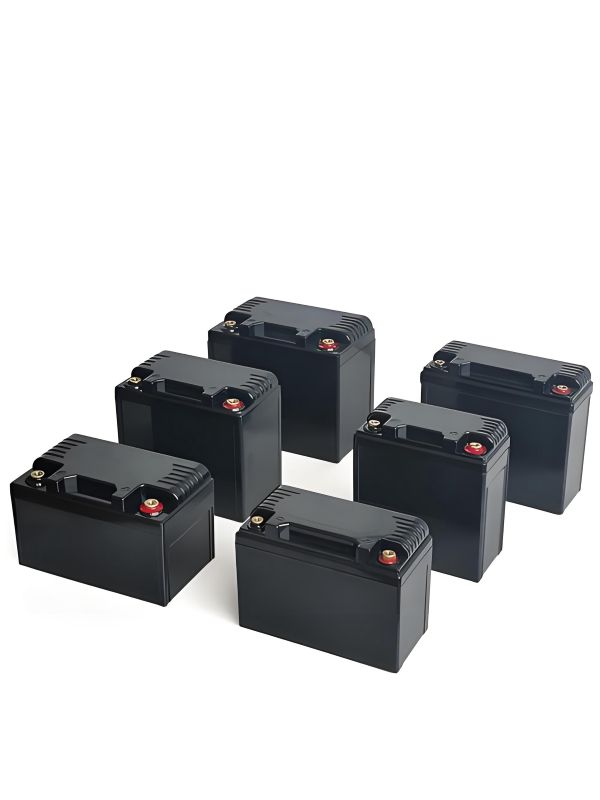
The Challenge: Vibration-induced leaks in PE casings elevated scrap rates to 15%, jeopardizing EV production timelines.
Custom Solution: Implementation of a 16KW servo-controlled custom hot plate welding machine with zoned heating (200-280°C) and 60 psi sealing pressure, ensuring full compliance with ISO 21307 for butt fusion.
Quantified Outcomes: Yield increased to 99.5%, cycle times reduced by 30% (from 45s to 31s), and ROI achieved in 8 months, resulting in annual savings of $150,000. [Source: Dizo Sonics Internal Audit 2025]
Before/After Metrics:
- Scrap: 15% → 0.5%
- Throughput: +28%
Medical Device Application for Fluid Cartridges
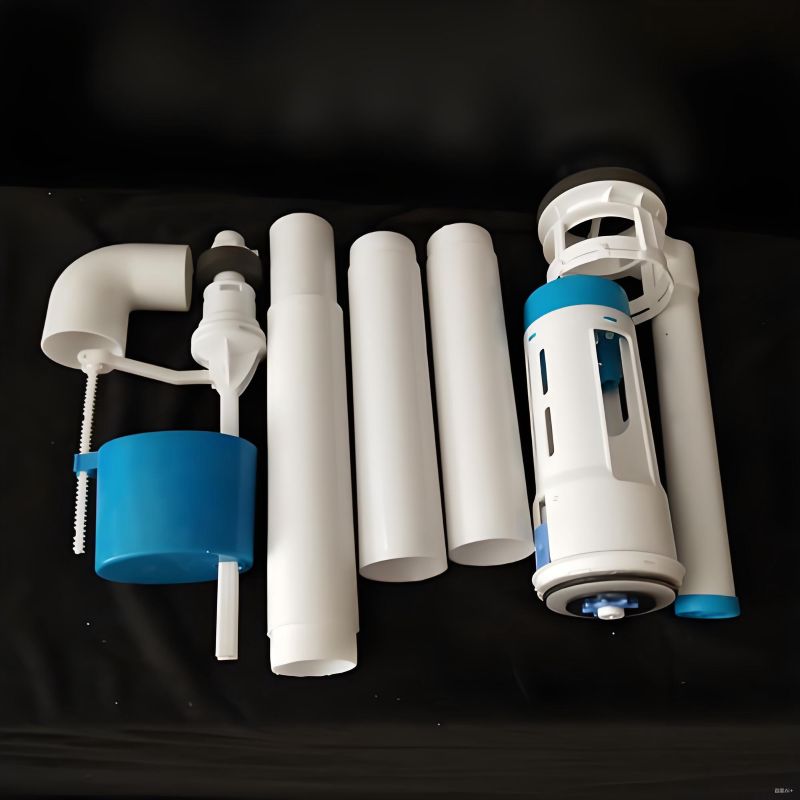
The Challenge: PP cartridge failures under ISO 13485 sterilization protocols led to 12% leak rates.
Custom Solution: Deployment of a compact 220V custom hot plate welding machine featuring a 1200mm² platen and real-time pressure monitoring (50-80 psi).
Quantified Outcomes: Seal integrity reached <0.01ml/min, output boosted by 25%, and recalls eliminated over an 18-month period. [Source: Dizo Sonics Internal Audit 2025]
Electronics Case for Consumer Product Enclosures
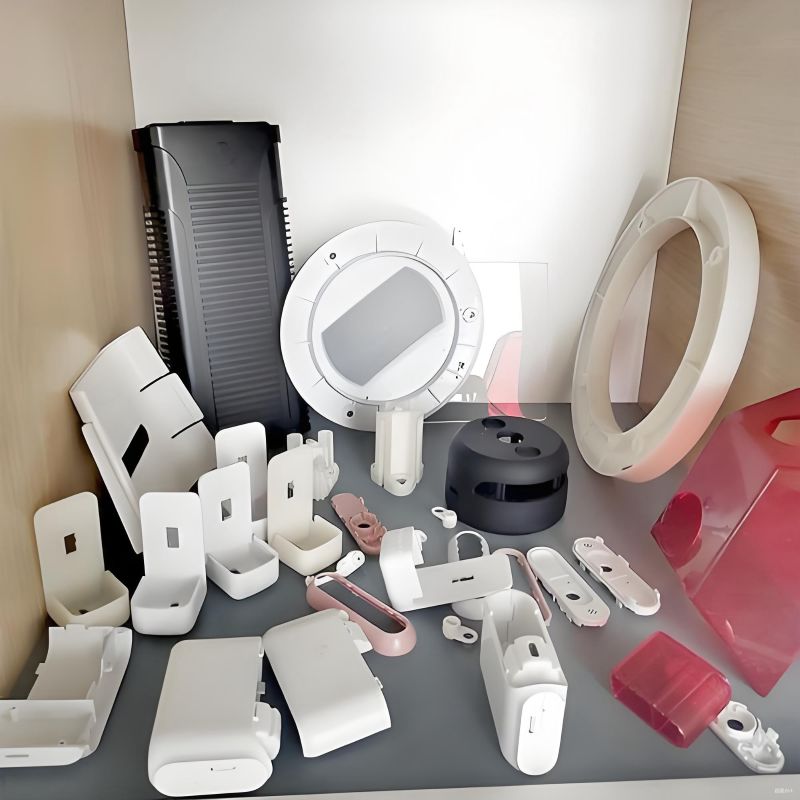
The Challenge: ABS enclosure flash issues compromised aesthetics, driving rework rates to 20%.
Custom Solution: Automated hot plate welding plastic line with ASTM D2564 validation and quick-change tooling.
Quantified Outcomes: TCO reduced by 20%, uptime improved to 95%, transforming production bottlenecks into efficiencies.
Selecting the Right Custom Hot Plate Welding Machine Supplier
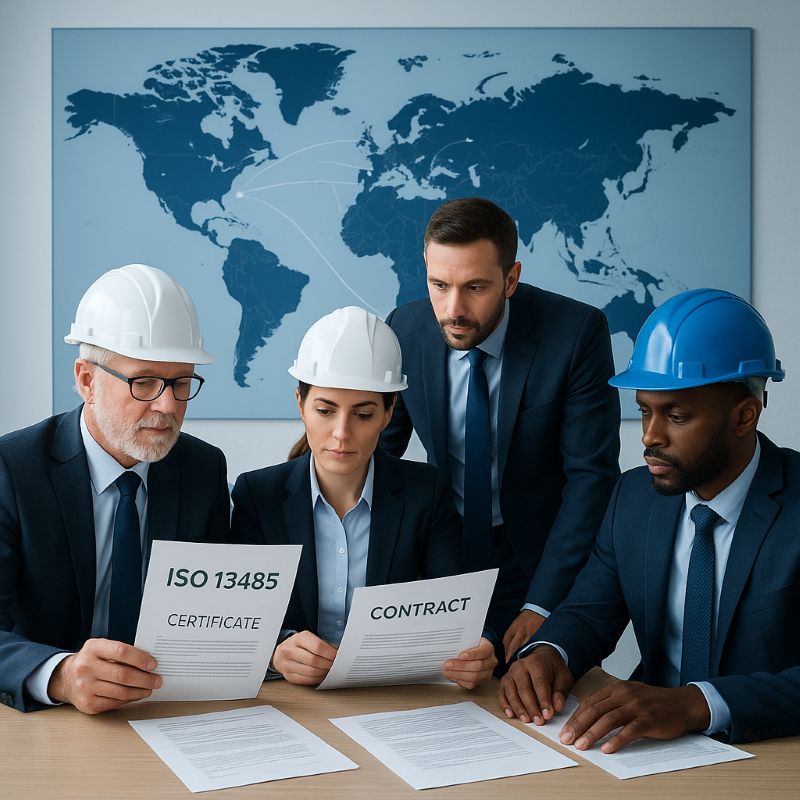
Must-Have Credentials: Experience, Certs, and Support
Choose custom hot plate welding machine manufacturers with 500+ installations and sector-specific certifications: ISO 13485 (medtech sterility) and IATF 16949 (auto quality). Look for <24-hour response and local prototyping to ease integration.
Supplier Red Flags and Contract Safeguards
Steer clear of vendors with ambiguous MOQs (>5 units unjustified) or missing ASTM F2620 testing---both risk leak-proof integrity. Insist on SLAs for 99% uptime, IP protection clauses, and third-party audits per DVS 2207/1.
Supplier Vetting Checklist:
- Certifications (ISO/ASTM): Request documentation for ISO 13485 and IATF 16949 to confirm sector-specific compliance.
- Lead Times (<12 weeks): Demand prototype evidence to validate delivery timelines.
- Support (Global, 24/7): Assess network coverage and response protocols for ongoing maintenance.
- Custom References (3+ Similar Cases): Review case studies [link to relevant examples] for quantifiable outcomes like ROI improvements.
Future-Proofing Investments in Custom Hot Plate Welding Machines
AI and IoT for Real-Time Process Optimization
AI algorithms auto-adjust melt depth and pressure via spectral analysis, slashing defects by 20% in pilots (RSI 2025). Coupled with IoT monitoring, this predicts 15% energy savings---perfect for variable loads in auto/medtech.
Eco-Conscious Designs and Sustainable Materials
Zoned platens optimized for bio-PE cut power 20% while meeting EU green directives and ISO 23512 eco-requirements, enabling recycled content without joint compromise. The hot plate welding plastic sector is set for 7.9% CAGR through 2033.
AI and Sustainability: The 2025 Fusion
Hybrid gasless systems with IoT handles sustainable plastics efficiently (Weldex 2025). While AI setup costs exist, phased rollout maximizes ROI in volume settings.
Horizon Scan for Emerging Trends:
- AI Wins: Predictive maintenance via machine learning, achieving 25% downtime reductions in automated lines.
- Green Shifts: Low-VOC platens supporting net-zero objectives, aligned with EV-driven demand growth.
- Scalability: Modular AI configurations enabling 2x volume ramps without redesign.
Next Steps for Custom Hot Plate Welding Machine Decisions
Building a Decision Framework Tailored to Your Operation
Evaluate part geometry (large or curved? Prioritize hot plate for broad contact), compliance needs (ISO-certified for medtech/auto?), and key metrics (target ROI under 12 months via TCO analysis). This structured approach minimizes selection risks, accelerating implementation for leak-proof joins.
Comprehensive FAQ for Hot Plate Welding Decisions
Q: What's the typical price for a custom hot plate welding machine?
A: Ranges from $50,000 to $200,000 in 2025, depending on automation levels (e.g., $75,000 base plus $50,000 for servo upgrades), with ROI modeling projecting 6-12 month payback per industry benchmarks.
Q: How long is the lead time for custom delivery?
A: Typically 6-12 weeks after specifications, with prototypes available in 4 weeks using modular designs.
Q: What materials are compatible with hot plate welding plastic?
A: Thermoplastics such as PP, ABS, and PE; always validate blends per ASTM D2564 protocols to ensure bond integrity.
Q: What are energy efficiency tips for these machines?
A: Choose 2025 zoned models drawing 10-16KW for 20% savings; integrate AI for adaptive control in variable operations.
Q: What warranty and support options are available?
A: Standard 2-year warranty with lifetime technical access and global response under 24 hours.
Q: How do I find a custom hot plate welding machine near me?
A: Look for manufacturers with global networks for local prototyping and support, ensuring <12-week lead times.
Q: How can I request a sample test?
A: Submit part specifications for a complimentary process audit to validate compatibility and performance.
Book a complimentary process audit to address your specific questions with expert guidance.
Key Terms Glossary
- Platen: The heated plate (200-300°C) that melts interfaces for molecular bonding.
- Hermetic Seal: An impermeable joint preventing leaks below 0.1ml/min in fluid applications.
- TCO (Total Cost of Ownership): Full lifecycle expenses, including capital and operational costs.
- Servo Drive: Precision motor providing ±1% control over parameters like pressure and time.

Conclusion: Achieving Leak-Proof Plastic Joins with Custom Hot Plate Welding Machines
This guide has dissected core challenges like inconsistent seals and high rework costs, compared methods for balanced strength and speed, and outlined integration strategies backed by standards such as ISO 23512 and ASTM D2564---equipping you with a blueprint for precision welding in automotive, medical, and electronics applications. Real-world cases demonstrate achievable outcomes, including 99% yields and 20% TCO reductions, while 2025 trends like AI optimization promise sustained ROI.
Ready to address your production inefficiencies? Get your free ROI analysis to tailor a solution that delivers enduring results.
Get Your Free ROI Analysis