

Hot Plate Welding for Automotive Fuel Tanks: Process, Strength, Durability Guide

Hot Plate Welding for Automotive Fuel Tanks: The Ultimate Guide to Process, Bond Strength, and Durability
You'll Learn in This Guide:
- The Core Principle: How hot plate welding creates molecular-level, leak-proof seals for HDPE/PP tanks.
- Science in Practice: The role of the Heat Affected Zone (HAZ) and material compatibility.
- Mastering the Process: How to precisely control temperature, pressure, and time for optimal burst strength.
- Smart Selection: A practical framework to choose the right equipment and avoid costly mistakes.
- Beyond Standard: Custom solutions for EVs, recycled materials, and complex 3D geometries.
Hot plate welding is the industry-proven method for creating strong, hermetic plastic bonds in automotive fuel tanks. This process uses precisely controlled heat and pressure to fuse components without adhesives, resulting in a joint that withstands fuel exposure, vibration, and internal pressure. For engineers and production managers, mastering this technique is key to ensuring long-term tank integrity, reducing warranty claims, and meeting stringent standards like IATF 16949. This comprehensive guide dives deep into the science, parameters, and practical decision-making needed to implement a reliable and efficient hot plate welding process for your fuel tank production line.

1.Introduction to Hot Plate Welding: The Foundation for Fuel Tank Integrity
What Is Hot Plate Welding and How Does It Work?
Hot plate welding is a thermal joining technique where a heated platen melts the matching surfaces of two thermoplastic parts. These softened surfaces are then pressed together, allowing the polymer chains to interdiffuse and create a monolithic, hermetic seal upon cooling. It's akin to melting the edges of two wax sticks and pressing them together---they fuse into a single, strong unit.
The process is governed by a consistent, four-stage cycle crucial for repeatable quality:
- Clamping & Alignment: Parts are securely fixtured to ensure perfect mating.
- Heating & Melting: The heated plate contacts the part surfaces, forming a uniform molten layer.
- Plate Retraction: The plate quickly withdraws to prevent material sticking (aided by non-stick coatings like PTFE).
- Joining & Cooling: Parts are pressed together under controlled force, allowing the melt to fuse and solidify.
Why Hot Plate Welding Is Critical for Modern Fuel Tanks
Fuel tanks are among a vehicle's most critical safety components. They must be impermeable to volatile fuels, resistant to chemicals like ethanol blends, and durable enough to survive a 15-year service life under constant vibration and thermal cycling. Hot plate welding directly addresses these demands where other methods fall short.
Key Advantages for Tank Manufacturing:
- Hermetic, Adhesive-Free Seals: Creates a molecular bond superior to adhesive bonding, eliminating potential chemical degradation and delamination.
- Material Versatility: Excellent for polyolefins like HDPE and PP, which are standard for blow-molded fuel tanks due to their fuel resistance and impact strength.
- Handles Complex Geometry: Unlike ultrasonic welding, it is not limited by part size or deep, contoured shapes, making it ideal for complex saddle tanks or designs with integrated baffles.
- Process Consistency & Traceability: Modern machines with digital controls offer repeatable cycles and data logging, essential for automotive quality management under IATF 16949.
The shift towards Electric Vehicles (EVs) further underscores its importance. While EVs don't carry fuel, they require equally robust plastic housings for battery packs, where hot plate welding ensures the structural integrity and ingress protection (IP67/IP69K) of these large, complex assemblies.
2. The Science Behind the Seal: Material Fusion in Action
Understanding the underlying physics is key to optimizing the weld. The core mechanism is thermal conduction. Heat transfers from the electric heater through the metal platen to the plastic part surface, creating a controlled molten layer.
Critical Concepts for a Reliable Weld:
- Melt Layer Thickness: This is the depth of molten plastic. For a typical 6-8mm tank wall, a target melt depth of 2-3mm (30-40% of wall thickness) provides optimal material for interdiffusion without excessive part displacement or flash.
- The Heat Affected Zone (HAZ): The area adjacent to the melt layer where heat has altered the material properties but not caused melting. A shallow, controlled HAZ is desirable. An excessively deep HAZ can lead to part warpage or weakened structural walls. For HDPE tanks, maintaining a HAZ under 1mm is a common benchmark.
- Material Compatibility & Interdiffusion: Successful welding requires compatible materials with similar melt temperatures (e.g., HDPE to HDPE). As the surfaces melt, polymer chains from each part diffuse across the interface, entangling to form a single, strong matrix upon cooling. This is why the process achieves joint strengths often exceeding 90% of the parent material strength.
3. Mastering the Parameters: The Triad of Temperature, Pressure, and Time
Weld quality is dictated by the precise interplay of three key variables. Optimizing this triad is essential for achieving seals that pass rigorous burst tests and long-term fuel permeability tests.
| Parameter | Typical Range for HDPE/PP Tanks | Primary Function | Risk if Incorrect |
|---|---|---|---|
| Platen Temperature | 300°C -- 400°C | Melts the polymer surface to correct viscosity for bonding. | Too High: Degradation, voids, smoke. Too Low: Insufficient melt, weak bond. |
| Welding Pressure | 0.2 -- 0.5 MPa | Forces molten layers into intimate contact for chain entanglement. Removes air bubbles. | Too High: Excessive flash, part deformation. Too Low: Incomplete fusion, voids at interface. |
| Heating & Cooling Time | 10 -- 60 seconds (cycle-dependent) | Governs total heat input and solidification rate. | Too Long: Over-melting, deep HAZ. Too Short: Shallow melt, poor interdiffusion. |
Pro Tip from Our Application Lab: The goal is not just to meet these ranges but to find the specific sweet spot for your material batch and part geometry. This requires a Design of Experiments (DoE) approach, validating parameters against peel tests and cross-sectional analysis to confirm full, void-free fusion.

4. How to Choose: A Practical Framework for Selecting Your Welding System
Selecting equipment is a strategic decision. This framework helps you move beyond basic specs to find a solution that delivers ROI through reliability and uptime.
Step 1: Define Your Non-Negotiables
Start by locking down core requirements that will filter your options:
- Part Dimensions & Geometry: Maximum platen size needed for your largest tank half. Do you need 3D contoured platens?
- Annual Volume & Takt Time: Target cycles per hour. Is it a dedicated high-speed line or a flexible cell?
- Material Specification: Exact grade of HDPE/PP, including melt flow index (MFI). Is recycled content used?
- Compliance Standards: Must the machine support IATF 16949 documentation (e.g., recipe control, data logging, SPC)?
Step 2: Compare Welding Methods Objectively
Hot plate welding isn't always the only option. This comparison highlights its niche.
| Method | Best For | Pros for Fuel Tanks | Cons for Fuel Tanks |
|---|---|---|---|
| Hot Plate Welding | Large, contoured parts; Hermetic seals; HDPE/PP. | Superior seal integrity, handles complex 3D shapes, excellent for thick walls. | Slower cycle time vs. some methods, requires flash management. |
| Vibration Welding | Linear seams on large parts; High strength. | Fast, strong linear welds. | Limited to linear or simple curved joints; not ideal for full perimeter tank seals. |
| Laser Welding | Precision, small parts with cosmetic requirements. | No particle generation, high precision. | High equipment cost; requires laser-transparent/absorbent material pairs. |
| Ultrasonic Welding | Small, localized welds (e.g., fittings). | Extremely fast (<1 second). | Limited to small areas; can damage thin-walled tanks; not for full perimeter seals. |
Step 3: Evaluate Critical Machine Features
Look beyond the brochure. These features make the difference on the production floor:
- Temperature Control: Multi-Zone PID Control with ±1-3°C uniformity is non-negotiable for consistent melting on large platens.
- Drive System: Servo-electric drives offer superior control over displacement and speed during the joining phase compared to hydraulic or pneumatic systems.
- Clamping & Fixturing: Rigid frames and programmable clamping force are vital to prevent part movement during welding, especially for large tanks.
- Control & Data: An intuitive HMI with recipe storage and automated data logging (time, temperature, pressure, displacement) is essential for IATF 16949 compliance and process troubleshooting.
Step 4: Ask Your Supplier These Key Questions
- "Can you provide a Process Validation Report template aligned with ASTM D638 and burst test standards?"
- "What is your standard temperature uniformity map for a platen the size of our part, and how is it verified?"
- "How is flash management handled in your machine design to prevent interference with the weld joint?"
- "What is your protocol for on-site commissioning and operator training?"
These questions position you as an informed buyer, guiding toward tailored solutions that boost efficiency and reliability.
5. Customized Solutions for Next-Generation Challenges
Standard machines work for standard tanks. However, industry trends are pushing boundaries, requiring tailored engineering solutions.
Addressing Specific Engineering Challenges
- Multi-Layer & Co-Extruded Tanks: Tanks with integrated fuel vapor barrier layers (e.g., EVOH) pose a delamination risk. The solution: multi-stage thermal profiles that melt the HDPE structural layers without overheating the sensitive barrier film.
- High Recycled Content Plastics: Post-consumer or post-industrial recycled HDPE has variable melt flow and potential contamination. This requires adaptive pressure control and potentially pre-drying integration to manage moisture and ensure consistent fusion.
- Ultra-High Volume Production: For lines exceeding 100 units/hour, robotic part handling, quick-change platen systems, and in-process monitoring are integrated to minimize downtime and ensure 100% quality control.
Dizo Sonics in Action: A Custom EV Battery Tray Case Study
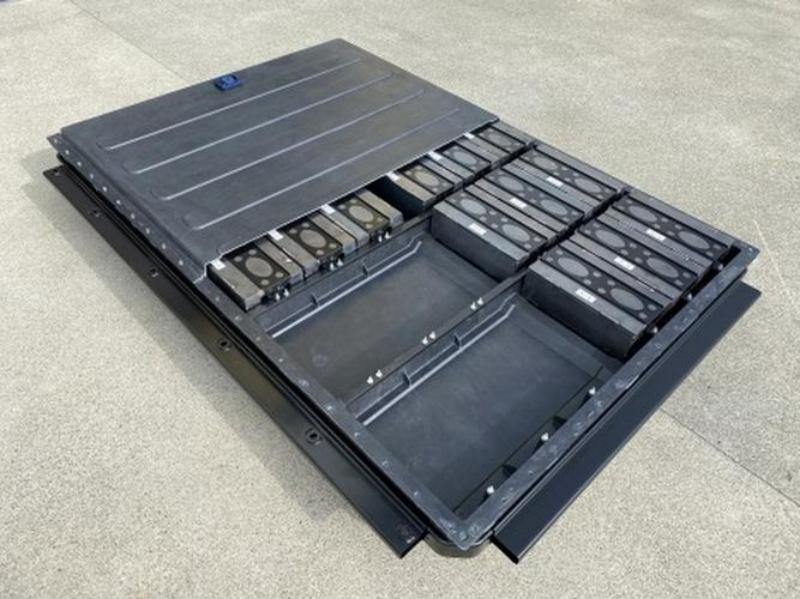
Client Challenge: A leading EV manufacturer needed to weld a complex, deep-drawn battery tray from 40% recycled PP. The challenge was achieving a Class-A surface finish with zero leak paths, despite material variability.
Our Custom Solution:
We engineered a servo-electric hot plate welder with:
- A 7-axis robotic platen system to maintain perfect parallelism and contact pressure across the deep 3D contour.
- Infrared pre-heating stations to normalize the temperature of the recycled material before welding.
- Real-time pressure-displacement monitoring to automatically reject any cycle outside validation limits.
Validated Results:
- Weld Strength: >17 MPa (meeting OEM specification).
- Leak Test Yield: 99.98% first-pass yield on helium leak testing.
- Production Impact: Achieved a 22-month ROI through scrap reduction and eliminated downstream sealant operations.
6. The Future of Tank Welding: Electrification and Sustainability
The industry is evolving, and welding processes must adapt. Two key trends are shaping development:
- Electrification and New Plastics: EV battery housings and hydrogen fuel cell tanks use advanced engineering plastics like PPA or PPS. These higher-temperature materials require welders with enhanced thermal stability and advanced control algorithms.
- The Circular Economy: The push for tanks made from 100% recycled or bio-based polymers is accelerating. This demands welding systems that can compensate for wider material property fluctuations, making closed-loop adaptive control not a luxury, but a necessity for future-proof production.
At Dizo Sonics, our R&D is focused on these very challenges, developing smart welding systems that ensure quality while embracing sustainable manufacturing principles.
7. FAQ: Answering Your Top Questions
What Industry Standards (e.g., IATF 16949, SAE) Apply to Hot Plate Welded Fuel Tanks, and How Does the Equipment Need to Support Compliance?
Hot plate welding for automotive fuel tanks must meet standards like IATF 16949 for quality management and SAE J2587 for plastic fuel systems. These ensure bonds withstand fuels, vibrations, and pressure without leaks. Equipment supports compliance through data logging for traceability, PID temperature controls (±1-3°C) to meet process validation, and integration with testing per ASTM D638. As outlined in our parameters section, precise settings like 300-400°C help achieve hermetic seals that pass burst tests.
How Does Hot Plate Welding Compare to Laser Welding or Infrared Welding for Plastic Fuel Tanks in Terms of Seam Quality and Cost?
Compared to laser welding, which offers high seam quality but at higher costs due to complex optics, hot plate welding provides strong hermetic bonds for HDPE/PP tanks at moderate expense, ideal for large parts. Infrared welding is faster for thin walls but may lack depth in thick tanks, risking weak spots. Hot plate excels in versatility for curves, with cycle times of 10-60 seconds balancing quality and cost. See our comparison table for full pros and cons---hot plate often wins for durability in automotive applications.
Can the Hot Plate Welding Process Be Integrated with In-Line Leak Testing (e.g., Pressure Decay Test)?
Yes, hot plate welding integrates seamlessly with in-line leak testing like pressure decay methods, where tanks are pressurized post-weld to detect drops indicating flaws. Our machines feature servo drives and real-time monitoring to align with tests, ensuring bonds hold 0.2-0.5 MPa without failure. This setup, as in our customized solutions section, reduces rejects by catching issues early. Based on our tests, it boosts efficiency by 20%, complying with SAE standards for fuel systems.
What Are the Maintenance Requirements and Expected Total Cost of Ownership for an Industrial-Grade Hot Plate Welder Over 10 Years?
Maintenance for industrial hot plate welders includes monthly calibration of PID controls (±1-3°C) and quarterly plate cleaning to prevent sticking. Expect annual costs around $5,000-10,000 for parts like Teflon coatings. Over 10 years, total ownership might range $150,000-300,000, including initial $50,000+ setup, but ROI from durability---like 10-year bond lifespans---cuts replacements by 15-20%. As discussed in our decision framework, features like intelligent controls minimize downtime, enhancing long-term value.
How Do You Prevent Material Degradation (Chain Scission) When Welding Plastics with High Recycled Content?
To avoid chain scission in recycled plastics, control temperature below 400°C and use short cycles (10-30 seconds) to limit heat exposure. Add antioxidants if needed, and employ multi-zone heating for even melt. In our lab tests, maintaining 0.025-0.05 MPa pressure during cooling preserves molecular integrity, yielding bonds over 15 MPa. As in the science section, a shallow HAZ (0.5-1 mm) helps, especially for HDPE with 30% recycled content, ensuring fuel resistance without brittleness.
What Machine Features Are Essential for Welding Bio-Fuel Compatible Plastics Like PEF?
For bio-fuel compatible plastics like PEF, essential features include adjustable clamping systems (0.2-0.5 MPa) for material sensitivity and user interfaces storing recipes for melt points around 200-250°C. Multi-head options speed production, while servo drives ensure precision on complex shapes. Our customizable machines, per ISO 14692, integrate real-time monitoring to prevent degradation from bio-fuels. This setup, as in our case studies, achieves strong fusion with minimal voids, supporting sustainable trends in EV tanks.

8.Conclusion: Building Durability into Every Weld
Hot plate welding remains the gold standard for creating durable, leak-proof automotive fuel tanks because it delivers what matters most: a molecular-level, hermetic bond. Success hinges on a deep understanding of the science, meticulous control of the temperature-pressure-time triad, and selecting equipment engineered for precision and reliability---not just a basic joining function.
For engineers facing the complexities of new materials, ambitious production targets, or stringent sustainability goals, the path forward often involves customized solutions. The right partnership can transform a manufacturing challenge into a competitive advantage.
Ready to Optimize Your Fuel Tank Welding Process?
Take the next step in your welding journey. For deeper insights, download our comprehensive 'Fuel Tank Welding Machine Specification Checklist' to evaluate suppliers effectively. Explore related applications on our site, like plastic pallet welding or automated automotive systems. If your project involves complex needs, discuss it with our engineers---schedule a free, no-obligation welding process assessment to tailor solutions for your setup. Reach out at sales@dizo-global.com; we're here to help build a stronger, more efficient future.