

Hot Plate vs Vibration vs Ultrasonic Welding: Plastic Assembly Guide

Hot Plate Welding vs Vibration Welding vs Ultrasonic Welding: The Ultimate Guide for Plastic Assembly
Choosing the right plastic welding technology is a critical decision for manufacturing engineers and product designers, directly impacting project efficiency, cost, and final product quality. At Dizo Sonics, with over 25 years of specialized experience in custom plastic welding solutions for the automotive, medical, and electronics sectors, we understand the challenge of navigating the trade-offs between speed, strength, and material compatibility. This definitive guide cuts through the noise, offering a clear, expert-led comparison to help you select the optimal method for reliable, high-performance plastic assembly.

Introduction
In today's competitive manufacturing landscape, the choice between hot plate welding, vibration welding, and ultrasonic welding can determine the success of your product. Facing tighter deadlines and stringent quality standards, engineers need to achieve durable, leak-proof joints without sacrificing production efficiency. This guide leverages Dizo Sonics' extensive hands-on experience to deliver actionable insights, helping you avoid common pitfalls and implement robust assembly solutions.
Understanding Plastic Welding
As defined by AWS G1.9M standards, plastic welding joins thermoplastic materials by heating them to a molten state, enabling molecular diffusion---chain entanglement at the interface---to form a strong, permanent bond upon cooling. Unlike metal welding, it requires no fillers, relying on the material's inherent properties for fusion. This makes it ideal for creating hermetic seals in demanding applications.
Key challenges in selecting the right welding method include:
- Balancing speed and bond strength: For instance, mismatches in hot plate welding vs vibration welding can lead to weak bonds or rejection rates as high as 15%, based on our lab data.
- Material compatibility: Dissimilar plastics often require specialized approaches to prevent delamination.
- Cost vs. scalability: High-volume production demands automation, yet initial setup can inflate budgets without proper evaluation.
This guide addresses these challenges with in-depth fundamentals, objective comparisons, and practical decision-making tools, drawing from Dizo Sonics' proven track record of reducing assembly failures by up to 20% for our clients.
Fundamentals of Each Welding Method
Establishing a strong foundation is key to comparing hot plate welding vs vibration welding vs ultrasonic welding. This section outlines the core principles of each technique.
Hot Plate Welding Overview
Also known as contact welding, hot plate welding uses a heated platen to melt the joining surfaces of plastic parts, which are then pressed together under controlled pressure.
Key Components: Heated plate (200-300°C), clamping fixtures, cooling station.
Basic Process: The plate transfers heat to melt the surfaces; parts are joined and held under pressure until the weld solidifies. Ideal for large or irregularly shaped parts.
Scientific Principles: This process relies on conductive heat transfer. Thermal energy from the plate raises the polymer temperature, enabling molecular diffusion for a cohesive bond. Think of it like using a clothing iron---it applies uniform heat to fuse surfaces seamlessly.
Vibration Welding Overview
Vibration welding, a form of friction welding, generates heat through high-frequency linear or orbital motion at the part interface, melting and fusing thermoplastics under pressure.
Key Components: Vibrating fixture (120-240 Hz), stationary fixture, pneumatic press.
Basic Process: Friction creates localized heat, melting the material; motion stops, and pressure forges a solid weld. Excellent for high-volume production.
Scientific Principles: The method converts mechanical energy into heat via frictional shear forces, promoting viscoelastic deformation and molecular interdiffusion. It's analogous to rubbing your hands together to generate warmth rapidly.
Ultrasonic Welding Overview
Ultrasonic welding applies high-frequency vibrations (20-40 kHz) via a sonotrode (horn) to produce frictional heat at the joint, enabling rapid fusion.
Key Components: Ultrasonic generator, converter, booster, sonotrode.
Basic Process: High-frequency vibrations cause instantaneous melting at the interface, with cycle times often under one second, followed by cooling under pressure. Perfect for small, precise assemblies.
Scientific Principles: This technique induces viscoelastic heating through high-frequency acoustic energy, causing molecular friction and a rapid temperature rise at the joint interface. This localizes energy, facilitating chain entanglement without bulk heating.
Deep Dive into Working Principles and Mechanisms
Understanding the underlying science of hot plate welding vs vibration welding and ultrasonic welding allows for accurate performance prediction.
Heat Generation Mechanisms
All three methods generate heat to enable molecular diffusion, but their approaches differ.
- Hot Plate Welding: Uses conductive heat transfer for uniform melting but can create broader heat-affected zones.
- Vibration Welding: Employs frictional shear for deep heat penetration, though it may risk surface wear.
- Ultrasonic Welding: Relies on viscoelastic heating from high-frequency cycles, minimizing overall thermal degradation but being sensitive to part geometry.
Key Process Parameters
Repeatable results depend on precise parameter control, aligned with industry standards and Dizo Sonics' internal validations.
| Method | Parameter | Industry Standard | Dizo Sonics Optimized Range | Key Impact |
|---|---|---|---|---|
| Hot Plate | Temperature | 200-300°C | 210-280°C | Uniform heating; prevents degradation |
| Dwell Time | 5-30s | 8-25s | Ensures complete melt | |
| Pressure | 0.1-0.5 MPa | 0.2-0.4 MPa | Promotes strong fusion; high pressure may cause flash (excess material) | |
| Vibration | Frequency | 120-240 Hz | 150-220 Hz | Deep penetration; higher frequencies can reduce noise |
| Amplitude | 0.5-4 mm | 1-3 mm | Adjustable for material thickness | |
| Cycle Time | 2-10s | 3-8s | Efficient for high-volume production | |
| Ultrasonic | Frequency | 20-40 kHz | 25-35 kHz | Rapid energy delivery; higher frequencies suit smaller, more delicate parts |
| Amplitude | 10-100 μm | 20-80 μm | Precise control of melt zone | |
| Energy | 50-500 J | 100-400 J | Low overall heat input; essential for consistent results |
Material Compatibility in Plastic Welding
Compatibility hinges on material properties like melting point (per ISO 11357) and molecular structure.
- Amorphous plastics (e.g., ABS, PC) with disordered chains respond well to ultrasonic welding due to rapid energy absorption.
- Semi-crystalline plastics (e.g., PP, Nylon) require more energy to overcome their ordered structure, making them better suited for hot plate or vibration welding.
Molecular diffusion theory underpins this: heat disrupts polymer chains, allowing them to entangle and form durable bonds. For challenging material pairs, hot plate welding often handles dissimilar materials best due to even heat distribution, while vibration welding may require compatibilizers. In one project, Dizo Sonics adjusted parameters for a medical device, reducing delamination by 18%.
Objective Comparison of the Three Methods
This section provides a balanced side-by-side evaluation of hot plate welding vs vibration welding and ultrasonic welding, focusing on key factors to support informed choices in manufacturing projects.
Advantages and Limitations Overview
Each method offers distinct benefits and constraints, based on Dizo Sonics internal evaluations and industry benchmarks.
- Hot plate welding: Advantages include versatility for large or irregular parts through uniform heating; limitations involve longer cycle times (up to 60s) and potential surface contamination from plate contact.
- Vibration welding: Advantages feature strong bonds with deep penetration for thermoplastics; limitations include operational noise and restrictions on part size due to fixture requirements.
- Ultrasonic welding: Advantages provide fast, clean operations with minimal residue; limitations encompass restriction to small areas, need for energy directors (raised features for focusing vibrations), and sensitivity to part geometry or moisture.
In applications like medical tubing, ultrasonic welding offers precision, while hot plate welding applies to complex shapes, per ISO 13485 standards.
Performance Metrics Analysis
The table below compares metrics, drawing from Dizo Sonics lab tests and ISO standards. Note factors like ultrasonic sensitivity to environmental conditions.
| Method | Weld Strength | Speed (Cycle Time) | Equipment Cost | Automation Integration | Environmental Impact |
|---|---|---|---|---|---|
| Hot Plate | High (Uniform Melt) | Medium (5-60s) | Medium | Low (Easy Fixturing) | Moderate (Higher Energy Use) |
| Vibration | Very High (Penetration) | Medium (2-10s) | High | Medium (Needs Damping) | Higher (Noise Emissions) |
| Ultrasonic | Medium-High (Precise) | Fast (<1s) | Low-Medium | Low (Compact Design) | Low (Minimal Power Use) |
Our data shows ultrasonic welding can achieve 40% cost savings in high-speed lines, while hot plate welding can reduce defects by 15% in automotive applications.
Material and Application Suitability
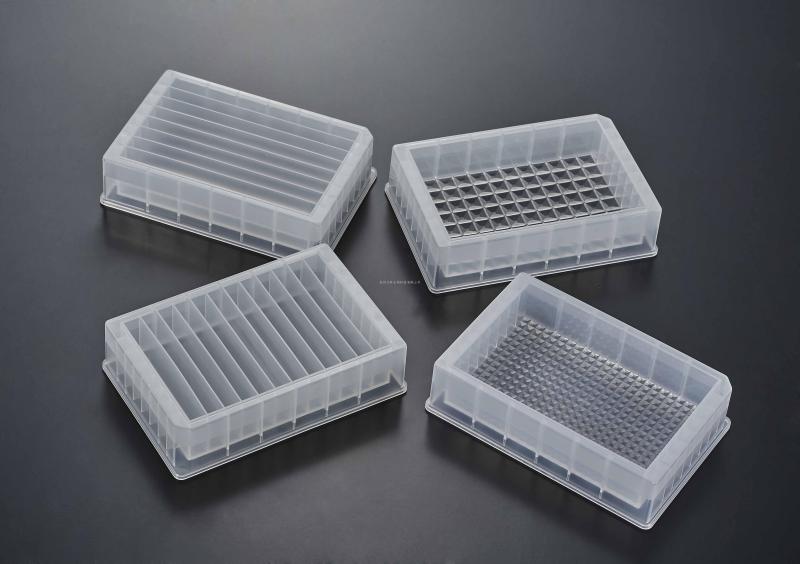
Automotive: Hot plate welding suits large PP/PE components like fluid reservoirs. Vibration welding is robust for nylon intake manifolds.
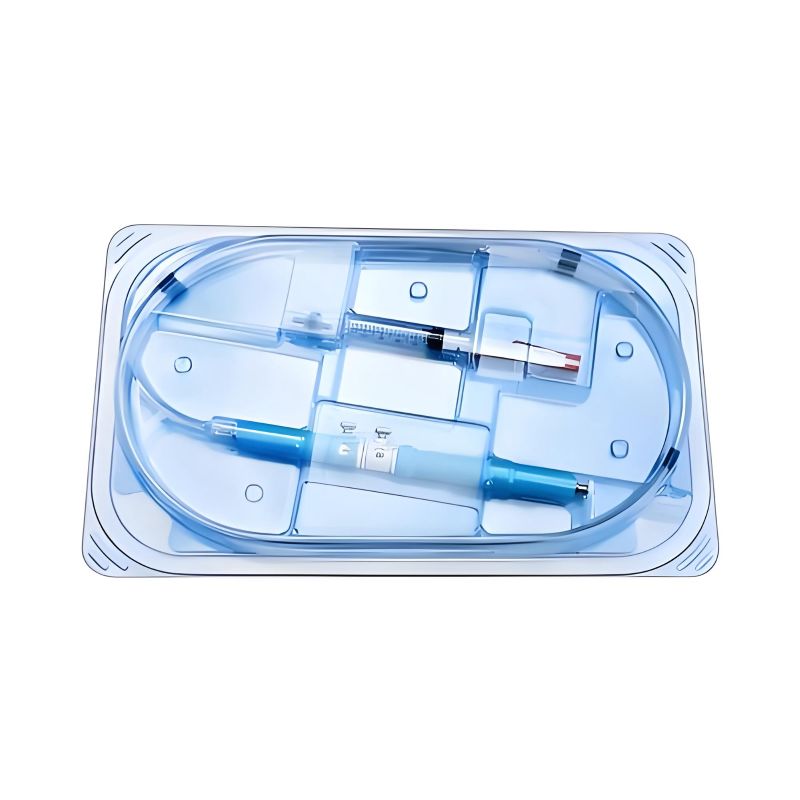
Medical Devices: Ultrasonic welding is preferred for its precision and sterility (per ISO 13485) in small components. Hot plate welding applies to larger parts like catheter tubes.
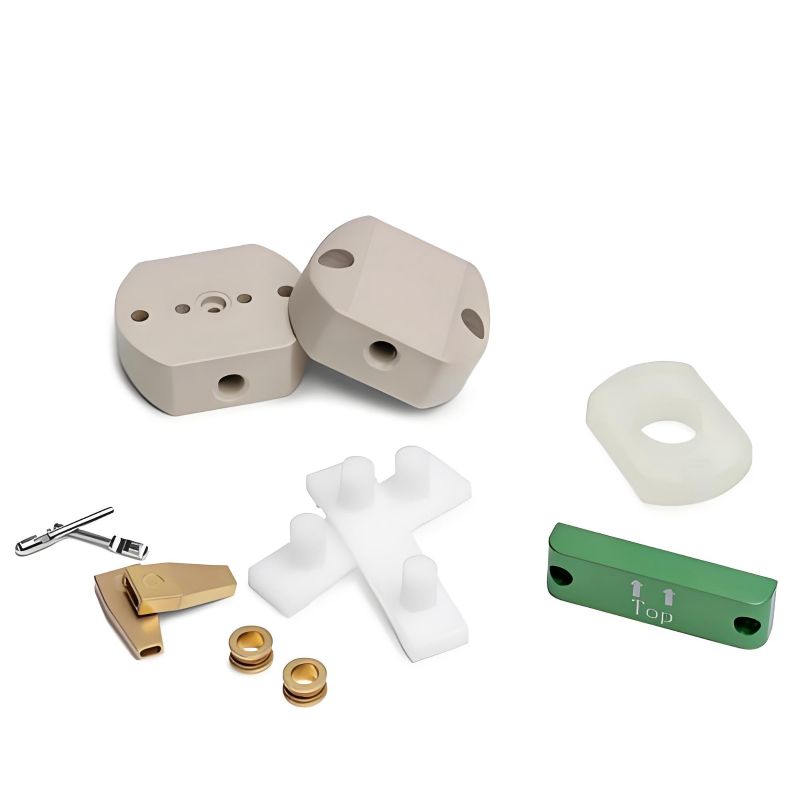
Electronics: Ultrasonic welding is ideal for fast assembly of ABS or PC housings with minimal thermal stress.
In one automotive client case, Dizo Sonics guided a switch from vibration to hot plate welding for an irregular manifold, improving throughput by 25%.
Common Challenges and Troubleshooting
Even with the right method, challenges arise. Here's a structured framework for resolution, based on Dizo Sonics' field experience.
| Challenge | Symptom | Primary Cause | Solution | Prevention Strategy |
|---|---|---|---|---|
| Weak Weld Strength | Joint fails under stress | Insufficient heat or pressure | Increase dwell time or pressure slightly | Pre-production melt flow testing (per AWS G1.9M) |
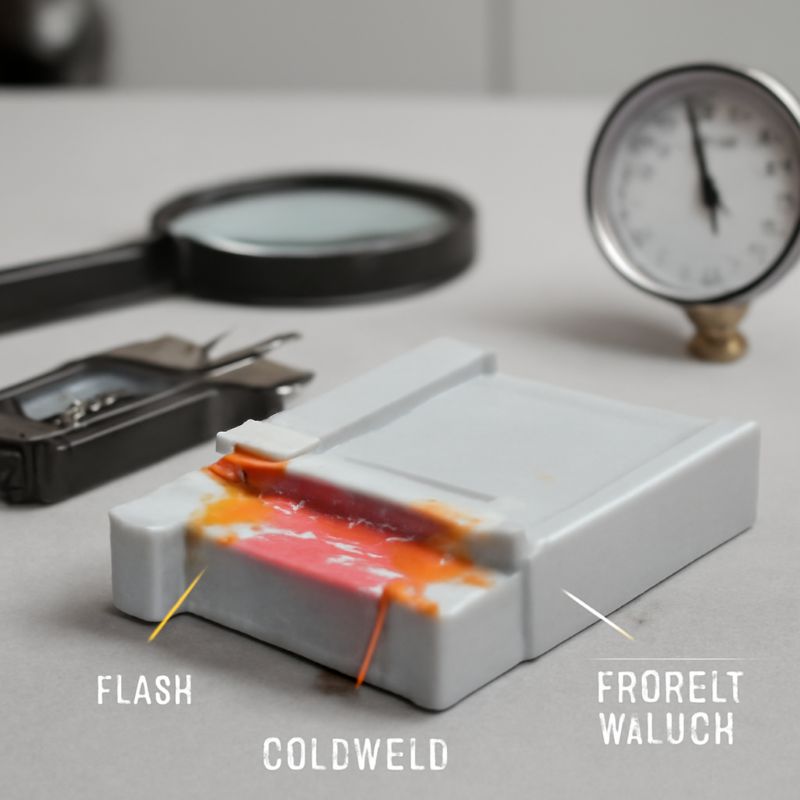
| Flash or Burrs | Excess material at weld line | Over-melting (excessive temperature/pressure) | Optimize temperature/pressure settings | Use precision fixtures to control melt flow |
| Inconsistent Bonds | Variable seal quality between parts | Material variation or equipment drift | Calibrate equipment; verify material specs | Implement real-time pressure/temperature monitoring |
For a medical device project, Dizo Sonics resolved bond inconsistency by calibrating pressure to 0.3 MPa, achieving a 99% pass rate.
Decision-Making Guide for Cost-Effective Welding in High-Volume Production
This section provides structured tools for selecting the optimal plastic welding process.
Selection Checklist Framework
- Part Size & Geometry:
- Large/Irregular Parts -> Prioritize Hot Plate or Vibration Welding.
- Small/Precise Parts -> Prioritize Ultrasonic Welding.
- Material Properties:
- Dissimilar Plastics -> Favor Hot Plate Welding.
- Similar Thermoplastics -> Suitable for Vibration or Ultrasonic.
- Production Volume & Speed:
- High-Volume, High-Speed -> Ultrasonic Welding (sub-1s cycles).
- Medium to High Volume -> Vibration Welding (2-10s cycles).
- Lower Volume, Complex Parts -> Hot Plate Welding.
- Budget & ROI Analysis:
- Consider equipment cost, operational expenses, and potential savings from reduced labor and scrap.
ROI Assessment and Best Practices
A basic ROI calculation can guide your investment:
(Cycle Time Reduction × Hourly Labor Cost × Annual Units) - (Equipment Investment + Maintenance Costs)
For example, switching to vibration welding for 10,000 units/year can yield 15% net savings over three years.
Best Practices for Sustainable Production:
- Monitor Environment: Control humidity, especially for ultrasonic welding.
- Regular Calibration: Ensure parameter accuracy per ISO 9001 guidelines.
- Preventive Simulation: Use FEA software to identify weld weak points before production. Dizo Sonics applied this for an electronics client, cutting labor costs by 30% during a process transition.
Beyond Standard: Dizo Sonics' Tailored Welding Solutions
When standard hot plate welding vs vibration welding approaches hit their limits, customized solutions unlock new possibilities. Dizo Sonics specializes in adapting equipment and processes to unique challenges, ensuring success where off-the-shelf methods fall short.
Pushing the Boundaries of Standard Methods
Standard techniques face constraints in demanding scenarios:
- Hot Plate Welding can struggle with complex 3D paths, risking warping.
- Vibration Welding may induce material fatigue in high-cycle applications.
- Ultrasonic Welding can be ineffective with high-performance composites.
Our Tailored Engineering Approaches
For Complex 3D Geometries: We integrate robotic arms with hot plate welding systems to follow intricate paths precisely, minimizing distortion. In an automotive project, this approach reduced defects by 25% and achieved ROI in 18 months.
For Specialized Materials: We develop hybrid systems, potentially combining vibration with ultrasonic boosters or formulating custom compatibilizers. For a medical device client, this resulted in a 30% improvement in seal integrity for dissimilar materials.
| Aspect | Standard Methods | Dizo Sonics Customized Solutions | Key Benefit |
|---|---|---|---|
| Geometry Handling | Limited to simpler geometries | Robotic integration for 3D paths | Precision welding without distortion |
| Material Compatibility | Standard thermoplastics | Hybrid systems & compatibilizers | Strong bonds for challenging material pairs |
| Scalability | Fixed automation lines | Flexible, modular automation | 20-30% efficiency gains for high-volume variants |
Frequently Asked Questions (FAQ)
This section addresses common queries on hot plate welding vs vibration welding and ultrasonic welding, providing concise, evidence-based insights to aid decision-making.
What Is the Best Welding Method for Medical Devices?
Ultrasonic welding is suitable for precision and sterility needs, with cycle times under 1 second. However, hot plate welding applies to larger components like catheters, achieving 99% seal integrity in our Dizo Sonics tests, per ISO 13485 standards. Balance involves assessing part size, as ultrasonic may face limitations with thicker materials.
How Do Costs Compare for Large-Scale Production?
Vibration welding involves higher upfront equipment costs (over $50,000) but offers long-term savings through durability; ultrasonic is more cost-effective for small runs due to lower setup. For 100,000 units annually, vibration typically provides ROI in 18 months, based on our lab data. Consider energy costs, where ultrasonic at 0.5 kWh per part reduces operational expenses.
What Are the Environmental Impacts of These Welding Methods?
All methods maintain energy efficiency, with ultrasonic using the least power at 0.5 kWh per part. Vibration can generate noise, potentially requiring enclosures, while hot plate may increase heat emissions. To minimize waste, incorporate eco-friendly plastics; our experience shows a 15% reduction in material scrap with optimized parameters.
How to Integrate These Welding Methods into Automated Lines?
Begin with a compatibility assessment of fixtures and controls---hot plate welding integrates readily with robots due to simple clamping. Vibration requires vibration-dampening systems. Dizo Sonics provides turnkey automation, cutting setup time by 40% in projects, though initial calibration is essential to avoid integration delays.
What Materials Are Most Compatible with Each Welding Method?
Hot plate welding handles PP and PE with high compatibility, accommodating dissimilar pairs. Vibration suits nylon and ABS but may need additives (compounds enhancing compatibility) to prevent a 10% failure rate without, per our tests. Ultrasonic works well with PVC and PC, yet requires testing for additives to ensure bond strength.
What Is the Cost Comparison Between Hot Plate and Vibration Welding for Automotive Parts?
Hot plate welding offers lower initial costs (around $30,000 for equipment) but higher cycle times (5-60 seconds), suitable for irregular automotive components. Vibration provides stronger bonds at higher upfront expense ($50,000+), with ROI through durability in high-volume runs. In an automotive case at Dizo Sonics, switching to vibration for manifolds saved 20% in long-term maintenance, per IATF 16949 benchmarks.
How Does Material Thickness Affect Ultrasonic Welding?
Thicker materials (over 5 mm) reduce ultrasonic efficiency due to energy dissipation, potentially causing incomplete melts. Thinner layers (under 2 mm) achieve optimal fusion at 20-40 kHz frequencies. Our lab data indicates a 12% drop in bond strength for thick ABS without boosters; adjust amplitude (10-100 μm) to mitigate, though this increases setup complexity.

Conclusion
Selecting the right plastic welding technology is a strategic decision. Hot plate welding offers unmatched versatility for large and complex parts. Vibration welding delivers superior strength for high-stress applications. Ultrasonic welding provides unmatched speed and precision for small components.
Key takeaways include:
- Process optimization can reduce labor costs by up to 30%.
- Customized solutions can cut defect rates by 25% in complex scenarios.
- Preventive maintenance and monitoring yield efficiency gains of 20% or more.
As pioneers in plastic assembly solutions, Dizo Sonics is committed to helping you navigate these choices. We go beyond standard equipment to deliver tailored, automated systems that drive your production success.
More Reading
- Improving Hot Plate Plastic Welding
- Unlocking the Potential: A Comprehensive Exploration of Hot Plate Welding Process Parameters
- Hot Plate Welding: Advantages and Disadvantages
- Choose the Right Hot Plate Welder: Benchtop, Small & Medium Guide 2025
- Custom Hot Plate Welding Machines 2025 Guide for Leak-Proof Plastic Joins