

Heat Staking Guide: Process, Selection & Solutions for Auto & Medical Assembly

The Definitive Guide to Heat Staking for Automotive & Medical Assembly: Process, Selection, and Custom Solutions
Struggling with inconsistent bonds in automotive interior trim or medical device housings? These defects lead to costly rework, compliance risks, and production delays. Heat staking---a precise thermoplastic assembly process---solves this by using controlled heat and pressure to form strong, reliable joints without adhesives or fasteners.
As Jensen from Dizo Sonics, I bring over 20 years of specialized expertise in advanced plastic joining, supported by multiple patents and deep collaborative partnerships with industry leaders like BYD and Siemens. This guide cuts through the complexity. We'll move from core principles and objective technology comparisons to a practical selection framework, finally showcasing how tailored solutions overcome the limits of standard equipment for challenges like micro-staking or fully confined spaces. Let's build a more reliable and efficient assembly process.
1. Heat Staking Explained: Principles and Industrial Significance
Heat staking is a thermal assembly process where a heated tool (or "punch") softens a thermoplastic boss or post. Pressure is then applied to deform this molten plastic, forming a rivet-like head that mechanically locks another component in place upon cooling.
Why has it become critical for modern manufacturing? It answers the dual demand for miniaturization and reliability. In automotive manufacturing, it securely attaches clips, emblems, and trim panels---often in lightweight materials for electric vehicles---without the weight or complexity of screws. For medical device assembly, it creates clean, biocompatible joints for disposable components, eliminating adhesive outgassing or contamination risk. Its precision is also key in consumer electronics, where it assembles small housings without damaging internal PCBAs.
The process hinges on a fundamental material property: when heated above its glass transition temperature (Tg), a thermoplastic becomes viscoelastic, allowing polymer chains to interdiffuse and create a permanent, molecular-level bond upon solidification.
2. The Science and Control Behind Reliable Heat Staking
Success in heat staking depends on mastering the interplay between material science and precise process control. This section breaks down the thermodynamics at play and the key parameters you must command.
Thermodynamics and Polymer Behavior
The process is governed by heat transfer. Energy from the tool raises the polymer temperature past its Tg into a flowable state. Think of it like precision soldering: localized, rapid heating melts only the target feature, minimizing thermal stress on the surrounding part.
Material behavior is equally crucial. A plastic's melt flow index (MFI), per ASTM, indicates its viscosity when molten. A low MFI (high viscosity) material like some nylons requires higher pressure to flow and fill the forming cavity adequately. Conversely, a high MFI material can flow too easily, risking flash or weak stakes. Understanding your specific material's thermal conductivity and crystallization behavior is the first step to predicting stake quality.
The Critical Triad: Temperature, Pressure, and Time
These three parameters are the levers of control. Imbalance is the primary source of defects.
- Temperature (Typically 200°C -- 300°C): Dictates melt depth. Too low results in cold forming and weak bonds; too high causes polymer degradation, flash, or part warping. The ideal range is material-specific (e.g., ABS vs. Polycarbonate).
- Pressure (0.5 -- 2.0 MPa): Drives material flow and head formation. Insufficient pressure creates incomplete stakes; excessive pressure can crush the boss or deform the substrate.
- Time (Often < 1 second): The duration the tool is in contact. It must be long enough for heat transfer and formation but short enough to maintain cycle time and prevent excessive heat soak.
Optimizing this triad reduces defects by over 25%, as evidenced by data from Dizo Sonics application labs. The goal is a complete, visually consistent stake head with strong pull-out strength.
Advanced Control: Rapid Cycles and Closed-Loop Systems
For high-volume production, consistency is non-negotiable. This is where advanced control strategies come in.
- Rapid Thermal Cycles: Techniques like punch heating bring the tool to the exact setpoint before contact, enabling an extremely fast "touch-and-form" cycle. This minimizes the heat-affected zone, protecting sensitive nearby features---a must for electronics assembly.
- Closed-Loop Control: This is the cornerstone of modern precision. Sensors continuously monitor tool temperature and applied force (pressure). A programmable logic controller (PLC) compares these readings to the setpoints and makes micro-adjustments in real-time. This compensates for variables like ambient temperature shifts or slight material batch variations.
| Control System | Consistency & Yield | Initial Cost | Long-Term Value |
|---|---|---|---|
| Open-Loop | Medium. Relies on stable inputs. | Lower | Higher scrap risk, less suitable for critical apps. |
| Closed-Loop | High (≥99% yield). Self-correcting. | Moderate | Fast ROI through near-zero scrap, essential for medical/auto. |
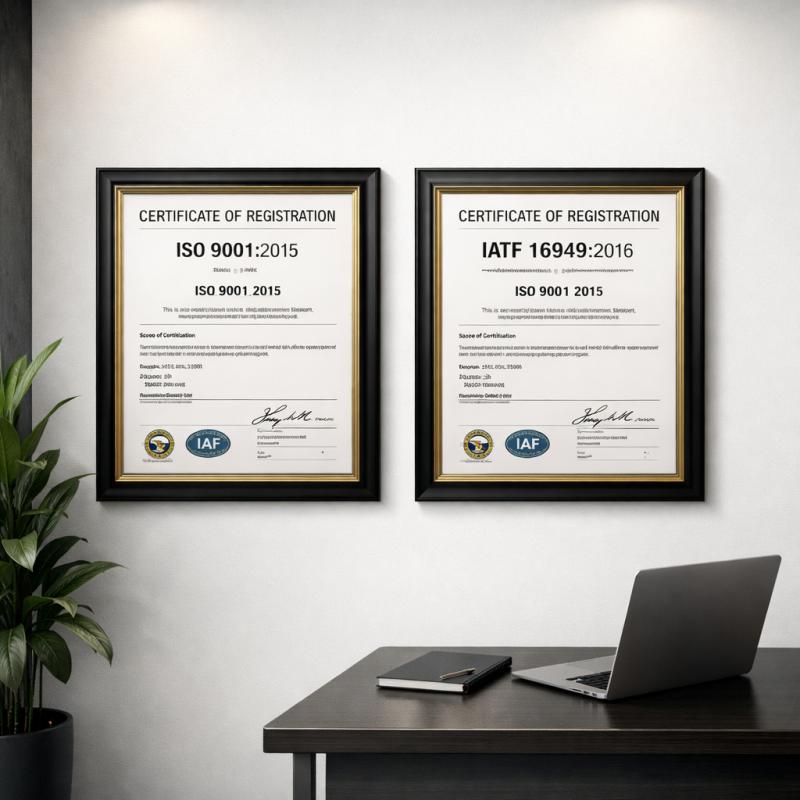
Implementing closed-loop control, as required under quality standards like ISO 9001 and IATF 16949, transforms heat staking from a manual art into a repeatable science.
3. Heat Staking vs. Alternatives: An Objective Technology Comparison
Selecting the right assembly method requires a clear-eyed view of the options. The table below provides a neutral comparison based on Dizo Sonics' cross-technology experience.
| Method | Best For | Speed | Strength | Cost | Automation | Key Advantage | Key Limitation |
|---|---|---|---|---|---|---|---|
| Heat Staking | Thermoplastics; small bosses; sensitive electronics. | Medium (0.5-2s) | High (mechanical lock) | Medium | Excellent (servo/PLC) | Precise, vibration-free. No consumables. Ideal for tight spaces. | Heat input must be managed. |
| Ultrasonic Welding | Rigid, symmetrical thermoplastics. | Very Fast (<1s) | High (molecular fusion) | Low-Medium | Excellent | Extremely fast, energy-efficient. | Vibration can damage delicate parts or electronics. |
| Hot Air / Gas Staking | Large, simple surfaces; low-volume. | Slow | Medium | Low | Difficult | Simple principle, low tooling cost. | Uneven heating, low repeatability, high energy waste. |
| Infrared (InfraStake) | Clear or pigmented plastics where no tool contact is allowed. | Medium | High | High | Good | Non-contact, clean process. | High equipment cost, sensitive to material color/type. |
Guidance for Selection:
- Choose Ultrasonic Welding for the fastest cycles on robust, resonant parts.
- Choose Heat Staking when working with electronics, delicate components, or in geometrically constrained areas where vibration is a concern.
- Consider Hot Air only for prototyping or very low-volume, non-critical applications.
- Evaluate InfraStake for applications where tool marks are unacceptable, justifying the higher capital expenditure.
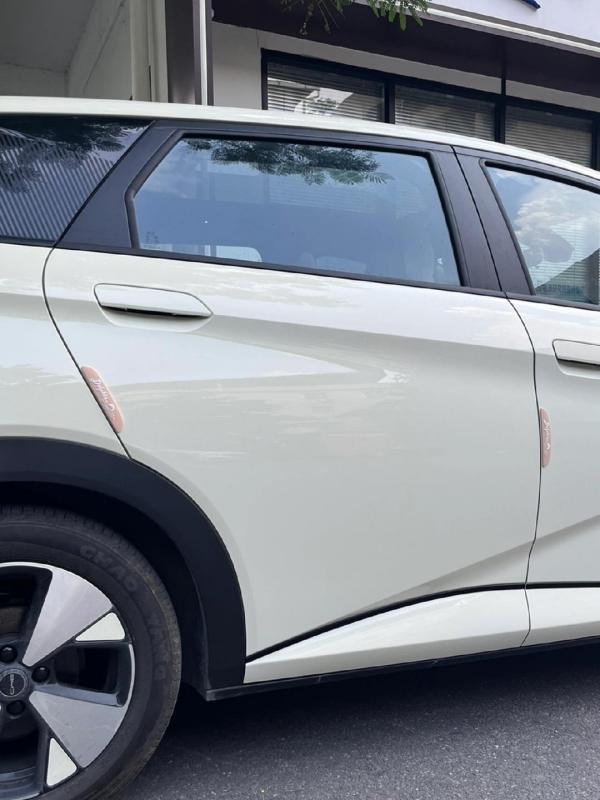
A real-world example: BYD reduced door trim attachment defects by 25% by switching from a manual adhesive process to an automated heat staking cell, highlighting the method's reliability for automotive interiors.
4. Your Heat Staking Selection Framework: A 4-Step Guide
Moving from theory to implementation requires a structured approach. Follow this framework to select and optimize your heat staking process.
Step 1: Assess Material & Design
Confirm your thermoplastic is suitable (most are). Critically evaluate
the boss design: height, diameter, and wall thickness. As a rule,
standard processes work well for bosses down to 1.5mm diameter. For
features smaller than this---common in micro-medical devices---note that
you will likely need a customized solution from the start.
Step 2: Define Production & Quality Goals
Determine your volume (low, mid, high), target cycle time, and required
uptime. For medical or automotive tiers, traceability and validation data
(per ISO 13485 or IATF 16949) are not optional. This step dictates
the level of automation and control needed.
Step 3: Pilot & Parameter Optimization
Begin with manufacturer-recommended parameters for your material. Use
a design of experiments (DoE) approach to test variations in
temperature, pressure, and time. The goal is to find the process
window---the range of parameters that produce acceptable stakes---not
just a single setpoint. This builds in robustness for production.
Step 4: Build the Business Case
Quantify the value beyond the equipment price. Factor in:
- Elimination of consumables (adhesives, fasteners).
- Reduction in scrap and rework (closed-loop systems can achieve >99% yield).
- Increased line speed and throughput.
- Compliance and risk mitigation for regulated industries.
For mid-volume production, a well-implemented heat staking system typically shows a full ROI within 6-12 months.
5. Expert Insights: Overcoming Limitations with Customized Solutions
Standard heat staking machines excel within their design parameters. However, leading-edge product innovation often creates assembly challenges that push beyond these limits. Here's where a partnership with an experienced engineering provider delivers critical value.
5.1 Common Challenges Where Standard Tools Fail
- Micro-Staking: Forming reliable stakes on bosses under 1.0 mm in diameter.
- Fully Confined Access: No vertical access for a standard tool, requiring articulated or angled tooling.
- Multi-Point Simultaneous Staking: Forming 4, 8, or 16 stakes at once on a large component with perfect alignment.
- Integration with Complex Automation: Synchronizing the staking process with a 6-axis robot on a 3D path or within a fully automated assembly cell.
Engineered Solutions from Dizo Sonics
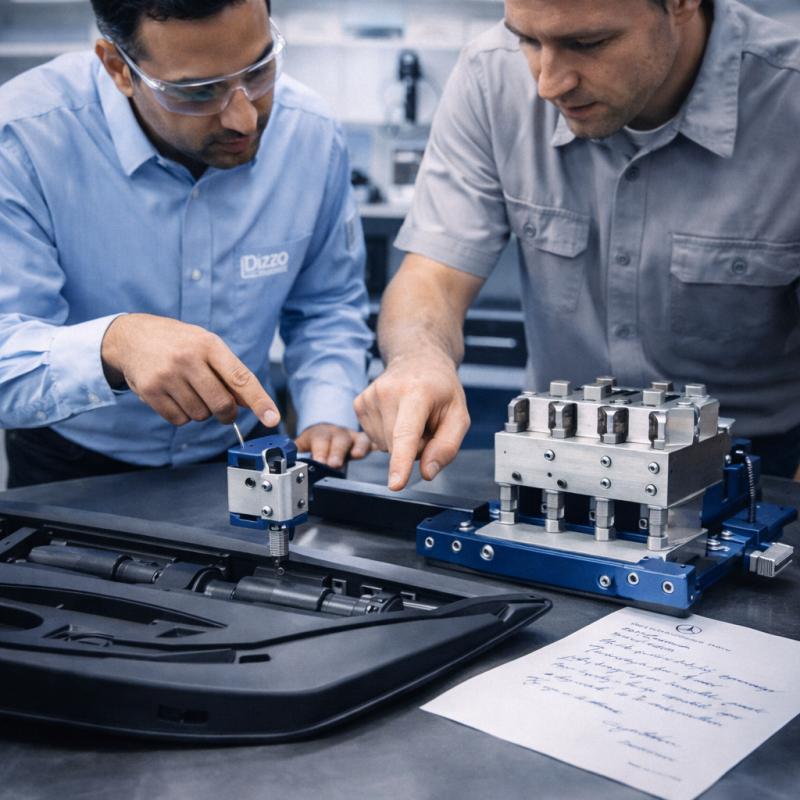
We develop tailored systems that address these exact pain points:
- Servo-Electric Actuation: For unparalleled control over force profile and speed, critical for micro-staking.
- Custom Miniature Tooling: Designed and machined in-house for specific geometries and access angles.
- Multi-Point Staking Heads: With individual closed-loop control for each stake point, ensuring consistency across large panels.
- Seamless PLC & Robotics Integration: Our systems are built to communicate natively with factory automation networks.
ROI of a Custom Approach: Case Examples
- For a Medical Device Manufacturer: A major client like Siemens Healthineers required absolute precision and cleanliness for a disposable sensor housing. Our custom servo-driven system eliminated adhesive use, ensured a hermetic seal, and increased assembly line efficiency by 40%, while providing full validation documentation.
- For an Automotive Tier-1 Supplier: Beyond the earlier BYD example, we solved a water pump assembly challenge where four small stakes had to be formed in a deep, recessed cavity. A custom multi-head tool with an extended reach achieved perfect results, eliminating a 15% scrap rate and preventing a production line stoppage.
A custom solution represents a strategic investment. While the initial cost may be higher, the long-term value---through guaranteed performance, reduced downtime, and accelerated product launch---typically results in total cost savings exceeding 20% over a 10-year lifecycle.
6. Navigating Implementation: Best Practices and Troubleshooting
Success hinges on more than just the right machine. Adopting these best practices from the start prevents common issues.
Best Practices for Sustainable Operation:
- Preventive Maintenance: Regularly calibrate temperature sensors and check tooling for wear or contamination. A scheduled maintenance plan prevents unplanned downtime.
- Operator Training: Ensure personnel understand the relationship between parameters and stake quality, empowering them to spot trends.
- Process Monitoring: Use the data logging capabilities of your closed-loop system for statistical process control (SPC), identifying drift before it causes rejects.
Quick-Start Troubleshooting Guide
| Symptom | Likely Cause | Immediate Action |
|---|---|---|
| Incomplete Stake Head | Temperature too low, time too short, or pressure insufficient. | Increase temperature in 5°C increments and/or check pressure setting. |
| Excessive Flash or Warping | Temperature too high or time too long. | Decrease temperature or cycle time. |
| Stake Head Cracking | Material overheating (degradation) or cooling too quickly. | Reduce temperature and ensure tool is not acting as a heat sink. |
| Inconsistent Results | Tool temperature drift or varying material MFI. | Verify closed-loop sensor calibration. Check material batch consistency. |
For persistent or complex issues, Dizo Sonics' remote diagnostics have resolved over 90% of customer concerns within 12-48 hours, minimizing production impact.
7. FAQ: Answering Your Heat Staking Questions
Q: What is the minimum practical boss size for heat staking?
A: Standard processes handle down to about 1.5mm, but our servo-controlled
tech at Dizo Sonics reliably stakes as small as 0.8mm. Pro Tip: Test
melt flow per ASTM D1238 to predict results---see Section 5 for
micro-staking details.
Q: How does heat staking cost compare to adhesives or ultrasonic
welding for mid-volume production?
A: Heat staking often edges out with lower long-term costs due to no consumables,
though initial setup is similar to ultrasonic. For mid-volume (5,000-50,000 units),
expect 15-25% savings on rework. Note: Our tests show ROI in 6-12 months;
compare in Section 3.
Q: Is heat staking suitable for delicate components like LED boards or
sensors?
A: Yes, its precise control avoids vibration damage common in ultrasonic
methods. Ideal for electronics with closed-loop monitoring. Pro Tip:
Use rapid cooling to protect circuits---our integrations ensure tight-space
reliability.
Q: What are the key factors for ensuring consistent quality in heat
staking?
A: Focus on real-time sensors for temperature and pressure, per ISO standards.
Factors include material consistency and calibration. Note: Based on our data,
this boosts yield to 99%; check troubleshooting in Section 4.
Q: Can heat staking be automated for high-volume lines?
A: Absolutely, with PLC integration for seamless robotic workflows. It
handles ultra-high cycles efficiently. Pro Tip: For 3D paths, our custom
setups cut downtime---explore automation in Section 5.
Q: My specific challenge isn't listed here. What should I do?
A: This FAQ hits common questions, but for unique needs like special
materials or extreme precision, a quick chat with our team is best.
Request a free review---we'll analyze your setup and suggest tailored options.

8. Conclusion: Taking the Next Step in Precision Assembly
You now have a comprehensive understanding of heat staking---from its scientific foundation and objective comparisons to a practical selection framework. You can also identify when a project demands expertise beyond standard equipment, such as for micro-scale features or fully automated integration.
The core insight is this: heat staking is not just an alternative to screws or adhesives; it's an enabling technology for lighter, cleaner, and more reliable products in the automotive, medical, and electronics sectors.
Ready to evaluate heat staking for your application?
The most efficient path forward is a direct conversation with our
application engineers. Dizo Sonics offers a confidential, no-obligation
process review. We'll analyze your component, materials, and production
goals to provide a clear recommendation---whether for a standard system
or a tailored solution---along with a detailed ROI analysis.
Contact us today to schedule your review:
- Email: solutions@dizo-global.com
- Phone: +86 18121506765
- Online: Visit our resource library at www.dizo-global.com for technical papers and case studies.
About the Author: Jensen is a Senior Applications Engineer at Dizo Sonics with over two decades of experience in thermoplastic assembly. His work, supported by multiple patents, focuses on developing reliable joining solutions for the world's leading manufacturers in the automotive, medical, and consumer electronics industries.
More Reading
- Plastic Welding Guide: Techniques for Automotive, Medical, Electronics
- Automotive Plastic Welding Guide: DIY & Professional Solutions
- Plastic Welding Guide for Automotive Interiors: Durable, Flawless Assembly
- Top Automobile Manufacturing Companies in 2025
- Automotive Robotic Ultrasonic Welding: Precision & Performance
- Automotive Plastic Parts: Types, Benefits, and Future Trends