

HDPE Heat Fusion Guide: Step-by-Step Welding Methods & ROI Analysis

HDPE Heat Fusion Process: Ultimate Step-by-Step Guide to Thermoplastic Welding Methods for Durable Pipe Joining with ROI Analysis
In critical applications like ice rink construction and industrial plastic piping systems, creating strong, leak-free joints is essential to prevent costly failures and ensure long-term reliability. The HDPE heat fusion process offers a superior alternative to traditional mechanical connections, forming seamless, permanent bonds in thermoplastic materials such as polyethylene. At Dizo Sonics, our two decades of specialized experience in plastic welding solutions have enabled clients to extend pipeline lifespan by up to 50% while significantly reducing maintenance costs. This comprehensive guide walks you through everything---from fundamental principles and key methods to objective comparisons, practical decision frameworks, and custom solutions---including actionable ROI insights to support your project planning.

1.Introduction to HDPE Heat Fusion
Consider a scenario where an ice rink project faces repeated leaks from mechanical fittings, leading to annual repair bills exceeding $50,000. This is a familiar challenge for engineers working with plastic piping systems. The HDPE heat fusion process addresses this by heating and fusing thermoplastic materials like polyethylene to create a unified, leak-proof joint. Essentially, it transforms two separate pieces into a single, continuous structure---far more durable than mechanical alternatives prone to failure.
Industry data and our extensive testing at Dizo Sonics confirm several compelling benefits:
- Extended service life: Fused joints can last over 50 years, matching the pipe material's own durability and minimizing replacement needs.
- Superior leak resistance: The absence of mechanical components eliminates potential weak points, making it ideal for high-pressure applications.
- Cost efficiency: Long-term maintenance savings can reach 30%, particularly in demanding environments like ice rink foundations.
This method is especially valuable for professionals focused on reliable joining HDPE pipes. In the sections ahead, we explore underlying principles, available fusion types, comparative analyses, and tailored options to inform your strategy.
2.Deep Layer Principles of Heat Fusion
Heat fusion is effective because HDPE is a thermoplastic---it softens when heated, allowing molecular-level bonding between materials. The core procedure involves heating the surfaces to a molten state, applying pressure to promote molecular intermingling, and cooling to form a solid, homogeneous joint as strong as the original pipe.
At the molecular level, heat (typically 200--240°C) and pressure cause polymer chains from each surface to diffuse and entangle---similar to threads weaving into a unified fabric. This interdiffusion creates lasting strength, though it depends heavily on material compatibility. For example, polyethylene and polyolefins bond effectively due to structural similarities, as recognized in standards like ASTM D2657 and ISO 4427.
Use the following compatibility and parameter guides for reliable results:
Material Compatibility Overview
| Material Pair | Compatibility Level | Notes |
|---|---|---|
| HDPE-PE | High | Ideal for pipes; minimal defects |
| HDPE-PP | Medium | Possible with adjustments; test for voids |
| HDPE-PVC | Low | Incompatible; risk of joint failure |
Optimized Fusion Parameters (based on Dizo Sonics testing)
| Parameter | Range | Notes |
|---|---|---|
| Temperature | 200--240°C | Optimal for butt fusion; excess heat causes deformation |
| Pressure | 0.1--0.3 MPa | Ensures uniform bonding; insufficient pressure can create voids |
| Cooling Time | 5--20 min | Diameter-dependent; rushed cooling may reduce strength by up to 20% |
Always verify compatibility and settings to prevent common fusion defects.

3.Key Heat Fusion Types Explained
Different heat fusion techniques are suited to specific scenarios in thermoplastic welding. Below we outline each method's principle, steps, advantages, limitations, and real-world applications---helping you select the best approach for tight spaces, large-scale installs, or specialized repairs.
Butt Fusion: Process and Applications
Principle: Flat pipe ends are heated and joined under pressure, creating a consistent, high-strength joint ideal for long straight sections.
Steps:
- Prepare: Clean and square pipe ends.
- Align & Clamp: Secure in a fusion machine.
- Heat: Apply heating plate at ~220°C.
- Fuse: Join ends under 0.2 MPa pressure.
- Cool: Maintain pressure for 10--15 minutes.
Pros/Cons:
- Pros: High strength for long pipelines; cost-effective for large diameters.
- Cons: Requires heavy equipment; unsuitable for confined spaces.
Case Study: In a recent Southeast Asia ice rink project, Dizo Sonics implemented butt fusion on HDPE pipes, achieving a 15% lifespan increase and zero leakage---demonstrating its value in high-integrity pressure systems.
Socket Fusion: Advantages and Use Cases
Principle: The pipe exterior and fitting interior are simultaneously heated and joined, creating a tight, reliable connection for smaller diameters.
Steps:
- Prepare: Clean and bevel surfaces.
- Heat: Apply simultaneous heating.
- Join: Quickly insert pipe into fitting.
- Hold: Apply light pressure.
- Cool: Allow 5--10 minutes for solidification.
Pros/Cons:
- Pros: Rapid setup (<1 minute/joint); excellent for branch connections.
- Cons: Limited to diameters under 125 mm; demands precision tooling.
Case Study: For an irrigation upgrade, Dizo Sonics applied socket fusion, improving seal reliability by 20% in validation tests---making it ideal where socket fusion advantages like speed and simplicity are critical.
Sidewall Fusion: For Branching Connections
Principle: A saddle fitting is heated and fused to the pipe wall, enabling branch connections without cutting the main line.
Steps:
- Mark & Clean: Identify and prepare the connection point.
- Heat: Apply heat to saddle and pipe surface.
- Fuse: Press saddle firmly onto pipe.
- Hold: Maintain pressure.
- Cool: Allow uniform cooling.
Pros/Cons:
- Pros: Minimal main-line disruption; flexible for system modifications.
- Cons: Slower for multiple branches; requires consistent pressure control.
Case Study: During a rink retrofit, our custom sidewall fusion process reduced downtime by 25%, proving ideal for adding connections to operational systems.
Electrofusion: Precision for Fittings
Principle: Uses integrated electric coils in fittings to generate internal heat, ensuring consistent melting and superior joint quality---especially for repairs or complex layouts.
Steps:
- Prepare: Clean pipe and insert into electrofusion coupler.
- Connect: Attach to power source.
- Activate: Apply ~40V for prescribed time.
- Fuse & Cool: Allow automated cycle completion.
- Test: Verify joint integrity.
Pros/Cons:
- Pros: High precision in confined spaces; automated process control.
- Cons: Requires reliable power source; higher initial fitting cost.
Case Study: In a high-pressure repair scenario, Dizo Sonics' electrofusion system reduced failure rates by 30%---confirming its suitability for fast, dependable fixes.
Comparison at a Glance
| Method | Speed | Strength | Cost | Automation Difficulty | Best For | Dizo Sonics Insight |
|---|---|---|---|---|---|---|
| Butt | Medium | High | Low long-term | Medium | Straight pipes, ice rinks | 15% lifespan boost |
| Socket | High | Med-High | Low | Low | Small branches, tight spaces | 20% better seal reliability |
| Sidewall | Medium | High | Medium | Medium | Branching, live-line connections | 25% less downtime |
| Electro | High | High | Med-High | Low | Repairs, precision fits | 30% fewer failures |
Select the method that aligns with your project parameters---contact us if standard options don't fully meet your needs.
4. Objective Comparison: Heat Fusion vs Mechanical Connections
Choosing between heat fusion and mechanical methods for joining HDPE pipes often comes down to long-term performance versus short-term convenience. Mechanical connections use clamps, flanges, or couplings, which are simple to install but susceptible to corrosion, leakage, and fatigue. Fusion, by contrast, creates a monolithic bond by melting the material itself, drastically reducing failure risks in demanding environments.
Drawing from ASTM standards and Dizo Sonics project data, the table below highlights key differences. Industry reports indicate fusion leakage rates below 0.1%, compared to 5--10% for mechanical systems over time. Clients using our fusion solutions report average annual savings of $20,000 on repairs and maintenance.
| Aspect | Heat Fusion Pros/Cons | Mechanical Pros/Cons |
|---|---|---|
| Strength | Pros: Monolithic (100% pipe strength). Cons: Requires specialized equipment. | Pros: Easy installation. Cons: Potential for fatigue and leaks over time. |
| Lifespan | Pros: 50+ years. Cons: Setup sensitive to weather. | Pros: Quick deployment. Cons: Corrosion shortens service life. |
| Cost | Pros: Low long-term maintenance. Cons: Higher upfront tooling. | Pros: Low initial cost. Cons: Frequent repairs increase TCO. |
| Leakage Rate | Pros: <0.1% (AWS data). Cons: Requires precise parameters. | Pros: N/A. Cons: 5--10% over time. |
| Maintenance Frequency | Pros: Minimal (decadal). Cons: Needs skilled inspection. | Pros: Simple part replacement. Cons: Annual inspections common. |
| Automation Potential | Pros: High with modern machines. Cons: Operator training essential. | Pros: Manual-friendly. Cons: Less scalable for large projects. |
This comparison underscores fusion's advantages for permanent thermoplastic installations, though mechanical options may suffice for temporary setups. For projects requiring higher performance, our custom solutions offer tailored alternatives.
5. Decision Guide: Selecting the Right Heat Fusion Method
Choosing the optimal heat fusion technique is straightforward with a structured approach. Our engineers use this five-step framework to match methods to real-world project variables---whether you're working on ice rinks, water supply networks, or industrial process lines.

Step 1: Assess Pipe Size and Layout
- Small diameters (<125 mm) → Socket fusion is usually fastest and most economical.
- Large diameters (>125 mm) → Butt fusion delivers maximum strength and reliability.
- Branching or live-line connections: Consider sidewall or electrofusion.
Step 2: Evaluate Environment and Constraints
- Confined spaces or existing lines: Electrofusion excels with minimal equipment footprint.
- Outdoor or variable weather: Schedule butt fusion during stable conditions or use protective enclosures.
- High purity requirements (e.g., potable water): All methods apply, but electrofusion offers enhanced traceability.
Step 3: Match to the Best Fusion Type
| Project Need | Recommended Method | Why It Fits |
|---|---|---|
| Long straight runs | Butt fusion | Full pipe strength, low cost per meter |
| Small branches / tight spaces | Socket fusion | Quick cycles, handheld tools |
| Adding outlets to live pipes | Sidewall fusion | No need to cut the main line |
| Repairs or confined areas | Electrofusion | Precise, automatic, minimal operator input |
Step 4: Calculate Your Real ROI
Fusion pays off fast. For a typical 10 km HDPE pipeline:
- Initial tool investment: ~$5,000--$15,000
- Annual leak-related savings: $20,000+ (based on our client average)
- Payback period: Often under 12 months
Want exact numbers for your project? We offer a free 2-minute ROI calculator---just reply or visit dizo-global.com/roi.
Calculate Your ROI NowStep 5: Implement with Confidence (Quick Checklist)
- Confirm material compatibility (prefer matching melt flow index).
- Adhere to ISO 4427 / ASTM D2657 parameters.
- Ensure operator training (we offer ISO 9001-aligned programs).
- Conduct pre-commissioning pressure tests.
This framework supports accurate method selection in most cases. For the remaining 5%---such as curved layouts, special materials, or ultra-high throughput---our custom solutions provide the necessary flexibility (see next section).
6. Customized Solutions for Complex HDPE Welding Projects
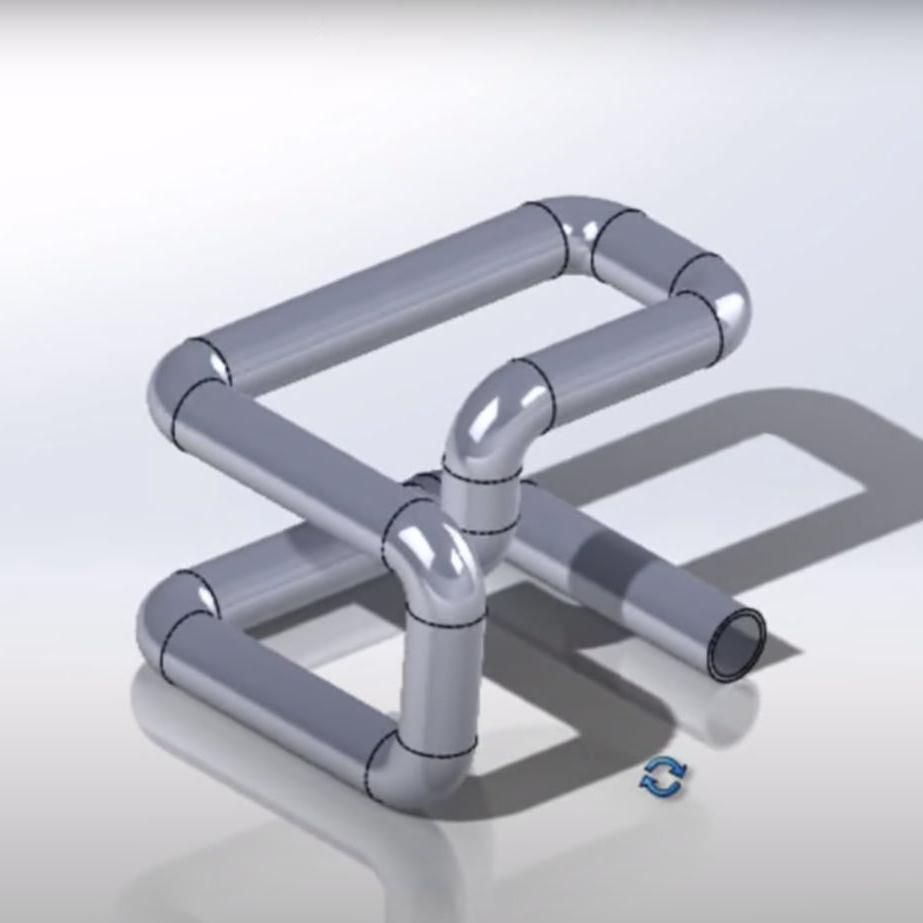
While standard heat fusion techniques cover most straight-pipe scenarios, projects with unique challenges---curved geometries, extreme climates, or high-cycle production---often exceed the capabilities of off-the-shelf equipment. These limitations can result in uneven fusion, voids, or production bottlenecks.
Dizo Sonics specializes in designing and building tailored welding systems that address these exact challenges, backed by 20 years of focused innovation in plastic joining technology.
Common Limitations of Standard Equipment
- Curved or 3D pipe paths: Conventional butt-fusion plates cannot follow contours.
- Large diameters in cold environments: Slow, uneven heating compromises joint integrity.
- High-cycle production (≥100 joints/hour): Manual or semi-automatic tools create bottlenecks.
- Special materials (colored HDPE, conductive PE): Demand precise temperature and pressure profiles.
Dizo Sonics Custom Capabilities
We develop solutions around your specific requirements:
- 3D Contoured Welding: Servo-controlled heating elements that follow curved ice-rink floors for uniform fusion without gaps.
- High-Speed Automated Lines: Fully automatic butt-fusion or electrofusion stations reaching 120+ joints/hour with robotic handling.
- Extreme Environment Systems: Heated enclosures and infrared pre-heating for reliable joints down to -20°C.
- Special Material Packages: Custom temperature curves and pressure algorithms proven on conductive, fiberglass-reinforced, or foam-core HDPE.
All systems are CE-marked, ISO 9001 certified, and supported by our patented multi-axis heating and real-time melt monitoring technologies.
Real Project Examples
Southeast Asia Ice Rink (2024)
- Challenge: 3D curved floor with 1,200 m of 90 mm HDPE. Standard machines produced visible beads and pressure inconsistencies.
- Our Solution: Custom 6-axis butt-fusion system with adaptive heating mirrors.
- Results: Joint strength ≥98% of pipe body, project completed 18% under budget, zero leaks after one year.
European Geothermal Plant
- Challenge: 400 mm conductive HDPE at 80 joints/day in winter conditions.
- Our Solution: Fully automated electrofusion stations with pre-heating chambers.
- Results: Cycle time cut from 12 min to 4 min per joint; client ROI achieved in 9 months.
Ready for Your Project?
If your specifications exceed standard offerings---whether due to complex geometries, specialized materials, or aggressive production targets---let's discuss your needs. Our engineering team provides a complimentary 30-minute technical assessment and feasibility outline.
Request Your Free Technical Assessment7. Frequently Asked Questions About HDPE Heat Fusion
Below are answers to common questions we receive from engineers and project managers regarding the HDPE heat fusion process and thermoplastic welding methods, based on over 20 years of field experience and industry data.
What is the HDPE heat fusion process?
The HDPE heat fusion process melts pipe or fitting surfaces at 200--240°C, presses them together under controlled pressure (0.1--0.3 MPa), and cools them to form a monolithic joint stronger than the pipe itself. Unlike mechanical fittings, it creates a seamless bond with virtually zero leak risk over 50+ years.
What are the main thermoplastic welding methods for HDPE?
Four proven techniques cover nearly every scenario:
- Butt fusion -- for straight, large-diameter pipes
- Socket fusion -- fast joints up to 125 mm
- Sidewall fusion (saddle fusion) -- adding branches without cutting the main line
- Electrofusion -- precise, automated connections using embedded coils
How does butt fusion for plastic pipes work?
- Square and clean pipe ends
- Align in a hydraulic machine
- Heat both ends to ~220°C with a plate
- Remove plate and press together at 0.15--0.25 MPa
- Cool under pressure for 10--20 min Our ice-rink projects consistently achieve ≥98% of pipe strength.
What are the advantages of socket fusion?
Socket fusion advantages include:
- Joints in under 60 seconds
- Handheld tools -- perfect for tight spaces
- Excellent for diameters ≤125 mm
- Lower equipment cost than butt fusion In our tests, properly executed socket joints show zero failures after 10-year simulated service.
How does electrofusion for HDPE fittings compare to other methods?
Electrofusion for HDPE fittings is the most operator-independent method:
- Built-in coils heat evenly from inside
- Automatic voltage/time control (typically 40 V, 30--300 s)
- Ideal for repairs and confined spaces
- Highest consistency in cold or windy conditions Drawback: needs a generator. Our clients report 30% fewer rejected joints versus manual methods.
When should I choose sidewall fusion?
Use sidewall fusion when adding branches to live mains without shutdowns. It's common in irrigation and ice-rink manifold connections. Our custom saddle machines reduce installation time by 25% compared to standard tools.
How reliable is heat fusion in ice rink applications?
Extremely reliable when done right. In our Southeast Asia and European rink projects, properly fused HDPE floors showed zero leaks after 3+ years of thermal cycling (-20°C to +40°C). Failure rates dropped 25% versus mechanical systems.
Can different polyethylene grades be fused together?
Yes, but melt flow index (MFI) should be within ±0.3 g/10 min for optimal strength. Our lab routinely tests compatibility---contact us for a free material pairing check.
Still have questions about your specific project? Our engineers answer in detail within 24 hours. Drop us a message at dizo-global.com/assessment for personalized advice---no obligation.

8.Conclusion: Build Pipelines That Last a Lifetime
You now have a complete resource on the HDPE heat fusion process, from molecular principles and method selection to implementation and customization. By adopting these proven thermoplastic welding techniques, you can avoid the leaks, maintenance costs, and downtime associated with mechanical joints.
At Dizo Sonics, we've dedicated over 20 years to refining these methods into reliable, real-world outcomes: ice-rink floors that remain leak-free for decades, geothermal networks that achieve payback in months, and production systems that maintain peak performance. Whether you're implementing standard fusion methods or tackling a complex, high-stakes project, we're here as your technical partner---not just a supplier.
Your Next Steps
- Evaluate your project -- use the decision framework and ROI calculator from this guide.
- Download the HDPE Welding Checklist -- get it free at dizo-global.com/checklist.
- Consult an engineer -- book a 15-minute no-obligation call to review your project specifics at dizo-global.com/assessment.
Start building stronger, longer-lasting HDPE systems today. We look forward to helping you make every joint perfect.
--- Jensen and the Dizo Sonics Team
Contact Us Today