

Vibration Welding for Thermoplastics: Process, Benefits & Best Applications

Vibration Welding for Thermoplastics: The Ultimate Guide to Process, Advantages, and When It's the Best Choice
If you're an automotive engineer, medical device manufacturer, or industrial designer working with thermoplastics, you know the challenges of achieving leak-proof seals, maintaining high production speeds, and joining complex part geometries. Vibration welding solves these issues by using controlled friction to create strong, hermetic bonds without adhesives or external heat sources. In this guide, you'll learn how the vibration welding process works, when to choose it over ultrasonic or hot plate welding, and how to implement it successfully---with insights from Dizo Sonics' 20+ years of industry expertise and ISO 9001-certifiedtesting.
Ready to see if vibration welding fits your project? Let's explore the technology, compare alternatives, and walk through a practical decision framework---complete with real application cases and ROI examples.
1. Introduction to Vibration Welding: A Reliable Joining Method
Are leaky fluid reservoirs, inconsistent weld strength, or slow cycle times affecting your plastic part production? Vibration welding is a solid-state joining process that presses two thermoplastic parts together while vibrating one relative to the other. The resulting frictional heat melts the interface, forming a molecular bond as it cools under pressure. This creates a hermetic seal ideal for automotive components, medical enclosures, and industrial assemblies.
At Dizo Sonics, we've specialized in vibration welding solutions since 2007, helping clients from Tesla to medical OEMs overcome joining challenges with patented clean vibration technology and customized fixturing.
In this guide, we'll cover:
- The science behind vibration welding
- How it compares to ultrasonic and hot plate welding
- A step-by-step framework to decide if it's right for your application
- Custom solutions for complex geometries and cleanroom environments
- Real-world examples from automotive and medical industries
2.Deep Principle Analysis: How Vibration Welding Works
Understanding the physics behind vibration welding helps you optimize parameters, select the right materials, and troubleshoot production issues. Here's a breakdown of the process from a mechanical and material science perspective.
Frictional Heat Generation and the Four Welding Phases
Vibration welding generates heat through linear or angular motion between two parts under controlled pressure. This friction raises the temperature at the interface, melting a thin layer of thermoplastic. The process occurs in four distinct phases:
- Solid Friction Phase: Surface asperities rub, generating initial heat without melting.
- Transient Phase: Polymer chains begin to disentangle; partial melting occurs.
- Steady-State Phase: Full melt flow ensures even material mixing and strong fusion.
- Cooling Phase: Pressure is maintained as the weld solidifies, locking the bond.
Think of it like generating heat by rubbing your hands together---but with precision control over frequency, amplitude, and pressure to achieve repeatable industrial results.
Material Behavior During Welding
Amorphous thermoplastics such as ABS, polycarbonate, and PMMA are ideal for vibration welding because they soften over a broad temperature range, enabling consistent melt flow. Semi-crystalline materials like nylon and polypropylene require more precise parameter control but can also be successfully welded with proper setup.
Key factors affecting weld quality include:
- Glass transition temperature -- affects melt initiation
- Melt flow index -- influences weld penetration and flash formation
- Filler content -- glass or mineral fillers may require higher amplitude
Key Process Parameters and Setup Guidelines
Based on Dizo Sonics' application database and VDI 2018 standards, here are the critical parameters to control:
| Parameter | Typical Range | Influence on Weld | Material Example |
|---|---|---|---|
| Frequency | 100--240 Hz | Heat input rate; higher for thin PP | 200 Hz for polypropylene |
| Amplitude | 0.5--3.0 mm | Melt depth; lower for glass-filled | 1.8 mm for ABS |
| Pressure | 0.5--20 MPa | Contact force; critical for strength | 4 MPa for nylon |
| Weld Time | 5--15 seconds | Total energy input | Shorter with IR preheating |
These parameters allow vibration welding to accommodate part-to-part variation, making it suitable for high-volume production environments.
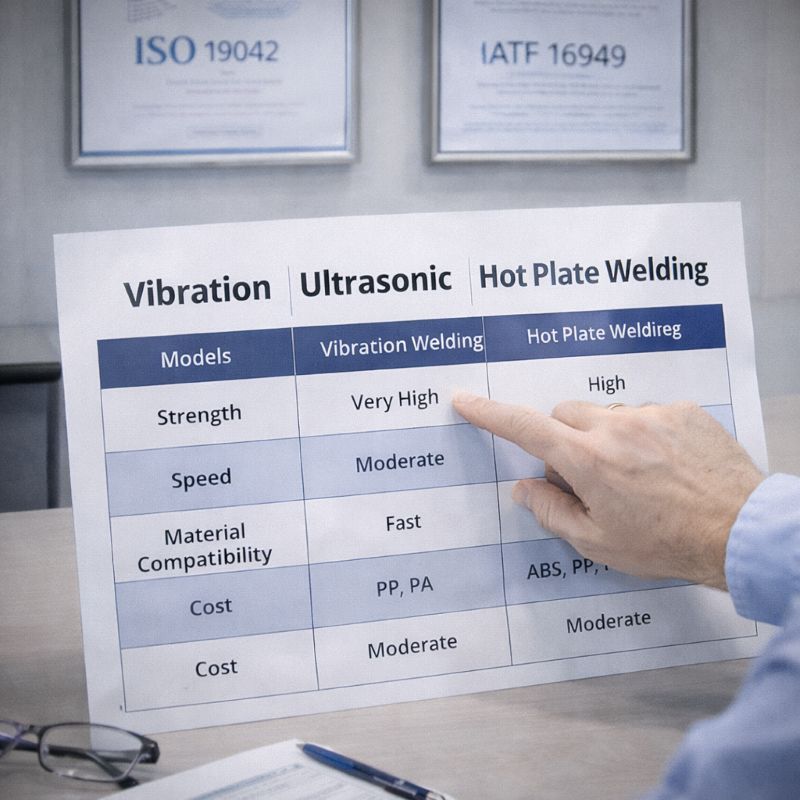
3. Objective Technology Comparison: Vibration vs. Ultrasonic vs. Hot Plate Welding
Choosing the right welding method depends on your part design, material, production volume, and quality requirements. Below is a data-driven comparison to help you evaluate each option.
| Method | Materials | Cycle Time | Joint Strength | Cost | Automation | Ideal Part Size | Energy Use |
|---|---|---|---|---|---|---|---|
| Vibration | Most thermoplastics | 8--15 sec | >80% (ISO 19042) | Medium | Medium | Medium--large, contours | Medium |
| Ultrasonic | Small, rigid parts | <1 sec | 70--85% | Low | Low | Small, simple | Low |
| Hot Plate | Large, thick parts | 15--60 sec | >85% | High | High | Large, irregular | High |
Advantages of Vibration Welding
Strong, hermetic seals -- achieves over 80% of base material strength, meeting automotive fluid containment standards.
Handles complex geometries -- linear and angular motion options adapt to 3D contours.
Suitable for dissimilar materials -- can join different thermoplastics with proper parameter tuning.
Clean technology option -- infrared preheating reduces particulate generation for sensitive applications.
Limitations and When to Choose Alternatives
Not for micro parts -- switch to ultrasonic welding for components under 2 cm.
Requires flat or near-flat joint interfaces -- highly curved surfaces may need customized tooling.
Dust generation in standard mode -- clean vibration technology is recommended for medical or optical parts.
For automotive applications under IATF 16949, vibration welding often provides the best balance of speed, strength, and adaptability.
4. Your Decision Framework: Is Vibration Welding the Right Choice?
This practical four-step evaluation process draws from Dizo Sonics' project experience with automotive, medical, and consumer goods manufacturers.
Step 1: Technical Feasibility Checklist
Answer these questions to see if your application is a good fit:
- Material type: Are you joining thermoplastics like ABS, PC, PP, or nylon?
- Joint design: Is the interface flat or slightly curved with a need for hermetic sealing?
- Part size: Are components medium to large (typically >10 cm in length)?
- Annual volume: Is production above 20,000 units per year?
If you answered "yes" to most questions, vibration welding is technically viable.
Step 2: Production & Economic Analysis
Use the following logic to narrow down your process choice: High annual volume (>50k) → Yes → Complex geometry or large part? → Yes → Vibration welding recommended.
For simple, small, high-volume parts, ultrasonic welding may be more cost-effective.
Step 3: ROI Estimation Example
Calculate potential savings using:
ROI = [(Current cost per part -- Vibration welding cost per part) ×
Annual volume] -- Initial equipment investment.
Example: An automotive supplier switching from adhesive bonding to vibration welding saved $0.18 per part on a bumper assembly. At 200,000 units/year with a $120,000 machine investment, payback was achieved in under 3 years.

Step 4: Supplier Qualification Questions
When evaluating vibration welding partners, ask:
- Can you provide material-specific welding parameters from your test database?
- Do you offer clean vibration technology for low-particulate applications?
- Are your systems compatible with multi-head or robotic automation?
- Can you share case studies from my industry?
At Dizo Sonics, we document all process parameters per ISO 9001 and offer free feasibility studies to de-risk your project.
5. Customized Solutions for Complex Welding Challenges
While standard vibration welders handle most applications, certain scenarios require tailored engineering. Here's how we solve three common challenges.
Challenge 1: Large, Contoured Parts like Automotive Bumpers
Uneven pressure distribution on complex 3D surfaces can lead to weak spots. Our solution uses:
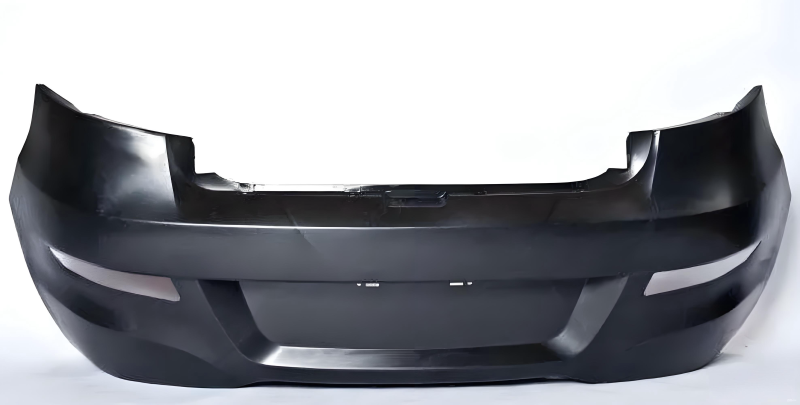
- Custom fixture designs with servo-pressure zoning
- High-rigidity frames to minimize deflection
- Multi-head vibration systems for large weld lengths
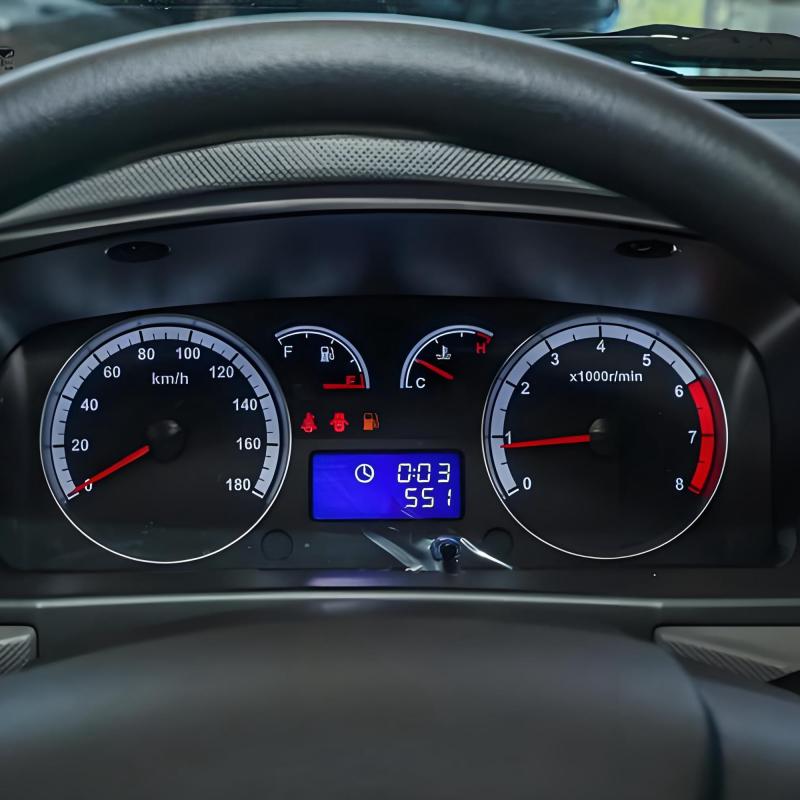
Case Example: A Tier-1 automotive supplier reduced NVH (noise, vibration, harshness) issues in instrument panels by 40% using our tailored multi-head system, achieving ROI in 14 months.
Challenge 2: Particulate-Free Welding for Medical and Optical Parts
Standard friction welding can generate fine particles---unacceptable in cleanrooms. Our clean vibration technology integrates infrared preheating to soften surfaces before contact, reducing particulate by up to 70% (based on internal lab tests). This meets ISO 14644-1 Class 7 cleanroom standards and is used in medical device and EV battery tray welding.
Challenge 3: High-Speed Production Demands
For electronics or consumer goods requiring cycle times under 10 seconds, we optimize with:
- Robotic part handling
- Simultaneous multi-axis welding
- Preheating and post-cooling stations
Contact our engineering team for a free feasibility review and concept design tailored to your throughput goals.
6. FAQ: Practical Answers to Common Vibration Welding Questions
What is clean vibration technology and when should I use it?
Clean vibration technology combines infrared preheating with reduced-amplitude vibration to minimize particle generation. Use it in:
- Medical device assembly
- Automotive interior components
- Optical and sensor housing welding
It improves seal quality, reduces contamination risk, and can shorten cycle times by up to 20%.
What materials are best for vibration welding?
Amorphous thermoplastics like ABS, polycarbonate, and PMMA weld most easily. Semi-crystalline materials such as nylon and polypropylene require precise parameter control. Avoid welding materials with widely different melt temperatures without expert guidance.
How do I maintain a vibration welding machine?
Regular maintenance includes:
- Checking actuator alignment
- Lubricating linear guides
- Inspecting fixture wear
- Updating PLC software
Most systems require minimal daily upkeep beyond cleaning and visual checks.
Can vibration weld dissimilar plastics?
Yes, but material compatibility is key. Polymers with similar melt temperatures and chemical affinity weld best. We recommend joint testing with our lab to validate bond strength before production.
What industries use vibration welding most?
Automotive: bumpers, fluid reservoirs, interior trim, battery trays
Medical: filter housings, diagnostic equipment, surgical tool casings
Consumer: appliance components, tool bodies, storage containers
Industrial: fluid handling parts, enclosures, structural panels

7. Conclusion and Next Steps
You now have a clear understanding of vibration welding---from its operating principles and advantages over other methods, to a practical framework for adoption. This technology offers a reliable, efficient solution for joining medium to large thermoplastic parts with hermetic seal requirements.
At Dizo Sonics, we bring over two decades of vibration welding expertise, IATF 16949-compliant project execution, and patented clean vibration technology to help you implement with confidence.
Ready to Take the Next Step?
Download our free Vibration Welding Project Planner -- includes a material compatibility checklist, ROI calculator, and technical specification template.
Schedule a free feasibility assessment -- send your part drawings and requirements for a preliminary review.
Visit our lab for a sample weld -- see the process firsthand and test your material.
For immediate assistance, email sales@dizo-global.com or call +86 510 83773953. Our engineers are ready to help you optimize your plastic joining process with the right vibration welding solution.
This guide is based on Dizo Sonics' application experience, ISO 19042 weld testing standards, and industry data from automotive and medical device manufacturing. All performance claims are supported by internal testing and client case studies.
More Reading
- Vibration Welding: Revolutionizing Insulated Trays Assembly
- Vibration Welding: An Innovative Solution for Aviation Overhead Storage Bins Assembly
- Vibration Welding: Revolutionizing Air Diverter Valves Assembly
- Exploring the Potential of Vibration Welding in Automotive Fluid Reservoirs Assembly
- Vibration Welding Design Guidelines: Creating Strong and Reliable Bonds
- Plastic Vibration Friction Welding Machine: A Comprehensive Guide