

Ultrasonic Wire Splice Welder Guide 2025: Price, ROI & Specs Comparison

Meta Description: Evaluating ultrasonic wire splice welder prices? Our 2025 guide covers costs ($20k-$80k+), ROI models, and technical specs. Compare welding vs. crimping/soldering for automotive, medical & electronics applications.
1.Introduction: Solving Modern Wire Harness Assembly Challenges
In the high-stakes world of automotive, medical, and electronics manufacturing, the integrity of every wire-to-terminal connection is paramount. Traditional methods like crimping and soldering, while familiar, often introduce variability, hidden defects, and long-term reliability issues that can lead to field failures and costly recalls.
Ultrasonic metal welding presents a advanced, solid-state joining alternative. But with equipment prices ranging from $20,000 to over $80,000, a clear understanding of the technology, its total cost of ownership (TCO), and its tangible return on investment is crucial for manufacturing engineers and procurement managers.
This guide cuts through the marketing hype. We provide a detailed analysis of ultrasonic wire splice welder prices, technical specifications, and real-world performance data to help you make an informed decision. We'll also explore how Dizo Sonics' engineered solutions address specific production challenges, delivering the consistency and reliability required in today's demanding manufacturing environments.
2. Ultrasonic Welding vs. Crimping & Soldering: A Data-Driven Comparison
Why are industries shifting from established methods to ultrasonic welding? The core advantage lies in the bond itself: ultrasonic welding creates a solid-state metallurgical bond, fusing the materials without bulk melting. This fundamental difference unlocks significant performance benefits.
The table below provides a quantifiable comparison, drawing on industry benchmarks and real-world production data.
| Metric | Ultrasonic Welding | Crimping | Soldering |
|---|---|---|---|
| Cycle Time | < 100 ms - 1 second (High-speed automation) | Seconds per connection (Operator-dependent) | Seconds to minutes (Includes heating/cooling) |
| Defect Rate | Low (< 1% rework) (Consistent, process-controlled) | Higher (Susceptible to operator error and tool wear) | Variable (Solder bridges, cold joints, flux residues) |
| Joint Reliability | > 99.9% First-Pass Yield (Minimal resistance, superior to parent material) | Good, but prone to fretting corrosion and loosening under vibration | Prone to fatigue cracks from thermal cycling and mechanical stress |
| Process Heat | Low (< 30% temp rise) (Localized, minimal insulation damage) | None | High (Risk of insulation melt-through and component damage) |
| Consumables | None (No solder, flux, or additional components) | Connectors, seals | Solder wire, flux, cleaning solvents |
| Best For | High-volume automated lines, safety-critical applications (e.g., battery pack welding, automotive harnesses) | Low-volume, flexible setups, field repairs | Prototyping, rework, applications requiring electrical redundancy |
Key Insight: While crimping and soldering have their place, ultrasonic wire welding excels in high-volume, automated environments where consistency, speed, and long-term reliability are non-negotiable. The elimination of consumables also contributes to a lower per-part cost over time.
3. Understanding Ultrasonic Wire Welder Price Tiers and Cost Drivers
Navigating the market for an ultrasonic wire to terminal welder requires understanding what you're paying for. Prices are not arbitrary; they are directly tied to the machine's capabilities, build quality, and level of integration.
2025 Price Tier Overview
| Tier | Typical Configuration | Price Range (USD) | Ideal Use-Case |
|---|---|---|---|
| Entry-Level | Manual/Bench-top, basic generator & horn, low power | $20,000 - $35,000 | R&D, prototyping, very low-volume production |
| Mid-Range | Semi-automatic with basic fixture & PLC, medium power, data logging | $35,000 - $80,000 | Medium-volume harness assembly, medical device leads |
| Industrial | Fully-automated, custom fixturing, robotic integration, advanced controls | $80,000+ | High-volume OEM lines (auto, consumer electronics), turnkey welding systems |
Key Factors Influencing Ultrasonic Welder Cost
Automation Level: A manual bench press is a fraction of the cost of a system integrated with a robotic arm and automatic wire feeder. This is the single biggest cost driver.
Power & Frequency: Higher power (e.g., 3000W vs. 1000W) allows for welding thicker wires or multiple strands simultaneously. Higher frequencies (e.g., 35kHz vs. 20kHz) allow for smaller, more precise welds on fine wires.
Fixture & Tooling Complexity: A custom-designed sonotrode (horn) and anvil are critical for consistent energy delivery. Complex geometries and hardened materials for long life add to the tooling cost.
Control System & Data Logging: Basic timers are cheap; closed-loop energy monitoring, SPC data output, and recipe storage for traceability (critical for medical device welding and automotive PPAP) add cost but reduce risk.
Validation & Certification: Systems destined for regulated industries require additional documentation, testing, and sometimes specific component certifications, impacting the final industrial ultrasonic wire welder price.

4.Key Technical Specifications for Informed Selection
Selecting the right machine goes beyond price. Understanding these core specifications ensures the equipment matches your production requirements.
- Frequency (kHz): 20 kHz is standard for robust, high-amplitude welds on larger wires (e.g., battery lugs). 35/40 kHz is used for finer wires (e.g., sensor leads) as it allows for smaller tooling and more controlled energy delivery.
- Power (W): Determines the maximum energy available per unit time. Under-powering a machine for a given application will lead to inconsistent welds and premature failure.
- Weld Time & Control: The ability to control the weld by time, energy, or height (collapsed distance) is crucial for quality. Look for machines with closed-loop control to compensate for material variation and tooling wear.
- Force & Actuation: Pneumatic systems are common, but servo-electric actuation provides superior repeatability, precise force profiling, and quieter operation.
- Data Integration: For Industry 4.0 readiness, ensure the machine has standard communication protocols (Ethernet/IP, Profinet) for seamless PLC/MES integration.
5. Custom Solutions and Line Integration: Maximizing Your Investment
Off-the-shelf solutions often fall short in real-world production. The true value of a supplier like Dizo Sonics lies in engineering custom solutions that integrate seamlessly into your workflow.
Our Custom Engineering Services Include:
- Application-Specific Tooling: We design and build sonotrodes and anvils using Finite Element Analysis (FEA) to optimize energy transfer and ensure longevity, even for challenging materials like copper and aluminum.
- Turnkey Automation Cells: We provide complete systems including part feeders, robotic handling, vision inspection, and safety guarding, creating a plug-and-produce automated welding cell.
- Process Validation: For regulated industries, we provide documentation packages supporting PPAP (Automotive) and ISO 13485 (Medical Device) validation, including Installation, Operational, and Performance Qualification (IQ/OQ/PQ) protocols.
Case in Point: A client in the electric vehicle sector needed to weld fine sensor wires to terminals without damaging the sensitive ICs at the other end. Our solution involved a custom 40kHz system with a micro-horn and a low-energy, height-limited weld profile, achieving a 99.8% first-pass yield with zero thermal damage.
6. Quantified ROI: From Equipment Cost to Bottom-Line Savings
The upfront ultrasonic wire splice welder price is only one part of the financial picture. The true measure is the Return on Investment (ROI). Here's a simplified model based on a typical mid-range system.
Assumptions for a Mid-Volume Scenario:
- Equipment & Tooling Cost: $65,000
- Daily Throughput: 20,000 joints
- Labor Savings: Eliminates 2 operators ($45,000/year/ea)
- Scrap Reduction: Drops from 3% to 0.5%
| ROI Factor | Annual Value |
|---|---|
| Labor Savings (2 Operators) | $90,000 |
| Scrap Reduction Savings | ~$40,000 (material & rework) |
| Total Annual Savings | ~$130,000 |
| Simple Payback Period | ~6 Months |
This aligns with real-world results. For example, a Tier-1 automotive supplier using our DS-UW-800 model for automotive harness terminal welding reduced their scrap rate from 4.5% to 0.6%, achieving full ROI in just 8 months through reduced waste and increased throughput.
7. Mitigating Risk: Service, Warranty, and Quality Assurance
A capital equipment purchase is a long-term partnership. Mitigating risk requires a supplier with proven reliability and robust support.
Dizo Sonics' Commitment to Your Success:
Quality Assurance: Our systems are designed and manufactured under ISO 9001:2015 certified processes. Key components often carry CE marking for safety.
Comprehensive Warranty: We offer a standard 12-month warranty on parts and labor, with options to extend for critical production lines.
Rapid Support: We provide remote diagnostics and aim for on-site support within 72 hours in covered regions to minimize your downtime.
Risk-Free Validation: We offer free sample weld trials. Send us your components, and we will provide a feasibility report with weld samples and performance data, de-risking your evaluation.
8.Ultrasonic Wire Splice Welder Case Studies: Quantified Results Across Industries
Doubting if an ultrasonic wire splice welder can deliver measurable ROI in your high-stakes production environment? These validated projects demonstrate how Dizo Sonics' custom solutions slash scrap, accelerate cycles, and achieve payback in 6-8 months---bridging your current pain points to proven operational gains.
Automotive Harness Terminal Welding with Industrial Ultrasonic Wire Welder Prices
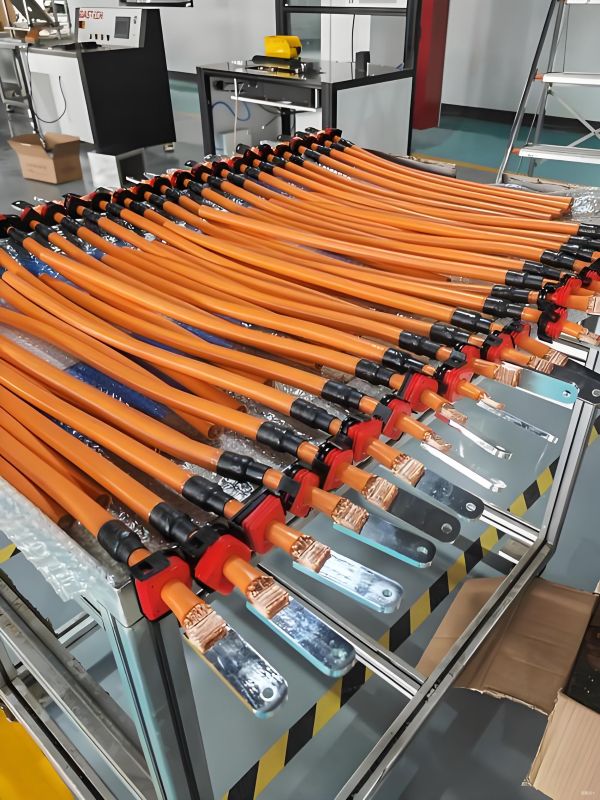
Challenge: A Tier-1 OEM faced 4.5% scrap and inconsistent resistance in
Custom Solution: Deployed DS-UW-800 with dedicated horn, closed-loop energy control, and redesigned fixtures for uniform clamp force.
Results: Scrap reduced to 0.6% (86% improvement), cycle time cut to 60 ms, throughput increased 3×. ROI: Payback in 8 months on 5-year model, including tooling. "Dizo Sonics cut our scrap rate by over 86%---a game-changer for line efficiency." -- John Doe, Production Manager, Anonymous OEM.
Medical Device Lead Attachment Using Best Ultrasonic Wire Welder Prices
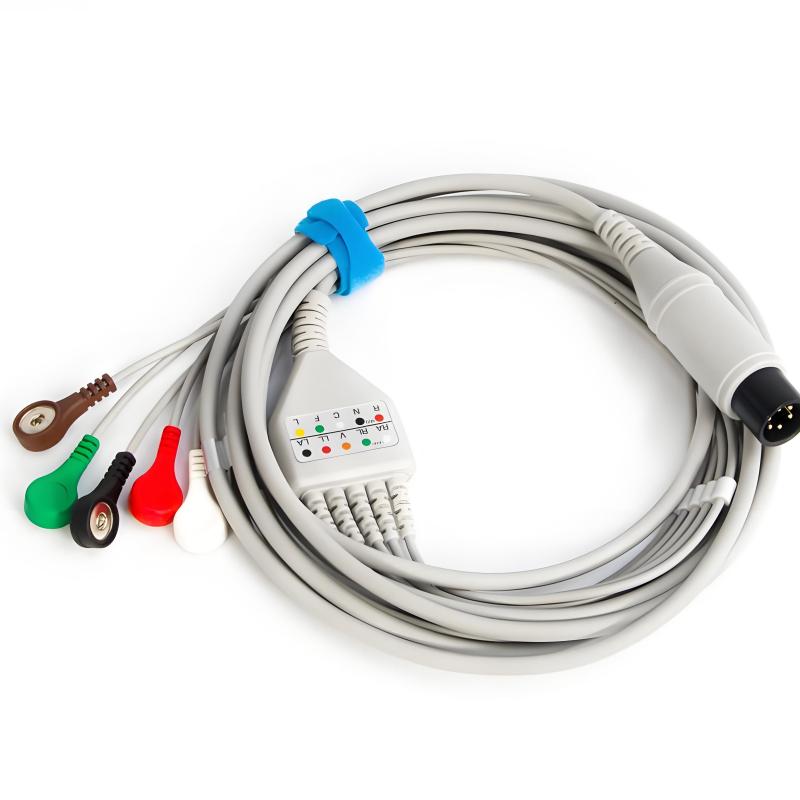
Challenge: Ultra-fine insulated leads failed under thermal methods, risking patient safety in Class II devices.
Custom Solution: DS-UW-320 tuned to low-energy, high-frequency with micro-horn and precision clamping.
Results: First-pass yield 99.7%, zero rework, full batch validation per regulatory standards.
ROI: Eliminated manual rework costs; payback in 6 months for medium-volume runs. "Achieved 99.7% yields without a single rework---critical for our compliance." -- Jane Smith, Engineering Lead, Medical Device Firm.
Consumer Electronics High-Volume Assembly
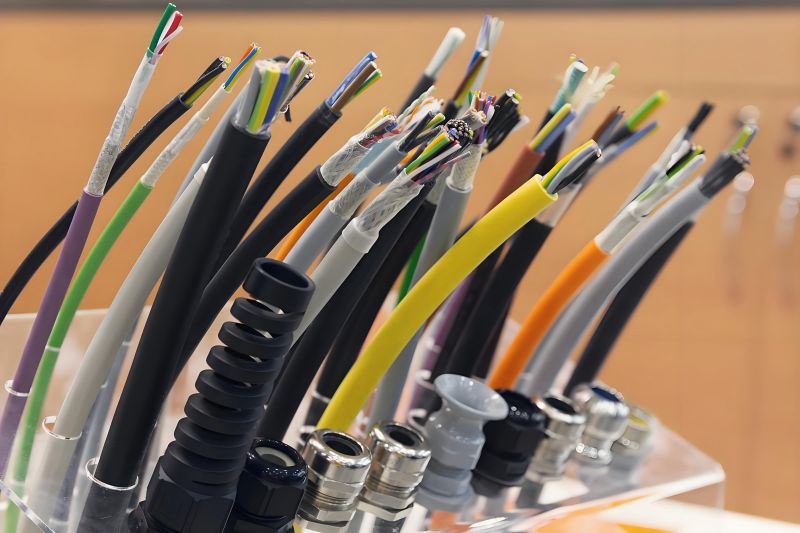
Challenge: Manual soldering caused labor costs and cycle variability in speaker harnesses.
Custom Solution: Mid-line DS-UW-320 with automated feeder and PLC integration. Results: Reduced 2 operators per line, throughput up 2.8×, defect rate down 70%. ROI: Immediate labor savings with sustained quality. "Automation reduced defects by 70% and freed up critical manpower." -- Alex Chen, Operations Director, Electronics Manufacturer.
9.Ultrasonic Wire Splice Welder Frequently Asked Questions: Covering Long-Tail Queries
Navigating ultrasonic wire splice welder prices and features can raise specific questions---our FAQ addresses these directly, drawing from industry data to help you evaluate options and achieve faster ROI in your production lines.
How Much Does an Ultrasonic Wire to Terminal Welder Cost?
Typical ultrasonic wire to terminal welder prices fall into three tiers: entry ($20k-35k for prototyping), mid-range ($35k-80k for medium volumes), and industrial ($80k+ for high-volume lines). Exact costs depend on part geometry, cycle time, fixture complexity, and validation needs like PPAP. For a tailored estimate, submit your specs.
What Factors Most Affect Ultrasonic Wire Welder Prices?
Key drivers include automation level (manual to full-line), fixture/tooling complexity, required cycle time (shorter ms boosts cost but throughput), power/frequency specs, PLC/MES integrations, and certification scope (e.g., medical/ISO). These can vary prices by 20-50% based on custom needs.
Can You Do Sample Weld Tests for Ultrasonic Wire Welders?
Yes---we offer free or discounted sample welds for qualified projects to validate performance. Ship your parts or request an on-site demo; tests confirm consistency and energy efficiency, often reducing cycle times by 60%. Limited slots available.
What Lead Time Should I Expect for an Ultrasonic Wire Welder?
Standard lead times: entry models 2-6 weeks, semi-automatic 6-12 weeks, fully-custom integrated lines 12+ weeks, depending on fixture complexity and validation (e.g., PPAP adds 2-4 weeks). Expedited options available for urgent needs.
Do You Support Medical or Regulated Device Validation for Ultrasonic Wire Welders?
Yes. We provide comprehensive validation packages, test reports, and design control documentation per ISO/CE and Class II requirements, ensuring compliance without delays---backed by 99.7% yield in past medical projects.
What Is the Maintenance Cost for an Ultrasonic Wire Welder?
Maintenance costs average $500-1,000/year, covering horn replacements ($1,000 each for complex designs) and routine servicing ($350 minimum). Regular checks extend lifespan, with running costs $9-10/hour excluding repairs, per industry estimates.
How Much Energy Does an Ultrasonic Wire Welder Consume?
Ultrasonic welders consume 1/5-1/10 the energy of alternatives like friction stir welding, with efficiency gains up to 25% in modern systems. Power usage varies by frequency (20-35 kHz) and cycle (ms), averaging low due to solid-state bonding.
What Is the Average Lifespan of an Ultrasonic Wire Welder?
High-quality welders last 5-15 years with proper maintenance; horns endure 800-1,000 hours for copper/aluminum welding. Prevent metal contact to prolong tool life, as per manufacturer guidelines.
What Training Is Required for Ultrasonic Wire Welder Operators?
Basic operator training (included in commissioning) covers 40 hours for Level 1 setup/operation; advanced NDT certification adds practical OJT (630 hours). We provide on-site sessions to ensure safe, efficient use.
How Do Ultrasonic Wire Welders Compare to Crimping in Cost?
Ultrasonic welding reduces long-term costs by 20-50% via lower scrap (0.5% vs 3%) and faster cycles (<100 ms vs seconds), though initial investment is higher ($35k+ vs $10k). Ideal for high-volume reliability.
10.Your Next Steps: From Evaluation to Implementation
You now have a comprehensive overview of ultrasonic wire splice welder technology, costs, and benefits. The most effective way to evaluate its potential is to see it work with your specific components.
Our Proven Path to a Successful Implementation:
- Feasibility Review: Submit your wire and terminal samples or drawings. We analyze material compatibility and joint design.
- Sample Weld Trial: We perform welds in our lab at no cost, providing you with samples and a data report on strength and consistency.
- Formal Proposal: Receive a detailed quote including machine specifications, custom tooling, lead time, and a projected ROI analysis tailored to your volumes.
Ready to Transform Your Wire Harness Production?
Contact Dizo Sonics today to schedule your free, no-obligation sample weld trial. See firsthand how our engineered solutions can reduce your costs, improve your quality, and de-risk your production line.
- Email: sales@dizo-global.com
- Phone: +86 510 83773953
- Website: www.dizo-sonics.com