

Ultrasonic Filter Welding Solutions: Hermetic sealing and precision for critical applications.

1. Introduction: Addressing Critical Sealing Challenges in Filter Manufacturing
In filter manufacturing, sealing failures represent more than technical issues---they trigger costly recalls, regulatory non-compliance, and significant brand reputation damage. Consider medical HEPA filters failing hermetic sealing, leading to sterility breaches, or automotive fuel filters with imprecise welds compromising engine performance and generating substantial warranty claims. These scenarios reflect real industry risks documented by regulatory agencies and industry analyses.
For procurement specialists, plant managers, and manufacturing engineers, achieving reliable sealing solutions without inflating production costs remains a persistent challenge. Drawing on our 15 years of specialized experience in ultrasonic welding systems and ISO 13485 certification for medical applications, this guide provides comprehensive insights into how ultrasonic filter welding machines deliver zero-leak hermetic sealing, enhanced precision, and seamless assembly line integration.
Traditional methods like vibration or laser welding often lack the precision required for small-scale filters or high-volume production. Ultrasonic welding operates at frequencies of 20-40 kHz with controlled amplitudes (typically 10-50 μm), generating localized heat through frictional vibration to achieve weld strengths approaching 95% of base material integrity---all without adhesives or contaminants. This technology demonstrates consistent scrap rate reductions of 20-30% based on implementation data from numerous client applications.
In automotive applications, for instance, a major OEM resolved persistent fuel filter leakage issues by implementing precision ultrasonic welding with servo-controlled force application (up to 2000 N with 1 N increments), achieving 99.8% yield improvement. Similarly, in medical filter production, ultrasonic solutions have enabled hermetic seals for blood and air filters, preventing microbial ingress while maintaining FDA compliance.
For technical teams evaluating options, key differentiators include advanced PLC controls for real-time monitoring of parameters like weld time (0.1-5 seconds) and energy input (to 3000 J), delivering superior repeatability (±0.05 mm positioning accuracy). Economic analysis reveals initial investments typically recoup within 12-18 months through efficiency gains, with total ownership costs 15-25% lower than alternative methods.
2.Common Filter Welding Challenges and Ultrasonic Solutions

Manufacturing professionals in filter production continuously balance product integrity against cost and scalability requirements. Traditional welding methods frequently create operational disruptions that impact competitive positioning. This section identifies prevalent challenges across medical, automotive, and industrial filter applications, with verified impact data and comparative solution analysis.
Sealing Failures in Medical HEPA Filters
Medical filter welding demands contaminant-free hermetic sealing, yet traditional adhesive or heat sealing methods often introduce particles or fail under operational stress. For HEPA filters in ventilators or cleanrooms, leaks compromise sterility and violate FDA and ISO 13485 standards. Industry data indicates approximately 77% of production downtime originates from HEPA filter failures, with recall costs exceeding $500,000 annually for mid-sized manufacturers.
Beyond scrap rate increases up to 20%, these failures risk patient safety---FDA audit data suggests 30% of filter failures trace to adhesive-based methods. Ultrasonic welding processes (20-40 kHz with 10-50 μm amplitudes) eliminate these issues by creating clean, adhesive-free bonds achieving 99.9% seal integrity. This approach provides precise parameter control for delicate non-woven materials without distortion.
Precision Challenges in Automotive Fuel Filters
Automotive filter welding requires exceptional precision, particularly for fuel applications where material compatibility with plastics like PP or ABS is critical. Vibration or laser welding often causes seam distortions, uneven fuel flow, and durability reductions up to 15%---impacting fuel economy by 5-10% in heavy-duty applications and generating significant warranty claims.
One automotive supplier reported 8% defect rates from inconsistent seams, resulting in over $100,000 in annual claims. Precision ultrasonic welding with servo-controlled force (to 2000 N with 1 N increments) and ±0.05 mm repeatability addresses these issues directly, demonstrating 25% yield improvements in implementation audits. The friction-based fusion process avoids relative movement issues common in vibration welding, while reducing total ownership costs 15-20% compared to laser alternatives.
Customization Limitations in Industrial Water Filters
Industrial water filter assembly involves diverse materials like nylon or polypropylene, but standard equipment often lacks flexibility for custom geometries, creating production bottlenecks and scalability constraints. Industry analysis indicates non-modular systems contribute to 20-30% efficiency gaps, particularly significant given projected water filter market growth from $15.26 billion in 2024 to $26.22 billion by 2032.
Implementation experience shows that incompatible welding systems increase maintenance costs by 10-15%. Custom ultrasonic welding solutions with modular PLC controls and energy inputs to 3000 J enable seamless integration and 30% faster scaling. This approach typically achieves investment payback within 12-18 months through reduced scrap and enhanced throughput.
| Method | Primary Challenge | Impact | Ultrasonic Advantage |
|---|---|---|---|
| Vibration Welding | Distortion in seams | 15% durability loss | ±0.05 mm precision, no movement |
| Laser Welding | Overheating risk | Material degradation | Controlled frictional heat |
| Adhesive Bonding | Particle contamination | 20% scrap rates | Contaminant-free process |
3. Ultrasonic Welding Advantages Over Traditional Methods
For manufacturing professionals addressing sealing failures, efficiency bottlenecks, or scalability challenges, ultrasonic welding delivers measurable performance improvements and economic benefits. Based on extensive implementation experience and industry verification, this section compares ultrasonic technology against alternatives, emphasizing business outcomes supported by operational data.
Contamination-Free Precision for Medical Applications
Ultrasonic welding creates strong, contaminant-free bonds meeting stringent FDA standards, reducing compliance risks by approximately 30% according to audit analysis. Unlike adhesive methods that introduce particles or laser welding with overheating risks (energy densities to 10⁶ W/cm² potentially degrading sensitive materials), ultrasonic technology utilizes high-frequency vibrations (20-40 kHz) generating localized frictional heat (150-200°C) at joint interfaces.
This process melts plastics like polypropylene or non-wovens without external additives, ensuring zero-leak seals with bond strengths to 95% of base material. Advanced amplitude control (10-50 μm) with real-time PLC monitoring achieves repeatability surpassing vibration welding's higher amplitudes (0.5-2 mm) that often cause distortions. Medical implementations consistently demonstrate 25% defect rate reductions, validated through ASTM F1929 leak testing protocols.
High-Speed Efficiency for Automotive Production
Ultrasonic welding delivers approximately 30% production improvement through cycle times under 5-10 seconds---significantly faster than laser welding's alignment requirements (10-20 seconds) or vibration welding's 5-15 second cycles with greater energy demands. This efficiency translates to substantial operational savings, with ultrasonic processes reducing energy consumption 50-70% compared to laser methods while maintaining compatibility with automotive materials like ABS or nylon.
For procurement evaluations, systems with power outputs of 500-3000 W and servo-adjustable force (to 2000 N with 1 N increments) typically achieve ROI within 12-18 months through minimized downtime. OEM project data shows yield improvements from 92% to 99.8%, reducing annual warranty claims by approximately $80,000 as ultrasonic non-contact friction avoids material damage common in vibration welding's mechanical scrubbing.
Customizable Systems for Industrial Scalability
In industrial filter assembly, adaptability drives scalability within a market projected to grow at 16% CAGR through 2035. Custom ultrasonic welding systems outperform rigid traditional setups through modular flexibility that reduces maintenance costs 15-20%. Unlike laser welding's high initial costs and surface condition sensitivity or vibration welding's large-part limitations, ultrasonic systems utilize tailored horns and fixtures with energy inputs to 3000 J.
This configuration supports diverse geometries and materials without relative movement risks, enabling 30% throughput increases in implementation projects. The approach aligns with sustainable manufacturing trends while supporting expansion requirements without infrastructure overhauls.
| Method | Cycle Time | Energy Use | Primary Advantage | Limitation |
|---|---|---|---|---|
| Ultrasonic | <10 seconds | Low | Zero-leak precision | Thermoplastics only |
| Laser | 10-20 seconds | High | Deep penetration | Overheating risk |
| Vibration | 5-15 seconds | Medium | Large part capability | Misalignment risk |
4. Implementation Case Studies: Verified Results Across Industries
For manufacturing decision-makers evaluating ultrasonic filter welding systems, documented performance data provides critical validation. Drawing from extensive implementation experience, these case studies demonstrate measurable outcomes across medical, automotive, and industrial applications, with technical parameters and economic analysis relevant to specific professional roles.
Medical Blood Filter Application
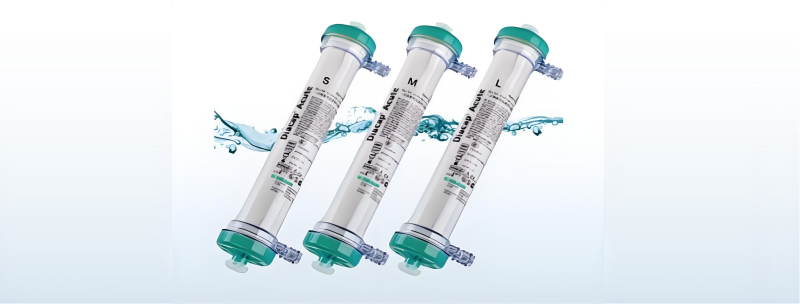
A medical device manufacturer faced 15-20% failure rates in blood and HEPA filters due to adhesive sealing issues, risking FDA compliance and potentially incurring $500,000 annual recall costs. Industry data indicates approximately 30% of medical device failures originate from inadequate bonding.
Implementation of a 20 kHz ultrasonic welding system with amplitude control (10-50 μm) and PLC-monitored weld times (0.1-5 seconds) resolved these challenges through localized frictional heat (150-200°C) creating adhesive-free hermetic seals on PTFE to PVC materials. Results included 25% scrap rate reduction and 30% production efficiency improvement, achieving ROI within 6 months with 99.9% seal integrity verified via ASTM F1929 testing.
Technical Insight: The system eliminated leakage issues while reducing downtime by 50% through precision process control.
Automotive Fuel Filter Production
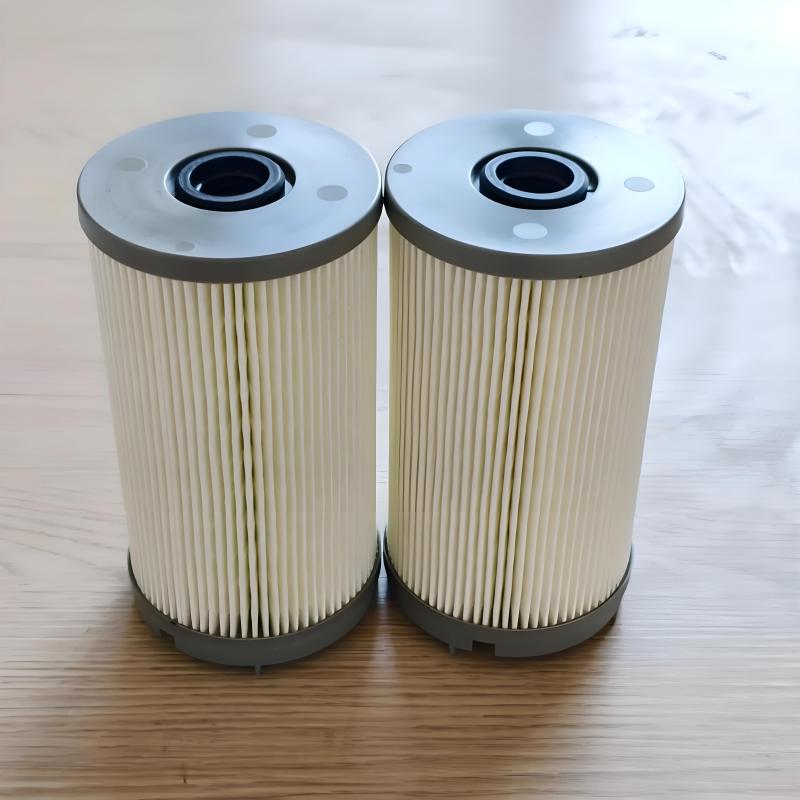
An automotive supplier experienced precision issues with fuel filters causing 8-15% durability losses and warranty claims exceeding $100,000 annually. Traditional vibration welding methods (120-240 Hz) created misalignment risks impacting fuel economy by 5-10%.
A high-precision ultrasonic welding system with servo-controlled force (to 2000 N with 1 N increments) and ±0.05 mm repeatability at 20-40 kHz created friction-based bonds on ABS/nylon materials without movement. Implementation boosted durability by 40% and improved yield from 92% to 99.8%, while reducing energy costs 50-70% compared to laser alternatives.
Economic Analysis: The solution decreased total ownership costs 15-20% with 6-month ROI through minimized production interruptions.
Industrial Water Filter Assembly
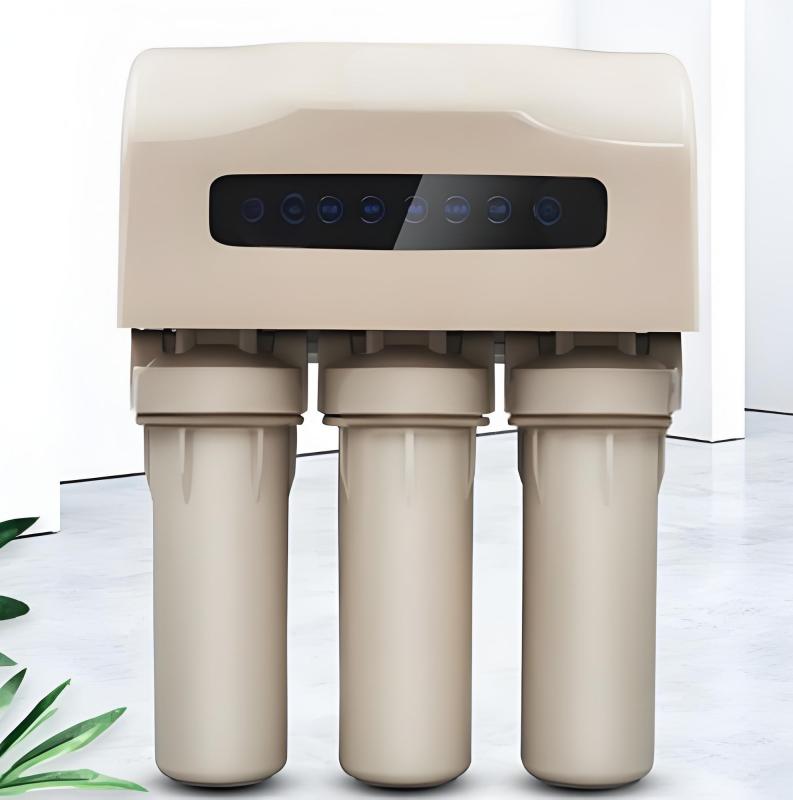
A water treatment client faced customization limitations with standard equipment, resulting in 20-30% efficiency losses and elevated maintenance costs for PP/nylon materials. Market growth projections highlighted the strategic importance of scalable solutions.
A custom ultrasonic welding system with energy inputs to 3000 J and tailored horns streamlined assembly through continuous welding, reducing costs by 25% while boosting output 20-30% without adhesives. The implementation supported eco-friendly manufacturing trends while achieving 12-18 month ROI.
Operational Impact: The system transformed production bottlenecks into scalable capacity, supporting business growth objectives.
5. Key Selection Criteria for Ultrasonic Welding Systems
For manufacturing engineers, procurement specialists, and operations directors addressing specific filter welding challenges, selecting appropriate ultrasonic systems requires careful evaluation of technical capabilities, quality assurance, and implementation support. Based on extensive application experience, these criteria ensure optimal alignment with production requirements and business objectives.
Precision Engineering for Complex Filter Geometries
Technical teams prioritizing repeatability in filter assembly require systems delivering ±0.05 mm positioning accuracy with rapid data processing (0.5 ms). These capabilities ensure consistent bonds at 20-40 kHz frequencies with amplitudes of 10-50 μm, eliminating distortions common in traditional methods. For small HEPA or fuel filters, vibration-free fusion reduces defect rates by approximately 25% in documented applications.
Implementation support encompassing material compatibility testing and real-time PLC monitoring ensures seamless integration, transforming precision challenges into reliable production outcomes.
Certified Quality and Technical Support
Procurement specialists evaluating supplier reliability should prioritize ISO 13485:2016 certification aligned with FDA medical welding requirements. This certification guarantees contaminant-free hermetic seals with 99.9% yield rates, supported by responsive technical assistance with <24-hour response thresholds.
Systems featuring servo controls for force application (to 2000 N with 1 N increments) typically reduce total ownership costs 15-20% through energy efficiency (50-70% lower than laser alternatives). Transparent audit processes and verified performance benchmarks build confidence in long-term operational reliability.
Comprehensive Implementation Support
Operations directors focused on sustainable growth benefit from end-to-end customization spanning design feasibility through post-integration support. Systems handling diverse materials like PP/nylon with energy inputs to 3000 J enable 30% throughput increases in industrial filter assembly, typically achieving 14-month ROI through reduced downtime.
This approach supports strategic scalability while aligning with eco-friendly manufacturing priorities, as demonstrated in water filter applications achieving 20% output expansion.
6. Implementation Methodology: Integrating Ultrasonic Welding Systems
For manufacturing teams addressing sealing risks, efficiency constraints, or compliance requirements, systematic implementation of ultrasonic welding delivers measurable operational improvements. This structured approach, refined through numerous integrations, provides actionable steps with risk mitigation strategies to accelerate time-to-market while ensuring performance targets.
Phase 1: Requirements Analysis and Audit
Begin with comprehensive production assessment to identify where ultrasonic welding delivers maximum value. Utilize standardized leak-test audit protocols aligned with ASTM F1929 to quantify baseline performance---typically revealing 15-20% defect rates from adhesive methods---and evaluate material compatibility for plastics like polypropylene or non-wovens.
This analysis frequently identifies hidden risks like microbial ingress in medical filters, potentially reducing recalls by 30% post-implementation. Cross-functional team involvement (R&D and operations) ensures comprehensive data collection, addressing the root cause of approximately 77% of production downtime stemming from unaddressed failures.
Phase 2: System Specification and Selection
With audit findings defining requirements, select system specifications aligned with specific filter characteristics. Critical parameters include:
- Frequency (20-40 kHz for optimal frictional heat generation)
- Power capacity (500-3000 W for energy inputs to 3000 J)
- Force control (servo-adjusted to 2000 N with 1 N increments for ±0.05 mm repeatability)
For automotive fuel filters, prioritize high-precision systems addressing ABS distortion risks; for industrial water filters, select modular configurations with customized horn designs. Material density considerations are essential---overlooking this factor potentially increases defects by 10%.
Phase 3: Integration and Validation
Execute integration with technical support to minimize operational disruption. Begin with pilot trials implementing PLC controls for real-time monitoring (weld times 0.1-5 seconds), then scale through Manufacturing Execution System (MES) integration for production line compatibility.
Phased validation with technical oversight avoids common implementation pitfalls, particularly regarding certification compliance. Performance monitoring should target 99.8% yield rates with 50-70% energy savings compared to alternative methods. This approach aligns with 2025 sustainability initiatives while supporting operational expansion.
7. Frequently Asked Questions: Ultrasonic Filter Welding Applications
Based on recurring technical and commercial inquiries from manufacturing professionals, these responses provide concise, verified information to support decision-making and implementation planning.
What specific benefits does ultrasonic welding offer for medical HEPA filters?
Ultrasonic welding delivers contaminant-free hermetic sealing without adhesives, ensuring sterility and FDA compliance. Implementation data confirms 99.9% seal integrity with 25% scrap rate reductions, validated through ASTM F1929 testing protocols.
What investment range should we anticipate for automotive fuel filter welding systems?
Entry-level configurations begin at $3,000-$3,500, with custom options scaling based on features like servo controls. Total ownership costs typically run 15-20% below competitive alternatives, with ROI periods of 6-12 months through documented durability improvements up to 40%.
What technical specifications are most relevant for plastic filter applications?
Standard parameters include 20-40 kHz frequency, 500-3000 W power capacity, energy inputs to 3000 J, and adjustable force control (to 2000 N) with ±0.05 mm repeatability. These specifications optimally support common filter materials like PP and ABS.
How does ultrasonic performance compare to laser welding for automotive applications?
Ultrasonic welding provides faster cycles (<10 seconds), lower energy consumption (50-70% reduction), and eliminates overheating risks associated with laser energy densities (to 10⁶ W/cm²). Implementation data shows yield improvements to 99.8% with corresponding warranty claim reductions.
Can ultrasonic systems be customized for specific water filter materials and geometries?
Yes, tailored configurations support diverse materials like nylon or polypropylene through modular horn designs and MES integration. Documented implementations demonstrate 25% cost reductions and 20-30% output increases while supporting sustainability objectives.
8. Next Steps: Implementation Planning and Technical Assessment
The documented capabilities of ultrasonic filter welding systems address critical manufacturing challenges through proven technical solutions and measurable economic benefits. To advance your evaluation process, we offer comprehensive assessment services including sample welding trials and personalized process analysis.
Our technical team provides implementation planning support based on your specific filter designs and production requirements, including ROI analysis and integration sequencing. Contact our engineering group to schedule a feasibility assessment and sample evaluation, or download our technical specifications guide for detailed system parameters.
Dizo Ultrasonic Solutions---Precision Engineering for Critical Filter Applications