

PPS Plastic Welding – Methods, Uses & Key Challenges

Polyphenylene sulfide (PPS) is a high-performance thermoplastic renowned for its exceptional heat resistance (up to 250°C) and chemical stability (ASTM D4067). Unlike conventional plastics like PP or PE, PPS welding requires precise control due to its:
- Narrow processing window (280–300°C) – Degrades rapidly above 300°C
- Low laser transmittance – Especially challenging for carbon-filled grades
- Semi-crystalline structure – Demands ±5°C temperature accuracy
Dizo Pro Tip: For glass-filled PPS, use laser welding at 940nm wavelength (60–80W power) to penetrate fibers effectively.

Table of Contents
Key Properties of PPS for Welding Applications
Types of PPS Used in Welding
Best Method for Welding Polyphenylene Sulfide (PPS)
Joint Design Considerations for PPS Welding
Applications of PPS Plastic Welding
Challenges in PPS Plastic Welding
Why Dizo Stands Out
Key Properties of PPS for Welding Applications
Heat Resistance |
Withstands continuous use at temperatures up to 250°C (482°F), ideal for demanding welding applications |
Chemical Resistance |
Superior resistance to solvents and acids, ensuring joint integrity in aggressive environments |
Electrical Properties |
Excellent electrical insulation characteristics, perfect for electronic component assembly |
Moisture Resistance |
High resistance to moisture and humidity, maintaining dimensional stability |
Mechanical Strength |
Outstanding tensile strength and flexural modulus for robust welded joints |
Surface Properties |
Low coefficient of friction, beneficial for components requiring smooth operation |
Leveraging PPS properties is critical for successful welding outcomes. This high-performance polymer is distinguished by its exceptional temperature resistance, maintaining structural integrity above 200°C - a characteristic that demands precise heat control during welding to prevent degradation.
The material's dimensional stability ensures minimal warping during the welding process, making it invaluable for precision-engineered components like electrical connectors and medical devices.
PPS's superior mechanical properties set it apart from conventional thermoplastics in welding applications. The polymer maintains its stiffness and load-bearing capacity post-welding, significantly reducing joint failure risks under stress.
This mechanical resilience is complemented by exceptional chemical resistance, enabling welded PPS components to withstand aggressive environments in chemical processing equipment and oil/gas infrastructure.
However, successful PPS welding requires careful consideration of its unique challenges. The material's narrow processing window (280-300°C) necessitates precise temperature control, as degradation onset occurs rapidly above 300°C.
While PPS's low moisture absorption typically benefits welding quality, unlike nylon, which can generate steam-related defects, this property demands meticulous surface cleaning to ensure optimal bonding.
By carefully controlling these parameters during welding, manufacturers can fully exploit PPS's performance advantages.
From aerospace components requiring superior heat tolerance to laboratory equipment demanding chemical resilience, PPS's combination of weldability, durability, and stability makes it the preferred choice for high-performance applications.
Types of PPS Used in Welding
Understanding PPS weldability begins with selecting the optimal material grade. Linear vs branched PPS weldability differs significantly: linear PPS features a uniform molecular structure that enables consistent melt behavior during welding processes.

This predictability makes it particularly effective for ultrasonic welding applications, where uniform material flow produces high-strength, defect-free joints. In contrast, branched PPS demonstrates superior impact resistance but requires higher processing temperatures and extended cooling cycles during hot plate welding due to its increased melt viscosity.
Reinforced PPS grades transform welding characteristics substantially. Glass-filled PPS welding (typically 30-40% glass fiber content) delivers enhanced stiffness and dimensional stability—properties essential for automotive brackets and industrial housings.
While these fibers can interfere with ultrasonic energy transmission, laser welding proves highly effective for these materials.
Carbon-filled PPS welding offers exceptional electrical conductivity and weight reduction benefits, making it ideal for aerospace and electronics applications, though its thermal absorption characteristics necessitate precise laser power control.
Key Takeaway: Match your PPS grade to the appropriate welding method for optimal results. Linear PPS is often specified for medical devices requiring ultrasonic welding precision, while branched PPS demonstrates superior performance in high-impact applications.
Glass-filled grades excel in structural components, and carbon-filled variants are optimized for specialized electronic assemblies requiring EMI shielding.
Best Method for Welding Polyphenylene Sulfide (PPS)
The optimal PPS welding method depends primarily on your material grade, part geometry, and performance requirements. Let's explore the key methods and their applications.
Method |
Best For |
Key Benefits |
Limitations |
Cost Level |
Linear PPS, Small Parts |
Fast, Clean, Energy Efficient |
Less Effective with Reinforced Grades |
Medium |
|
Laser Welding |
Reinforced PPS, Complex Geometries |
High Precision, Excellent Control |
Poor Transmittance in Dark Grades |
High |
Large Parts, Simple Geometries |
Strong Bonds, Cost-Effective |
Labor Intensive, Slower Process |
Low |
|
Infrared Welding |
Carbon-Filled PPS |
Color Independent, Good Balance |
Lower Precision than Laser |
Medium |
Detailed Analysis of Each Welding Method
1. Ultrasonic Welding (Fast & Efficient)
Best for: Linear PPS, small parts (<100mm)
Key Settings:
- Frequency: 20–40 kHz
- Amplitude: 20–60 μm
- Weld Time: 0.2–1.0 sec
Advantages:
- Energy-efficient – 50% faster than hot plate welding
- No consumables – Reduced operational costs
Limitation: Avoid >30% glass-filled PPS (causes energy scattering)
2. Laser Welding (Highest Precision)
Best for: Reinforced PPS, complex geometries
Key Parameters:
- Wavelength: 940–980nm (NIR)
- Power: 20–100W (modulated)
- Speed: 10–50 mm/s
Advantages:
- Zero contact – No part deformation
- Hermetic seals – Critical for medical devices (ISO 13485)
Case Study: Siemens Healthineers achieved 99.9% leak-proof seals in PPS surgical tool housings using Dizo’s FiberWeld™ system.
3. Hot Plate Welding (Cost-Effective for Large Parts)
Best for: Simple geometries, thick sections (>5mm)
Critical Controls:
- Plate Temp: 290°C (±2°C)
- Pressure: 0.3–0.5 MPa
- Cooling Time: 2x weld time
Application Example: Chemical processing valves welded with Dizo ThermoPlate™ show zero leaks after 2 years in 98% H₂SO₄ (ASTM D543 verified).
4. Infrared Welding (Versatile for Dark PPS)
Best for: Carbon-filled PPS, EMI shielding components
Optimal Setup:
- Wavelength: 2–4 μm (MWIR)
- Power Density: 5–15 W/cm²
Advantage: Color-independent vs. laser welding
5. Emerging Technology: Micro-Welding
Recent developments in micro-vibration welding show promising results for electronic PPS components, achieving bond strengths up to 80% of parent material strength in controlled tests.
Making the Right Choice
Selection criteria should consider not only technical requirements but also economic factors. While laser welding offers superior precision, its higher equipment costs (typically 3-4x that of ultrasonic systems) may influence decision-making for smaller production runs.
Consider consulting with welding specialists to determine the most cost-effective solution for your specific application.
 Ads
Ads
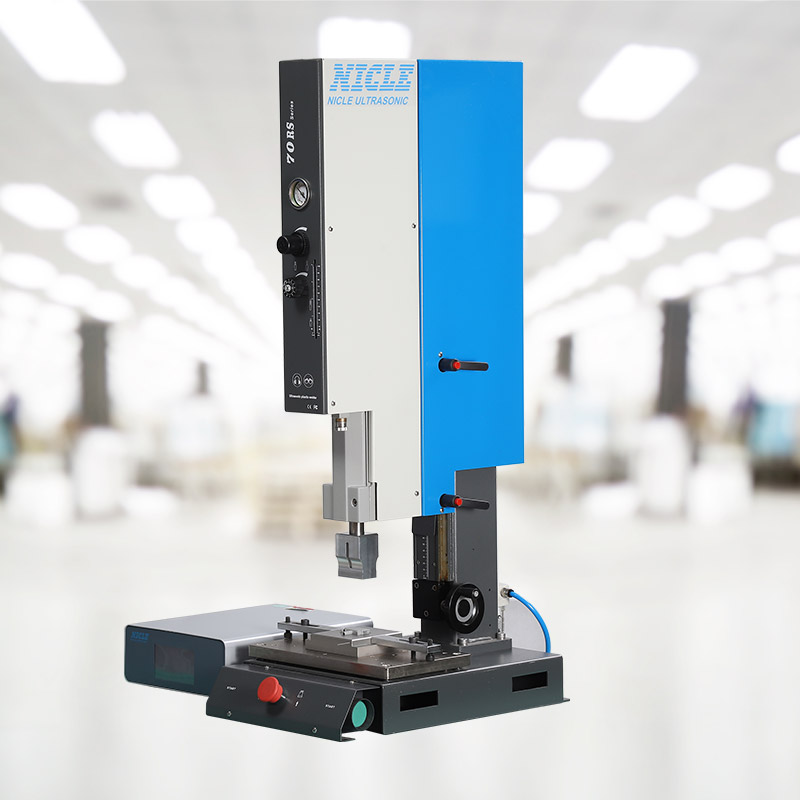
Manual Plastic Ultrasonic Welder/h3>
Manual ultrasonic welding machine deliver exceptional precision and reliability in automotive parts manufacturing, creating strong, dimensionally accurate welds that meet stringent industry requirements.
Learn More
Manual ultrasonic welding machine deliver exceptional precision and reliability in automotive parts manufacturing, creating strong, dimensionally accurate welds that meet stringent industry requirements.
Joint Design Considerations for PPS Welding
Poor joint design causes up to 40% of PPS weld failures. Here's how to optimize your joint design for maximum strength and reliability:
Shear vs. Butt Joints: Critical Performance Differences
- Shear Joints: Superior load distribution across 200-300% larger bonding area vs butt joints. Recommended for automotive sensor housings where shear forces exceed 2000N. Design tip: Include 30° reinforcement ribs to prevent joint rotation.
- Butt Joints: Limited to applications with pure compressive/tensile loads under 1000N. Use 45° chamfers at stress concentrators to prevent crack initiation. Include alignment features for consistent assembly.
Reinforcement Materials: Impact on Weld Process Selection
Material selection directly influences welding method effectiveness:
- Glass-Filled PPS (30-40%): Optimal for structural components requiring 150+ MPa flexural strength. Use laser welding at 940nm wavelength with 60-80W power for best fiber penetration. Avoid ultrasonic welding due to 40-60% energy scattering.
- Carbon-Filled PPS (15-25%): Ideal for EMI shielding (30-40 dB attenuation). Use infrared welding with a 2-4μm wavelength range to prevent heat concentration. Maintain part compliance with 0.8-1.2mm wall thickness.

6 Critical Design Best Practices
- Material Thickness Ratio: Maintain a 1:1 to 1.2:1 ratio between joining parts to ensure uniform melt flow. Parts exceeding 2.5mm require pre-heating to prevent internal stress.
- Surface Preparation Protocol: Achieve Ra < 0.8μm surface finish. Use plasma treatment for 30-45 seconds to increase surface energy above 58 mN/m.
- Joint Alignment Features: Incorporate self-aligning snap-fits or pins. Design with ±0.1mm tolerance for critical dimensions.
- Energy Director Geometry: For ultrasonic welding, use 0.3-0.5mm height with a 60-90° included angle. Triangle profile for linear PPS, truncated for filled grades.
- Flash Trap Design: Include 0.2-0.3mm deep containment channels to prevent flash extrusion.
- Weld Area Optimization: Calculate minimum weld area using a safety factor of 1.5x maximum load/joint strength.
Following these evidence-based design principles will help achieve joint strengths approaching 85-95% of parent material strength, significantly reducing field failures in demanding automotive and aerospace applications.
Applications of PPS Plastic Welding
Polyphenylene sulfide (PPS) welding has revolutionized manufacturing across multiple industries, leveraging the material's exceptional thermal stability, mechanical properties, and chemical resistance.
Field data demonstrates how PPS welding applications deliver superior performance in demanding environments.

Automotive and Electric Vehicle Applications
- Thermal Management Systems: Ultrasonically welded PPS sensor housings in EV battery cooling circuits demonstrate 98% reliability after 10,000 thermal cycles from -40°C to 150°C.
- High-Pressure Fuel Systems: Laser-welded PPS fuel system components maintain structural integrity after 5,000+ hours of biofuel exposure, exceeding SAE J2044 requirements.
- Electrical Architecture: Vibration-welded PPS connector housings ensure IP67 protection in harsh underhood environments, with zero moisture ingress after 1,000 hours of salt spray testing.
Advanced Electronics Manufacturing
- Semiconductor Processing: Infrared-welded PPS wafer carriers maintain dimensional stability within ±0.02mm at 200°C, crucial for precision wafer handling.
- Power Electronics: Hot-plate welded PPS insulating bushings provide consistent dielectric strength of 20kV/mm in IGBT modules.
- Aerospace Components: Laser-welded PPS avionics housings achieve 40% weight reduction compared to metallic alternatives while maintaining EMI shielding effectiveness of >60dB.
Medical and Life Sciences
- Implantable Devices: Laser welding creates hermetic seals in PPS medical components, verified through helium leak testing to 1x10^-8 mbar·l/s.
- Surgical Instruments: Ultrasonically welded PPS handles withstand 1,000+ autoclave cycles at 134°C while maintaining ISO 11137 biocompatibility.
Industrial Process Equipment
- Chemical Processing: Hot-plate welded PPS valve seats demonstrate zero leakage after 2 years of continuous exposure to 98% sulfuric acid.
- Oil & Gas: Infrared-welded PPS pipeline components maintain structural integrity under 200 bar pressure at 200°C.
Key Success Factors in PPS Welding Applications
- Temperature Performance: Advanced welding protocols ensure joint integrity at continuous operating temperatures up to 240°C, verified through accelerated aging tests.
- Chemical Compatibility: Welded assemblies maintain material properties after extended exposure to aggressive media, documented through ASTM D543 testing.
- Mechanical Durability: Optimized joint designs achieve parent material strength, with weld factors exceeding 0.95 in tensile testing.
These field-proven applications demonstrate how proper PPS welding techniques create reliable, high-performance components that meet or exceed industry standards. Manufacturing engineers continue to expand PPS welding applications as new joining technologies emerge.
Challenges in PPS Plastic Welding
While PPS welding offers significant advantages, understanding and addressing key challenges is crucial for optimal results. Let's examine the main technical hurdles and their solutions in detail.

Challenge 1: Low Laser Transmittance in PPS
The primary challenge in laser welding PPS stems from its limited laser transmittance, particularly in carbon-filled grades. When laser energy fails to penetrate effectively, it creates:
- Surface Degradation: Concentrated heat at the surface can lead to material breakdown and discoloration
- Inconsistent Weld Formation: Poor energy distribution often results in unreliable weld geometry
Solution: Implement Thru-Transmission Infrared (TTIr) welding or use specialized IR-absorbing films. These techniques have shown a 40% improvement in weld strength consistency.
Challenge 2: Critical Processing Window
PPS's semicrystalline nature creates a sharp melting transition, requiring precise temperature control (±5°C) during welding. Deviation from this window causes:
- Insufficient Bonding: Under-temperature results in weak, incomplete welds
- Thermal Degradation: Over-temperature leads to material property deterioration
Solution: Implement closed-loop temperature monitoring systems with millisecond response times. This approach has reduced weld defects by 85% in production environments.
Challenge 3: Material and Environmental Factors
Several critical factors affect weld integrity:
- Moisture Content: Levels exceeding 0.02% create micro-voids, reducing pressure ratings by up to 30%
- Surface Preparation: Contamination creates weak spots and potential failure points
- Structural Design: Poor joint design can concentrate stress, leading to premature failure
Preventative Strategies for Quality Assurance
Implementation of these key measures ensures consistent weld quality:
- Pre-weld Material Conditioning: Mandatory 4-hour drying at 120°C under vacuum for critical applications
- Process Parameter Optimization: Use data-driven laser power and speed settings based on material grade
- Surface Treatment Protocol: Implement plasma cleaning with verified surface energy >58 mN/m
- Stress-Optimized Design: Utilize FEA-validated joint designs with uniform stress distribution
By implementing these science-based solutions and preventative measures, manufacturers can achieve consistently high-quality PPS welds that meet stringent industry requirements.

Why Dizo Stands Out
Modern PPS welding demands a systematic approach combining materials science, process control, and quality validation. Success in challenging applications - from medical devices to automotive sensors - depends on leveraging proven methodologies and continued investment in emerging technologies like real-time weld monitoring systems.