

Polypropylene Welding Guide: Techniques for Strong, Leak-Proof Joints

The Complete Guide to Welding Polypropylene: Techniques for Strong, Leak-Proof Joints
Polypropylene (PP) presents a unique joining challenge. Its low surface energy and semi-crystalline structure often cause adhesives to fail and make traditional welding tricky. With over 20 years at Dizo Sonics, where I've led our plastics welding division for global manufacturers, I've tackled these challenges firsthand. My name is Jensen, and this guide is designed to give you the foundational knowledge, practical techniques, and clear decision-making frameworks to create strong, permanent, and leak-proof polypropylene joints, saving you time, money, and costly field failures.

1.Introduction to Polypropylene Welding: What It Is and Why It Matters
Polypropylene welding is a thermoplastic fusion process where heat and pressure are applied to melt and merge two PP parts at the molecular level. The polymer chains from each piece interdiffuse and, upon cooling, entangle to form a solid, cohesive bond with strength approaching that of the virgin base material.
This process is particularly vital for PP, a polymer widely used for its chemical resistance, lightweight nature, and durability in everything from automotive parts to medical devices and chemical tanks. Unlike bonding with glue, welding creates a homogeneous joint free of secondary materials that can degrade, making it the gold standard for permanent, structural, and leak-proof applications. Our testing at Dizo Sonics, often benchmarked against standards like ASTM D2659, shows that a properly executed weld can increase joint strength by up to 50% compared to the best industrial adhesives when used on PP.
The Role of Welding in Modern Manufacturing
Across industries, polypropylene welding supports high-volume, high-reliability production. In automotive, it's used for air ducts, fluid reservoirs, and bumper assemblies. In chemical processing, it's essential for piping systems and tank linings. The method supports repeatable quality and hermetic sealing where it matters most.
2.Deep Principles of Polypropylene Welding: Understanding the Science
Successful PP welding hinges on understanding its behavior as a semi-crystalline thermoplastic. The goal is to apply controlled energy to melt the polymer without causing thermal degradation, allowing chains to mix before reforming a solid structure.

The Science of Polymer Chain Entanglement and Fusion
The core mechanism is polymer interdiffusion. Applying heat within the range of 230--280°C breaks down PP's crystalline regions, granting the polymer chains enough kinetic energy to become mobile. Simultaneously, applied pressure (typically 0.2--0.5 MPa) forces these mobile chains from the two surfaces into intimate contact. Over a critical time period (often 5--10 seconds), the chains interpenetrate and entangle. Controlled cooling then allows the material to recrystallize, locking these entangled chains into a new, unified solid. It's this molecular entanglement that allows the weld to achieve near-parent-material strength.
Material Compatibility and Critical Factors
Material consistency is non-negotiable. Always weld like-grade PP to like-grade PP. Mixing homopolymer with copolymer, or introducing contaminants like mold release agents, oil, or even excessive moisture, can severely compromise bond integrity. In our lab tests, surface contamination alone has been shown to reduce weld strength by over 30%. Ensuring a clean, dry, and compatible material interface is the first law of reliable welding.
3.Preparing Polypropylene for Welding: A Non-Negotiable Step-by-Step Process
Skipping or rushing preparation is the leading cause of weld failure. A proper surface prep routine is your insurance policy for a strong bond.
The Essential Three-Step Preparation:
- Degrease & Clean: Thoroughly wipe all joint surfaces with a lint-free cloth and a solvent like acetone or isopropyl alcohol. This removes oils, silicones, and dust that create a barrier to polymer chain interaction.
- Mechanically Abrade: Lightly scuff the joint area with 80--120 grit sandpaper. This increases surface area and provides micro-mechanical keying for the molten polymer.
- Preheat (if applicable): For thicker sections or in cold environments, preheating the part to around 100°C with a hot air gun can minimize thermal shock and reduce internal stresses during the main weld cycle.
Common Pitfall to Avoid: Do not use chlorinated solvents (e.g., some brake cleaners) for cleaning, as they can attack the PP surface. Always test on a scrap piece first.
4. Key Welding Techniques for Polypropylene: Choosing Your Tool
No single technique is best for all situations. The right choice depends on part geometry, thickness, production volume, and required strength.
A. Hot Gas (Air) Welding
- Best for: On-site repairs, large fabrications (tanks, liners), and pipe welding.
- Process: A stream of heated gas (air or nitrogen) directed through a welding torch simultaneously heats a PP filler rod and the base material, which are fused together.
- Key Insight: Requires significant operator skill to maintain consistent temperature, speed, and pressure. Often used with a round or triangular welding rod.
B. Extrusion Welding
- Best for: Thick sections ( >6mm), long seams, and structural welds where high material deposition is needed.
- Process: A motorized feeder pushes molten PP filler material from a heated extrusion barrel directly into the prepared joint. The extruder's shoe smoothes the bead.
- Key Insight: Delivers the highest deposition rates and is excellent for weatherproofing and tank construction. Less dependent on manual dexterity than hot gas welding.
C. Hot Plate (Butt) Welding
- Best for: Joining pipe ends, sheets, or profiles with flat mating surfaces.
- Process: Two PP parts are pressed against a heated platen until molten. The platen is removed, and the parts are forced together under pressure to fuse.
- Key Insight: Produces incredibly strong, flush joints ideal for pressure piping systems. Requires precise, machine-controlled alignment and pressure.
D. Ultrasonic Welding
- Best for: High-speed, automated assembly of small to medium-sized parts (e.g., medical filters, automotive clips, electronic housings).
- Process: High-frequency (20--35 kHz) ultrasonic vibrations are applied under pressure, creating friction heat at the joint interface to melt and bond the parts in seconds.
- Key Insight: This is a "clean room" friendly process with cycle times under 3 seconds. For maximum consistency, look for systems with features like Automatic Frequency Tracking (AFT), like those in Dizo Sonics' welders, which maintain amplitude stability under varying loads to achieve the 95%+ process consistency demanded in medical and automotive sectors.
5. Beyond Basic Welding: Advanced and Alternative Joining Methods
While the above are staples, other methods exist for specific needs.
Vibration Welding: Ideal for large, complex parts like automotive intake manifolds or battery housings. One part is oscillated linearly against a stationary part under pressure, generating frictional heat. It's faster than hot plate welding for large areas.
Laser Welding: Used for precision, aesthetically critical components. A laser passes through a transparent upper layer to be absorbed by a carbon-black-loaded lower layer, creating a pinpoint melt zone with minimal flash. Excellent for medical device assembly.
Spin Welding: A simple, robust method for circular parts. One part is spun against the other under axial pressure until friction heat creates a melt, then spinning stops to allow cooling. Great for fluid containers and filters.
Objective Comparison: Welding vs. Adhesives vs. Fasteners
| Method | Pros | Cons | Best For |
|---|---|---|---|
| Welding | Molecular bond, leak-proof, excellent chemical/thermal resistance, high strength, no consumables. | Requires equipment/skill, not for disassembly. | Permanent, structural, or sealed joints in chemical, pressure, or automotive applications. |
| Adhesives | Bonds dissimilar materials, good stress distribution, simple application. | Poor performance on low-surface-energy PP, long cure times, degradation risks. | Prototyping, bonding PP to other plastics/metals, vibration damping. |
| Fasteners | Fast, reversible, no surface prep needed. | Creates stress concentrators, leak paths, adds weight, weakens structure. | Non-critical assemblies, field repairs, temporary fixtures, or very low-volume work. |
Data synthesized from ISO 16791 and Dizo Sonics long-term aging studies.
6.Mastering the Craft: Essential Parameters and Troubleshooting
A perfect weld balances three pillars: Temperature, Pressure, and Time.
- Temperature: 230--280°C is the sweet spot for melting without degrading PP (which begins above ~300°C). Use an infrared thermometer.
- Pressure: 0.2--0.5 MPa is typical. Too little causes poor fusion; too much squeezes molten material out, creating a "cold" weld (lack of material).
- Time: Dwell time must be sufficient for full chain interdiffusion. For manual techniques, this is dictated by travel speed (10-20 cm/min). For automated processes, it's a set parameter (e.g., 2-5 second weld time).
- Weak, Brittle Weld: Likely insufficient heat or contamination. Increase temperature slightly and re-clean surfaces.
- Porous, Foamy Weld: Material is absorbing moisture. Pre-dry PP resin or parts before welding (2-3 hours at 80°C).
- Excessive Flash/Part Deformation: Too much pressure or heat. Reduce parameters.
- Poor Penetration/"Cold" Weld: Travel speed too fast or pressure too low. Slow down and increase pressure.
Decision Guide: How to Choose the Right PP Welding Approach
Use this flowchart to narrow down your technique:
- Define Requirement: Is the joint structural, pressure-bearing, or aesthetic?
- Assess Geometry & Size: Small, complex parts → Ultrasonic/Laser. Large, flat seams → Extrusion/Hot Gas. Pipe ends → Hot Plate.
- Consider Volume: Low volume/prototyping → Hot Gas. High-volume automation → Ultrasonic/Vibration.
- Evaluate Equipment & Skill: What's available in-house? Hot gas requires high skill; ultrasonic requires capital equipment but less operator skill.
If your project involves non-standard geometries (deep 3D curves), special materials (glass-filled or recycled PP), or extreme cycle time demands, standard equipment may struggle. This is where custom engineering becomes critical.
7.Customized Solutions for Complex Applications: When Standard Isn't Enough
At Dizo Sonics, we specialize in solving problems that off-the-shelf welders can't handle. Our engineering partnership begins where standard manuals end.

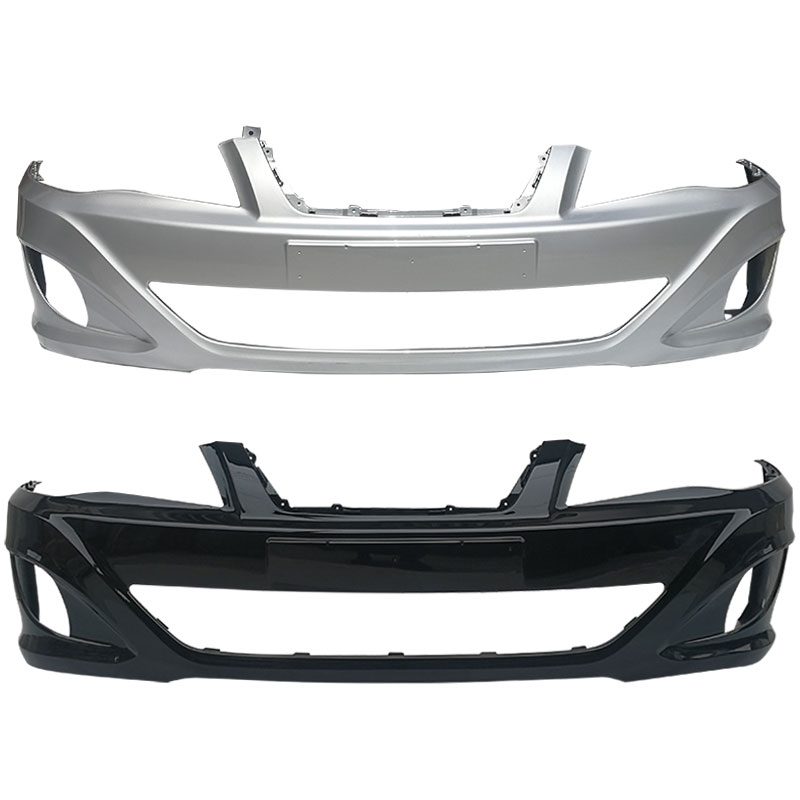
Case in Point -- Automotive Bumper Welding: A Tier-1 supplier for electric vehicles faced inconsistent bonds and slow cycle times on a complex, multi-curve bumper assembly. Off-the-shelf vibration welders couldn't maintain pressure uniformity. Our Solution: We engineered a custom servo-controlled vibration welding system with contour-matching tooling and real-time pressure profiling. The Result: A 25% reduction in cycle time and a leap to 99.9% joint integrity in QA testing, validated under automotive pressure and impact standards.
The Dizo Sonics Advantage: We collaborate with institutions like the 726 Research Institute and leverage patented technologies (like our next-generation AFT 2.0) and advanced finite element analysis (FEA) simulation software to pre-validate weld designs. Whether it's integrating robotics for a fully automated battery tray welding cell or developing a clean-room ultrasonic process for implantable medical devices, we build tailored solutions for partners like Bosch, Siemens, and BYD. The ROI isn't just in the machine---it's in 40% less unplanned downtime, a 10-year+ lifecycle, and lifetime technical support.
8.FAQ: Common Questions on Polypropylene Welding
Q: Can you weld polypropylene to polyethylene?
A: Generally, no. PP and PE (HDPE, LDPE) have different melting
temperatures and crystalline structures. They are not chemically
compatible for welding, leading to weak, brittle joints. Use adhesives
designed for dissimilar plastics or mechanical fasteners instead.
Q: How do you test the strength of a polypropylene weld?
A: Common non-destructive tests include visual inspection (for
uniformity, lack of voids), and pressure testing (for leak-proof
applications). Destructive tests are the gold standard: Tensile
Testing (ASTM D638) measures ultimate strength; Peel Tests assess fusion
quality; and Burst Pressure Tests validate real-world performance.
Q: What safety precautions are crucial for welding PP?
A: 1) Ventilation: While PP doesn't produce highly toxic fumes like PVC,
melting any plastic releases particulates and volatiles---use local
exhaust ventilation. 2) PPE: Wear heat-resistant gloves, safety glasses,
and a respirator with P100 filters for fine particles. 3) Fire
Safety: Have a CO2 fire extinguisher nearby; molten plastic can drip and
ignite.
Q: Is it possible to weld recycled or regrind polypropylene?
A: Yes, but with caveats. Recycled PP often has degraded molecular
weight and may contain contaminants. It typically requires higher heat
and may produce weaker welds. For critical applications, blend a high
percentage (e.g., 70%) of virgin material with the regrind and conduct
extensive testing first. We often help clients qualify recycled content
for their specific weld processes.

9.Conclusion: Your Path to Stronger, Leak-Proof Polypropylene Joints
You now have a comprehensive roadmap---from the molecular science of chain entanglement to the hands-on techniques and data-driven comparisons that separate a weak joint from a permanent, leak-proof one. For standard applications, applying these principles will elevate your results immediately.
However, the most demanding challenges---whether in scaling production, qualifying new materials like carbon-filled PP, or achieving zero-defect rates in regulated industries---often require specialized equipment and deep application engineering. That's the value of a partner with two decades of focused experience.
Ready to move from theory to guaranteed results? Let's discuss your specific part, material, and production goals.
Contact our engineering team for a free process auditContact our engineering team at sales@dizo-global.com for a free, no-obligation process audit or to schedule a live demo with your actual components.