

Plastic Welding Training – Learn Skills That Build Careers

As plastic materials continue to replace metal components across industries, the need for skilled plastic welders has never been greater. Whether you're entering the manufacturing sector, working in automotive repair, or involved in industrial equipment maintenance, certified plastic welding training provides the technical foundation and practical expertise to excel.
Plastic welding involves fusing thermoplastics using precise temperature control, correct filler materials, and the right welding equipment. However, mastering this craft—and maintaining the complex machinery that powers it—requires more than hands-on experience.
It demands structured training programs that cover core welding techniques, safety protocols, material science, and machine calibration.
This guide offers a comprehensive overview of plastic welding training programs, including the skills you'll develop, how long it takes to become certified, and how this specialized knowledge can significantly boost your career and business ROI.
Whether you're a technician, a plant supervisor, or an aspiring welder, this guide will help you navigate the best training options available today.

Table of Contents
Core Skills Developed in Plastic Welding Training
Duration of Plastic Welding Training Programs
6 Proven ROI Benefits of Certified Plastic Welding Training
Selecting a Plastic Welding Training Course
Industries in Need of Plastic Welding Training
Conclusion
Core Skills Developed in Plastic Welding Training
Plastic welding training is essential for equipping technicians with the specialized expertise required to tackle modern manufacturing and repair challenges. Plastic welding training courses combine theoretical knowledge with hands-on practice to ensure mastery of thermoplastic joining techniques. Here are the essential skills developed:

Material Science & Identification
Trainees master the identification and properties of thermoplastic materials, including polyethylene (PE), polypropylene (PP), and polyvinyl chloride (PVC). Using ASTM/ISO standard markings and testing methods, they learn to select appropriate welding techniques for each polymer type.
Understanding how crystallinity, melt flow index, and thermal properties affect weld quality enables precise material-specific adjustments. This foundational knowledge is crucial for effective plastic welding training.
Advanced Welding Techniques
Plastic welding training covers both manual and automated processes:
- Manual Methods: Hot gas pendulum welding for precise control and extrusion welding for thick seams.
- Machine-Assisted: Ultrasonic welding for medical devices and electrofusion for HDPE pipelines.
- Advanced Automation: Robotic laser welding for aerospace composites and induction welding for carbon-reinforced thermoplastics.
Equipment Operation & Safety Protocols
OSHA-aligned safety training forms a crucial component of plastic welding training. Technicians learn to:
- Calibrate welding equipment for optimal temperature, pressure, and feed rates.
- Implement proper ventilation and fume extraction systems.
- Use appropriate PPE for different welding processes.
- Manage hazards specific to each material and technique.
 Ads
Ads
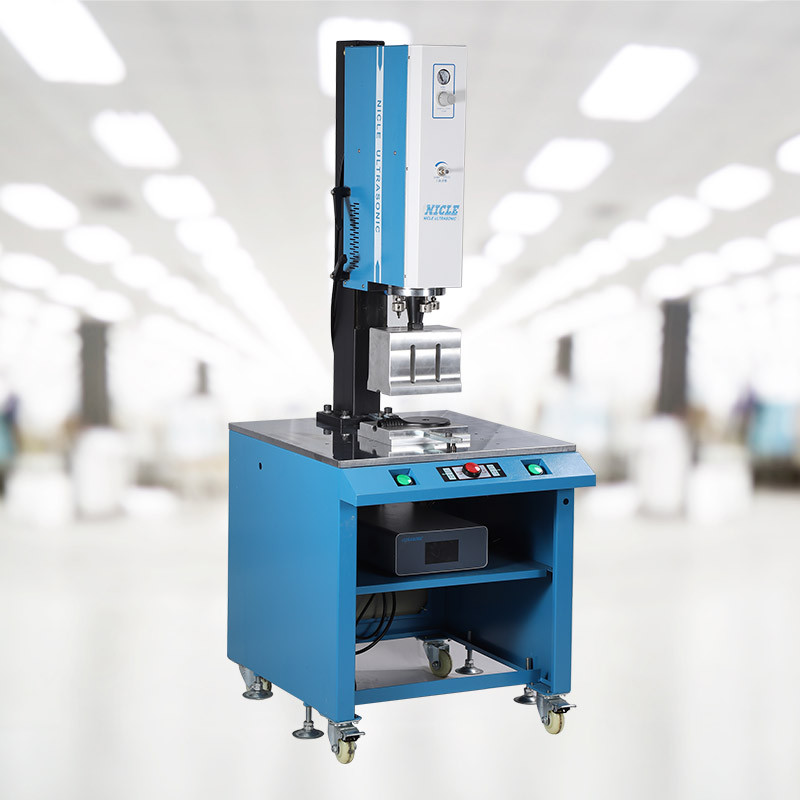
Desktop Plastic Ultrasonic Welder
The ultrasonic plastic welding machine is an advanced, high-efficiency system designed for precision welding with intelligent automation. It features Japanese transducers for stable frequency control and robust high-quality components.
Quality Control & Certification Standards
Quality assurance training in plastic welding training includes:
- Visual inspection techniques for identifying weld defects.
- EN 12814 destructive testing methods (peel, bend, tensile).
- Non-destructive testing using phased-array ultrasonic scanning.
- Documentation protocols for ISO 9001 and AS9100 compliance.
Industry-Ready Skill Alignment
The skills developed through plastic welding training directly align with industry certification requirements.:
- Aerospace: AS9100 standard for composite welding parameter control.
- Medical Devices: FDA-compliant clean room welding protocols.
- Infrastructure: ASME B31.3 pipeline welding defect prevention.
Duration of Plastic Welding Training Programs
The duration of plastic welding training programs varies based on industry requirements and career goals. According to AWS (American Welding Society) guidelines, training programs range from intensive short courses to comprehensive certification paths.

Short-Term Certification (1-14 Days)
AWS-approved accelerated programs focus on specific techniques. These include:
- 16-hour I-CAR automotive plastic welding certification.
- 40-hour TWI electrofusion certification for pipeline repairs.
- 24-hour AWS thermoplastic welding fundamentals.
Standard Programs (2-4 Weeks)
Industry-recognized mid-length courses combine theory with extensive hands-on practice:
- AWS Level 1 Plastic Welder: 140 hours (85% hands-on training).
- ASME-certified pipe fusion: 80 hours with live projects.
- DVS-approved industrial welding: 100 hours including defect analysis.
Comprehensive Certification (3-9 Months)
Advanced programs meeting NADCAP and AWS Level 2 requirements include:
- 300+ hours for aerospace certification.
- 400 hours for marine fabrication specialization.
- 500 hours for certified welding inspector qualification.
Learning Pathways
Short-term certification programs focus on specific skills, such as I-CAR for automotive repair, while comprehensive certification (3-9 months) covers broader skills, including NADCAP aviation standards.
Choosing the right plastic welding training path depends on your career goals and industry needs. Modern plastic welding training programs also offer hybrid learning options, combining online theory with in-person labs to optimize training efficiency while maintaining certification requirements.
6 Proven ROI Benefits of Certified Plastic Welding Training
Professional plastic welding training delivers measurable returns through validated performance metrics and industry recognition. Based on recent studies and workplace data, here are the key benefits that make formal plastic welding training essential for career advancement:

1. Quality and Defect Prevention
Certified welders achieve 98% weld integrity in pressure testing compared to 74% for self-taught technicians, according to TWI's 2024 analysis.
This precision comes from mastering parameter control in techniques like hot gas welding and electrofusion, significantly reducing costly defects in critical applications.
2. Safety Compliance and Risk Management
Certified welders demonstrate 100% compliance with OSHA 1910.252 standards for fume control and ventilation. This comprehensive safety training prevents workplace incidents and costly regulatory violations, while ensuring proper PPE usage and hazard mitigation.
3. Industry-Recognized Credentials
AWS certification holders command a 27% salary premium in specialized sectors like pipeline construction and medical device manufacturing, according to BLS 2023 data.
These credentials validate expertise in advanced processes like automated seam tracking and cleanroom welding protocols.
4. Hands-On Expertise Development
Training programs integrate 70% of practical coursework with advanced quality control methods. Graduates master defect identification and correction, achieving a 40% reduction in material waste through proper parameter optimization.
5. Advanced Technology Integration
Modern plastic welding training covers Industry 4.0 innovations, including robotic welding systems and laser-guided processes. This expertise is particularly valuable in emerging sectors like EV battery manufacturing, where the precision joining of composite materials is critical.
6. Career Advancement Opportunities
Data shows that 92% of certified welders advance to supervisory or specialized inspection roles within 18 months. Continuous training in emerging technologies and quality standards ensures long-term career growth and adaptability to industry changes.
These benefits translate directly to operational efficiency—certified welders complete projects 35% faster with significantly lower rework rates. For employers, this means improved project timelines and enhanced profitability through reduced material waste and labor costs.
Selecting a Plastic Welding Training Course
Selecting the appropriate plastic welding training and certification is crucial for career advancement. According to the American Welding Society's 2025 Industry Report, let's examine the five key criteria recommended by industry experts for evaluating plastic welding training programs:

Course Selection Decision Tree
Target Industry:
- Automotive: I-CAR 16-hour course.
- Aerospace: NADCAP 300+ hours.
- Medical: ISO 13485 specialization.
Exclusive Screening Criteria
Instructor Verification Tool: Require institutions to provide instructor WPS/PQR certificate numbers, which can be verified on the AWS website.
Key Evaluation Criteria
1. Match Credentials to Industry Demand
Different sectors require specific certifications:
- Automotive: I-CAR Plastic Repair Certification.
- Aerospace: AWS D15.1-Compliant Programs.
- Infrastructure: NASSCO/ASME Pipeline Certifications.
2. Verify Curriculum Standards
Quality programs must include these components per ISO/ASTM guidelines:
- Material science fundamentals (ASTM D4000 standards).
- Minimum 60% hands-on equipment training.
- Defect analysis techniques (ISO 13953 compliance).
- Safety protocols (OSHA 1910.252 requirements).
3. Evaluate Instructor Qualifications
As noted by TWI Senior Instructor James Chen: "Look for instructors with 10+ years of field experience and documented weld procedure qualifications (WPS/PQR). Their expertise directly impacts training quality."
4. Examine Program Track Record
Key performance indicators include:
- Graduate employment rates (industry average: 80%).
- Industry partnerships (e.g., Siemens Energy, Boeing suppliers).
- Student success metrics in certification exams.
5. Analyze Investment Return
According to the Bureau of Labor Statistics (2025), training costs vary:
- Entry-level certification: $500-1,500 (3-14 days).
- Professional certification: $6,000-8,000 (6 months).
- ROI: 2-year average payback through increased earnings.
Choosing a plastic welding training program that offers comprehensive certification preparation aligned with your industry's requirements is essential for career growth and long-term success.
Industries in Need of Plastic Welding Training
Plastic welding training provides essential skills for a versatile technique that is essential across numerous industries, with growing demand in emerging sectors.
Understanding which industries require plastic welding training helps identify valuable career pathways and training requirements. Let's explore key industries where plastic welding expertise is crucial, including emerging opportunities in sustainable technologies.

Emerging Sectors with High Demand
Hydrogen Infrastructure
The growing hydrogen economy creates significant demand for specialized plastic welding skills. Technicians must master EN 14141-compliant techniques for welding PE100-RC pipes capable of handling 350-bar hydrogen transport.
This sector requires additional certifications in high-pressure applications and safety protocols.
Advanced Medical Devices
Medical device manufacturing requires ISO 13485-certified clean room welding capabilities. From wearable healthcare devices to surgical equipment, technicians must master ultrasonic and laser welding techniques while maintaining strict biocompatibility standards.
Sustainable Infrastructure
Environmental applications include:
- Geomembrane installation for environmental protection (EPA compliance required).
- Renewable energy component assembly.
- Water treatment system fabrication.
Smart Manufacturing
Industry 4.0 integration has created demand for technicians skilled in:
- Automated welding systems programming.
- Quality control using IoT sensors.
- Digital twin modeling for process optimization.
Growing Opportunities
Microelectronics
The semiconductor industry requires micro-welding expertise for:
- Biodegradable sensor housings.
- Clean room-compatible component assembly.
- Precision instrument maintenance.
Marine and Offshore
Marine applications continue to expand, requiring:
- Advanced composite repair techniques.
- Underwater system maintenance.
- Corrosion-resistant component fabrication.
Industry Demand Heatmap
Industry |
Demand Growth Rate |
Key Certification |
Emerging Applications |
Hydrogen Infrastructure |
220% |
EN 14141 |
350-bar hydrogen transport pipelines |
Microelectronics |
180% |
ISO 13485 |
Biodegradable sensor welding |
EV Battery Manufacturing |
150% |
IATF 16949 |
Composite battery shell sealing |
Additional Insights on Industry Needs
Automotive and E-Mobility
The automotive sector, particularly electric vehicle (EV) manufacturing, relies heavily on plastic welding training. Modern EVs require specialized welding techniques for battery housings and lightweight components.
Technicians must be IATF 16949-certified and trained in advanced processes like ultrasonic and laser welding. According to recent industry data, EV manufacturing demands for plastic welding specialists have grown 40% annually since 2023.
Aerospace and Defense
Aerospace applications demand high-precision plastic welding training for composite structures and interior components. Technicians must meet AS9100D certification requirements and master specialized techniques for working with advanced polymers.
The industry emphasizes strict quality control protocols and documentation requirements.
Traditional Industries with Ongoing Demand
In addition to the emerging sectors, traditional industries continue to rely on plastic welding training:
- Automotive: For body repairs and component manufacturing.
- Consumer Electronics: For assembling plastic casings and components.
- Packaging: For creating durable and lightweight packaging solutions.
Future Trends and Opportunities
As technology advances, the demand for skilled plastic welders is expected to grow in several emerging fields:
- Biodegradable Materials: With increasing focus on sustainability, plastic welding training will need to incorporate techniques for working with biodegradable polymers.
- 3D Printing: Integration of plastic welding training with additive manufacturing processes to create complex components.
- Nanotechnology: Development of micro-welding techniques for nanoscale applications in electronics and medical devices.

Conclusion
Plastic welding training is a critical investment for professionals aiming to excel in modern manufacturing and repair industries. By mastering essential skills, adhering to industry certifications, and staying updated with emerging technologies, technicians can unlock a wide range of career opportunities.
Whether in traditional sectors like automotive or emerging fields like hydrogen infrastructure, the demand for certified plastic welders is on the rise. Investing in comprehensive plastic welding training ensures that technicians gain immediate career benefits and long-term adaptability to evolving industry needs.