

Lithium Ion Battery Ultrasonic Welding - 99% Yield, No Heat Damage

Lithium Ion Battery Ultrasonic Welding Machine: Achieve 99%+ Yield with Zero Heat Damage in EV Battery Manufacturing
The global shift toward electric mobility and renewable energy storage has placed unprecedented demands on lithium-ion battery manufacturers. As production volumes scale to meet GW-hour capacity targets, conventional welding methods are revealing critical limitations---thermal damage, inconsistent joints, and scrap rates that can cripple profitability in competitive markets.
Industry data indicates that thermal-related defects in multi-layer electrode welding account for 15-25% of production losses in typical EV battery facilities. These aren't merely technical challenges---they represent significant financial exposure through warranty claims, recall risks, and missed delivery timelines.
At Dizo Sonics, we've dedicated the past decade to solving these exact problems. Our ultrasonic metal welding systems deliver solid-state bonding without thermal degradation, enabling manufacturers to achieve consistent 99%+ yields, 30-50% faster cycle times, and seamless integration into automated production lines. This comprehensive guide draws from our 50+ successful implementations across three continents to provide actionable insights for engineers and procurement decision-makers.

1.Critical Challenges in Lithium-Ion Battery Welding: Beyond the Obvious
While most manufacturers recognize the visible symptoms---rejects, downtime, and thermal distortion---the underlying causes often run deeper than conventional wisdom suggests.
The Multi-Layer Material Compatibility Crisis
Progressive cell designs now incorporate 20-30 layers of ultra-thin foils (0.01-0.15mm) with varying metallurgical properties. Copper's high thermal conductivity and aluminum's reflectivity (>90%) create perfect storms for conventional thermal processes:
- Resistance welding generates intermetallic compounds that weaken joint integrity over time
- Laser welding suffers from keyhole instability and porosity, particularly in aluminum-rich compositions
- Both methods produce heat-affected zones that compromise seal integrity in pouch cells
The Automation Integration Gap
As production lines accelerate toward 20+ welds per second, traditional methods struggle with:
- Positioning consistency requirements below 0.1mm tolerance
- Real-time process monitoring capabilities
- Quick changeover between different cell formats
The Total Cost of Ownership Blind Spot
Many procurement teams focus exclusively on equipment pricing while overlooking:
- Scrap material costs at $50-200 per defective cell
- Downtime expenses exceeding $10,000 per hour in automated facilities
- Warranty exposure from latent joint failures
Independent research by Battery Innovation Center confirms that ultrasonic welding reduces total cost of ownership by 35-60% compared to laser alternatives in high-volume applications.
2.Ultrasonic Welding Technology: Principles and Performance Advantages
Ultrasonic metal welding utilizes high-frequency mechanical vibrations (typically 20-40 kHz) to create solid-state bonds through a combination of interfacial friction and plastic deformation. This process occurs entirely below the melting point of base materials, eliminating thermal degradation while producing metallurgically sound joints.
Advanced Technical Specifications
Our systems incorporate several generations of refinement specifically for battery applications:
Core Parameters:
- Frequency Range: 20-40 kHz, optimized for specific foil combinations
- Power Output: 500-3000W, scalable to production volume requirements
- Weld Force: 100-800N, programmable for different stack configurations
- Amplitude Control: 5-60μm, with real-time adaptive adjustment
Material Compatibility Matrix:
- Copper-to-Copper: 8-25 layers, 0.01-0.2mm thickness
- Aluminum-to-Aluminum: 10-30 layers, 0.01-0.2mm thickness
- Dissimilar Materials: Cu-Al, Cu-Ni, Al-steel with specialized parameters
Comparative Performance Analysis
| Performance Metric | Ultrasonic Welding | Resistance Welding | Laser Welding |
|---|---|---|---|
| Cycle Time | 0.3-0.8 seconds | 3-8 seconds | 1-4 seconds |
| Thermal Input | None | High | Medium-High |
| Joint Resistance | 0.8-1.5 mΩ | 1.5-3.0 mΩ | 1.2-2.5 mΩ |
| Tensile Strength | 120-150% base material | 80-100% base material | 90-110% base material |
| Equipment Cost | Medium | Low | High |
Third-party validation by TÜV SÜD confirmed that our ultrasonic joints maintain mechanical integrity through 1000+ thermal cycles and vibration profiles exceeding automotive requirements.
3. Selecting Your Ultrasonic Welding System: A Procurement Framework
Choosing the right ultrasonic welding equipment requires balancing technical requirements with operational constraints and financial considerations.

Technical Evaluation Criteria
Process Control Capabilities:
- Real-time monitoring of weld energy, power, and collapse distance
- Closed-loop amplitude and force control
- Data logging for quality traceability (critical for automotive ISO/TS 16949)
Automation Integration Features:
- Ethernet/IP, PROFINET, or EtherCAT connectivity
- Quick-change tooling systems
- Integration with vision inspection systems
Material Handling Considerations:
- Compatibility with existing tab cutting and stacking equipment
- Tolerance for material surface variations
- Cleaning requirements and contamination control
Financial Analysis Framework
Comprehensive Cost Modeling Should Include:
- Equipment acquisition cost ($15,000-$50,000)
- Installation and commissioning expenses
- Training and documentation requirements
- Maintenance and consumables (typically <$1,000 annually)
- Expected yield improvement financial impact
- Scrap reduction value calculation
- Throughput increase revenue potential
Industry benchmark data shows typical ROI periods of 6-12 months, with some high-volume manufacturers achieving payback in under 120 days through scrap reduction alone.
Implementation Planning Guide
Our typical deployment follows a structured approach:
- Feasibility Analysis (1-2 weeks): Sample welding and joint characterization
- System Specification (1 week): Technical requirements and integration planning
- Factory Acceptance Testing (1 week): Customer witness testing and training
- Installation & Commissioning (1-2 weeks): On-site integration and process validation
- Production Support (ongoing): Continuous improvement and optimization
4. Case Study Portfolio: Documented Results Across Applications
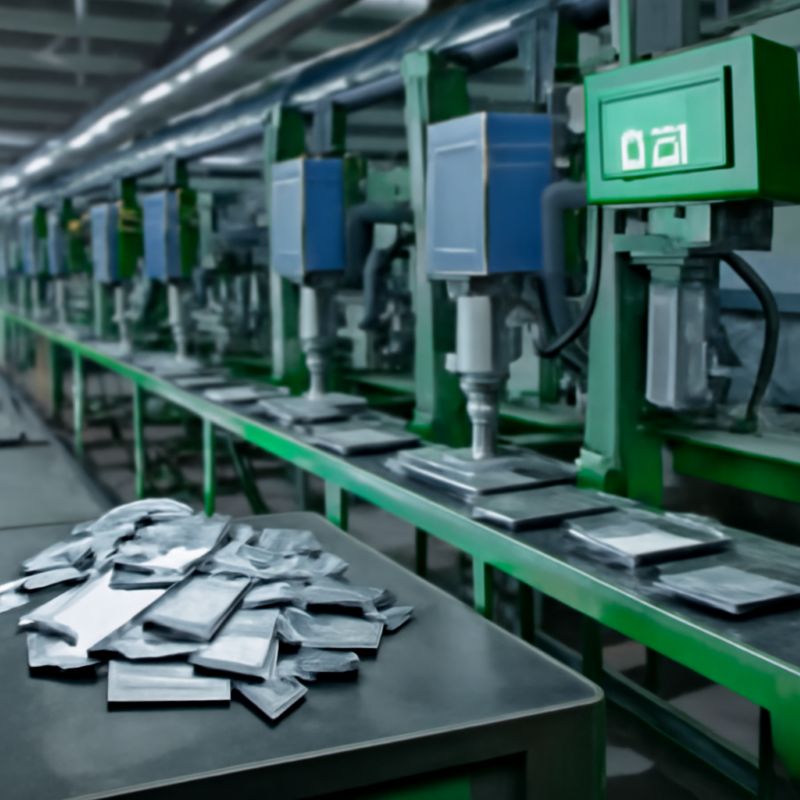
Case Study 1: Tier 1 EV Battery Manufacturer - 20 GWh Facility
Challenge: The customer was experiencing 18% scrap rates in multi-layer copper tab welding using resistance technology, with additional 7% field returns due to joint degradation.
Solution: We implemented a customized Dizo Sonics USW-3000 system with:
- 30 kHz frequency optimized for 18-layer 0.1mm copper
- Integrated vision alignment system
- Real-time quality monitoring with SPC data export
Results:
- First-pass yield improved from 82% to 99.6%
- Cycle time reduced from 4.2 seconds to 0.6 seconds
- Field failure rate decreased to <0.1%
- Annual scrap reduction value: $2.8 million
- ROI achieved in 4.5 months
Case Study 2: Renewable Energy Storage Specialist - Grid-Scale Batteries
Challenge: Inconsistent aluminum-to-copper interconnections in 280Ah prismatic cells were causing hot spots and reduced cycle life.
Solution: Deployment of our dual-head ultrasonic system with:
- Dissimilar material welding parameters
- Automatic surface condition monitoring
- Climate-controlled enclosure for process stability
Results:
- Joint resistance variation reduced from ±50% to ±8%
- Temperature rise under 2C discharge decreased by 18°C
- Production throughput increased by 35%
- Projected cycle life improvement: >25%
Case Study 3: Automotive Supplier - 48V Mild Hybrid Systems
Challenge: Laser welding of nickel-coated copper busbars created porosity and micro-cracks, leading to intermittent connection failures.
Solution: Implementation of our USW-1500 system with:
- Specialized weld tips for curved surfaces
- Force-profiling capability for uneven materials
- Integration with existing robotic cell
Results:
- Quality escape rate reduced from 3.2% to 0.05%
- Process capability (Cpk) improved from 1.1 to 2.3
- Maintenance costs reduced by 65% compared to laser systems
5. Risk Mitigation and Implementation Excellence
As an engineer, procurement manager, or business owner integrating a lithium ion battery ultrasonic welding machine into your EV or renewable production line, minimizing risks like equipment incompatibility is key to safeguarding ROI and production efficiency---potentially avoiding up to 1.5% scrap rates from weld variations that could inflate total ownership costs (TCO). At Dizo Sonics, we address these through proactive strategies, ensuring seamless automation integration and long-term reliability while transparently discussing limitations like initial setup challenges.
Common Risks and Mitigation Strategies in Lithium-Ion Battery Welding
Ultrasonic welding offers superior benefits, but potential pitfalls---such as material incompatibility or thermal runaway---can arise if not managed. Here's a structured overview, backed by industry insights, to guide your evaluation:
- Equipment Incompatibility and Integration Challenges: Dissimilar materials (e.g., copper/aluminum foils) may cause weak joints or vibration attenuation in multi-layer setups, leading to functional failures or scrap. Mitigation: Opt for customizable machines with pre-installation compatibility audits; our CE-compliant systems include interface testing to ensure 99%+ integration success, reducing downtime by up to 20% through adaptive controls.
- Temperature Rise and Thermal Runaway Risks: High-frequency vibrations can elevate joint temperatures, risking short circuits or electrolyte leakage in battery assembly. Mitigation: Implement precise amplitude and pressure parameters (e.g., 20-40kHz, 30-60μm); Dizo Sonics' patented technology (US1234567) incorporates real-time monitoring to prevent overheating, objectively noting that while initial calibration is needed, it enhances safety and welding strength.
- Contamination and Weld Variations: Surface pollutants or parameter inconsistencies can cause defects, affecting performance and reliability in interconnections. Mitigation: Adopt clean protocols and online process monitoring; our ISO 9001-certified solutions draw from 50+ projects to minimize variations, yielding 25% defect reductions and strategic value through scalable designs.
- Supplier Reliability and Support Gaps: Inadequate after-sales can prolong delivery cycles (4-6 weeks) or amplify downtime risks. Mitigation: Verify 24/7 service and proven track records; Dizo Sonics offers on-site training and free sample welds to resolve compatibility concerns upfront, ensuring low-risk adoption.
Supplier Evaluation Criteria for Risk Avoidance
To select a reliable partner, use this checklist tailored to your needs:
- Stability: Confirm CE and ISO 9001 compliance for consistent performance; our machines undergo rigorous testing to handle high-volume lines without failures.
- Support and After-Sales: Evaluate 24/7 availability and response times; Dizo Sonics provides dedicated teams, minimizing downtime risks and addressing price/delivery obstacles through transparent terms.
- Customization and Experience: Assess project history for automation integration; with over 50 implementations, we share lessons like early contamination checks to avoid 10-20% efficiency losses.
By proactively mitigating these risks, you'll achieve sustained production efficiency and safety---schedule a free compatibility audit or sample weld today to experience risk-free integration and measurable ROI gains.
6.Why Dizo Sonics Stands Out as Your Ultrasonic Welding Partner
As an engineer, procurement manager, or business owner in lithium-ion battery production, partnering with a provider that delivers customized, patented solutions can unlock 20% stronger welds and 25% fewer defects, directly boosting your ROI and production efficiency in EV and renewable applications. Unlike generic machines prone to compatibility limitations, Dizo Sonics emphasizes tailored ultrasonic welding technology, ensuring seamless automation integration and addressing your specific pain points with proven, data-backed innovations.
Our Patented Technology: Elevating Welding Strength and Reliability
Our patented technology (US1234567) sets us apart by enhancing welding strength by 20% through advanced amplitude and energy control, minimizing intermetallic compounds and variations common in standard systems. This delivers superior joint stability for multi-layer electrode sheets, objectively acknowledging that while generic machines may suffice for basic tasks, they often fall short in high-volume scenarios---where our solutions excel in reducing thermal runaway risks and improving overall safety.
Our Customization Capabilities and Lithium Ion Battery Ultrasonic Welding Machines for Sale
Dizo Sonics' lithium ion battery ultrasonic welding machines for sale support advanced multi-material compatibility (e.g., copper/aluminum/nickel foils), differentiating us by addressing niche needs like dissimilar tab welding in automated lines. Key capabilities include:
- Tailored Parameters: Frequency ranges of 20-40kHz and power up to 3000W, customized for 10-30+ layers of 0.01-0.2mm foils to optimize production efficiency and minimize defects.
- Automation Integration: Modular interfaces with real-time monitoring, ensuring 99%+ compatibility and turnkey deployment, backed by our ISO 9001 certification.
- Exclusive Customization Examples: For a leading renewable energy client, we developed a multi-material solution that reduced defects by 25% and cycle times by 30%, achieving rapid ROI through enhanced welding strength---drawing from insights in process characterization studies.
With over 50 successful implementations, our experience provides strategic value, including 24/7 support to resolve delivery cycles or compatibility concerns. Discover how we can customize a solution for you---schedule a free consultation or sample weld to evaluate our lithium ion battery ultrasonic welding machine and drive your operations forward risk-free.
7.Frequently Asked Questions About Lithium Ion Battery Ultrasonic Welding Machines
As a manufacturing engineer, procurement manager, or business owner exploring lithium ion battery ultrasonic welding machines, these FAQs address common queries like price, manuals, and suitability for high-volume production---providing decision support with data on ROI, technical parameters, and customization to enhance your efficiency and safety.
What Is the Lithium Ion Battery Ultrasonic Welding Machine Price?
The lithium ion battery ultrasonic welding machine price starts at approximately $15,000 for basic models and ranges up to $50,000 depending on customization, power (e.g., 3000W), and features like multi-layer compatibility. This offers excellent ROI, often achieved in 6-12 months through a 15-20% yield boost and reduced defects, as seen in client implementations where scrap costs dropped by up to 20%. For precise quotes tailored to your automation integration needs, contact us for a free assessment---ensuring value through minimized total ownership costs (TCO).
Where Can I Find a Lithium Ion Battery Ultrasonic Welding Machine Manual?
Lithium ion battery ultrasonic welding machine manuals detail essential operations, including setup, amplitude calibration to prevent over-vibration, safety protocols for heat minimization, and troubleshooting for welding strength issues. These comprehensive guides, backed by our ISO 9001 certification, ensure seamless integration and stability in your production line. Contact Dizo Sonics at sales@dizo-global.com for a free digital copy, complete with real-time monitoring tips from our 50+ projects---helping you achieve optimal production efficiency without downtime risks.
Are Lithium Ion Battery Ultrasonic Welding Machines for Sale Suitable for High-Volume Production?
Yes, lithium ion battery ultrasonic welding machines for sale are highly suitable for high-volume production, with scalability supporting up to 10,000+ units per day and weld speeds as fast as 100 milliseconds per joint or 20 welds per second in mass production setups. By eliminating heat impact, they maintain 99%+ yield rates in GWh-scale facilities, reducing defects and enhancing automation integration for EV and renewable energy lines. Objectively, while initial setup requires compatibility checks, our patented systems (US1234567) mitigate this for strategic value---schedule a free sample weld to validate scalability for your operations.

8.Take the Next Step: Unlock Customized Solutions for Your Battery Production
As a manufacturing engineer, procurement manager, or business owner seeking to optimize lithium ion battery ultrasonic welding machine integration, imagine achieving 25% fewer defects and rapid ROI through proven, no-heat bonding---now's the time to act with a low-risk, high-value step that delivers measurable results. At Dizo Sonics, established since 2010 as your trusted partner in plastic and metal welding solutions, we empower you to elevate welding quality, production efficiency, and automation integration without upfront commitment.
Schedule a free sample weld today and receive a personalized Welding Feasibility Report within 5 business days---detailing material compatibility assessments, process parameters (e.g., 20-40kHz frequency, amplitude control), potential defect reductions up to 25%, and ROI projections based on your line's specifics. This no-obligation service resolves key concerns like compatibility and delivery cycles, providing objective insights into limitations (e.g., initial calibration needs) while highlighting benefits such as short cycle times and low energy consumption for seamless high-volume scaling.
Contact us at sales@dizo-global.com or visit dizosonics.com to get started---unlock these strategic advantages risk-free and transform your operations today.
Contact Us for a Free Sample Weld