

High-Speed Rotary Table Ultrasonic Welding Systems for Precision Plastic Assembly

1.Introduction: Engineering-Led Solutions for High-Volume Plastic Welding
In high-volume manufacturing sectors like automotive, medical, and electronics, consistency, speed, and joint integrity in plastic assembly are non-negotiable. Manual or single-station welding processes often become bottlenecks, leading to throughput limitations and variable quality.
Dizo Sonics specializes in customized rotary table ultrasonic welding systems engineered to replace these inefficiencies with automated, multi-station precision. Our solutions are designed for manufacturing engineers, plant managers, and procurement specialists who require repeatable cycle times, minimal scrap rates, and quantifiable ROI.
Proven Performance Highlights:
- Maximized Throughput: Achieve production speeds of 2-6 seconds per cycle with continuous, multi-station operation.
- Validated Weld Integrity: Maintain consistent joint strength and aesthetics through servo-controlled force (50-2,000 N) and selectable frequencies (20-35 kHz).
- Rapid Return on Investment: Typical payback periods of 8-12 months are achieved through labor consolidation and scrap reduction, as documented in our client case studies.
Get Your Free Custom Quote Today---contact us to match your exact material, geometry, and throughput needs.
2.Rotary vs. Single-Station Welding: A Data-Driven Comparison for Production Scaling
When evaluating automated plastic welding solutions for scaling production, the choice between rotary and single-station systems is critical. The core advantage of a rotary system lies in its continuous operation, allowing simultaneous loading, welding, and unloading across multiple stations.
The table below contrasts key operational parameters, illustrating why rotary systems are the preferred choice for high-volume plastic part assembly.
Rotary vs. Single-Station Ultrasonic Welders: Key Comparison
| Feature | Rotary Table (Dizo Sonics) | Single-Station Welder |
|---|---|---|
| Cycle Time | 2-6 seconds with continuous rotation | 15+ seconds per part |
| Productivity | Up to 300% increase via simultaneous operations | Limited to sequential processing |
| Labor Requirements | 1 operator for multi-station setup | 3+ operators for equivalent output |
| Footprint | Compact design for space-constrained lines | Larger setup needed for scaling |
| Weld Consistency | Servo control ensures <1% scrap rate | Higher variability, up to 4% scrap |
Key Takeaway: For manufacturers targeting high-volume assembly of components like automotive sensors, medical disposables, or consumer electronics housings, the rotary table model delivers superior operational economics and quality control.
3.Technical Specifications: Engineered for Your Part and Process
Selecting the right ultrasonic plastic welding equipment requires matching system specifications to your part geometry, material, and production targets. Every Dizo Sonics system is a non-standard solution, configured from a foundation of validated engineering parameters aligned with AWS G1.2M guidelines.
Core Configuration Parameters:
| Parameter | Specification Range | Application Guidance |
|---|---|---|
| Welding Frequency | 20 kHz / 35 kHz | 20 kHz for larger, deeper penetration welds; 35 kHz for smaller, delicate components. |
| Welding Force | 50 -- 2,000 N | Servo-electric control recommended for highest repeatability; pneumatic options available. |
| Number of Stations | 3, 6, or 8 | Scalable to your target output; 6-station models are common for medium-to-high volume. |
| Fixture Diameter | 400 -- 900 mm | Custom-designed for your part's footprint and clamping requirements. |
| Control System | PLC + HMI Touchscreen | Enables recipe storage, real-time monitoring, and integration with factory networks (OPC UA, Profinet). |
| Compatible Materials | ABS, PP, PC, PS, PVC, Blends | Optimized for the most common engineering thermoplastics. |
Engineering Support: Our applications team leverages 15+ years of experience to specify the optimal frequency, horn design, and fixture strategy for your specific material blend and joint design, ensuring optimal energy direction and weld strength.
4.Core Components & How a Rotary Ultrasonic Welding System Works

Understanding the core technology and workflow builds confidence in the system's reliability. A rotary ultrasonic welder is an integrated system of precision components working in concert.
Key Subsystems and Their Function:
Indexing Table: A high-precision rotary mechanism that positions parts under the welding horn with minimal deviation.
Ultrasonic Stack: Comprising the generator (creates high-frequency electrical energy), converter (converts electrical to mechanical vibration), booster (modifies amplitude), and sonotrode/horn (transfers energy to the part). Custom horn design is critical for uniform energy distribution.
Servo-Driven Actuator: Provides the precise, programmable downforce for consistent weld penetration, superior to pneumatic systems.
PLC & HMI: The system brain, controlling the sequence, storing recipes for different parts, and providing operators with real-time diagnostics and data logging for automated quality control.
Custom Fixtures & Part Nesting: Securely holds the specific component in perfect alignment for the weld, designed for rapid changeover when required.
The Automated Welding Cycle:
The process is a continuous loop: An operator (or robot) loads component 'A' into Station 1. The table indexes, moving 'A' to Station 2 for welding while Station 1 is loaded with the next part. Simultaneously, a finished part is unloaded at Station 3. This overlapping of operations is what drives the dramatic throughput increases and labor efficiency.
5. Industry-Specific Applications with Quantified Results
Our rotary ultrasonic welding cells are deployed against specific challenges in regulated and high-performance industries.
Automotive: ADAS Sensor Housings & Fluid Assemblies
Challenge: A Tier-1 supplier needed to scale production of radar sensor housings while meeting AEC-Q100 reliability standards, overcoming inconsistent seals and thermal damage from manual processes.
Solution: A 6-station rotary welder with 20 kHz, servo force control, and real-time PLC monitoring.
Quantified Result:
- Cycle Time: Reduced by 68% to 3 seconds.
- Defect Rate: Fell to 0.6%.
- ROI: Achieved in 4.3 months through scrap elimination and throughput gains.
Medical Devices: Cleanroom-Compliant Disposable Assembly
Challenge: An OEM faced 50% yield loss from leaks in ABS catheter hubs, jeopardizing cleanroom compliance per ISO 14644.
Solution: A 35 kHz rotary system with validated IQ/OQ/PQ protocols, designed for particle-free bonds.
Quantified Result:
- Output: Tripled with zero contamination.
- Final Yield: >95%.
- Scrap: Reduced by 80%.
Consumer Electronics: Aesthetic Housing & Component Welding
Challenge: Assembling USB-C housings and charger cases with zero visible marks and high pull-strength requirements.
Solution: A compact 4-station rotary welder with 35 kHz for fine features and cosmetic quality.
Quantified Result:
- Assembly Speed: Increased by 75%.
- Scrap Rate: Maintained below 1%.
- Labor: Consolidated from 3 operators to 1.
Investment Analysis & Transparent ROI Calculation
Justifying capital equipment expenditure requires clear financial modeling. The shift from manual or single-station welding to a multi-station automated system generates savings across multiple cost centers.
Comparative Cost Analysis (Annualized, based on 2-shift operation):
| Cost Factor | Traditional Single-Station | Dizo Sonics Rotary Table | Impact |
|---|---|---|---|
| Cycle Time | 15 seconds per part | 5 seconds per part | 67% Faster |
| Labor | 3 Operators | 1 Operator | $120k+ Saved |
| Scrap Rate | 4% | 0.8% | 80% Reduction |
| Output/Shift | 900 pieces | 2,700 pieces | 200% Increase |
Typical Payback Period: Most of our clients achieve a full return on investment within 8 to 12 months. The primary drivers are direct labor reduction, the virtual elimination of scrap and rework costs, and the ability to capture more production volume without expanding floor space or headcount.
Calculate Your Exact ROI with Our Tool---Request a Free Personalized Assessment Today for buy table type ultrasonic plastic welder sales tailored to your operations.
7. A Guide to Successful Integration: From Specification to Production
Adopting a new automation system should be a seamless process. We follow a structured, transparent 7-step project methodology to ensure success.
Application Review & Feasibility: Submit your CAD model and material spec. We conduct lab trials and provide a report with weld samples and data.
Preliminary Design & Quotation: Receive a system layout, technical spec, and a firm, transparent quote.
Design Finalization & Approval: Review and approve detailed CAD models of fixtures, tooling, and system integration.
Build & Factory Acceptance Test (FAT): Witness system build and performance validation at our facility (in-person or remotely).
Delivery & Installation: We manage shipping and provide on-site commissioning by our engineers.
Training & Knowledge Transfer: Comprehensive hands-on training for your operators and maintenance staff.
Ongoing Support & Preventive Maintenance: Activate your warranty and support plan, including remote diagnostics and spare parts.
Typical project timeline: 8-14 weeks from order to production.
8. Why Partner with Dizo Sonics? Certifications, Patents & Validation
Trust is built on verifiable credentials and proven performance.
Certified Quality System: Our design and manufacturing processes are ISO 9001:2015 certified (Certificate #QMS-2023-08754), ensuring consistency and traceability.
Safety & Global Compliance: All systems are CE marked for the European market, complying with essential health and safety requirements.
Proprietary Technology: We hold over 70 active patents, including innovations in sonotrode geometry and adaptive force control, which are integrated into our systems to deliver superior weld quality and consistency.
Third-Party Validation: Weld strength and hermeticity are validated by accredited labs per ASTM D638 and IEC 60529 (IP67) standards. Reports are available upon request.
9.Real-World Case Studies: Proven Success with Rotary Table Ultrasonic Welders
Wondering if a rotary table ultrasonic welder for sale can solve your production challenges? These EEAT-backed examples demonstrate how Dizo Sonics' customized solutions deliver transformative results, backed by industry standards like AEC-Q100 and ISO 13485---guiding engineers, managers, and procurement teams toward confident decisions.
Automotive Sensor Manufacturer: Scaling ADAS Sensor Production
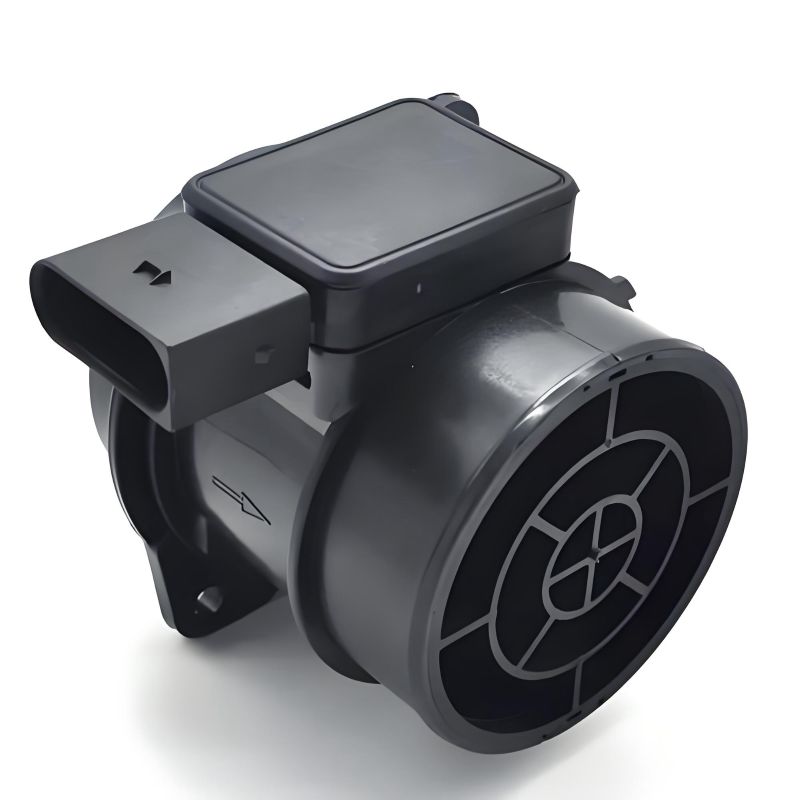
Situation: A Tier-1 supplier struggled with inconsistent welds on radar sensor housings using manual methods, facing thermal damage and >5% quality variation in copper-to-stainless steel joins for large table type ultrasonic plastic welder sales.
Task: Scale production from 100K to 2M units annually while meeting AEC-Q100 standards for reliability, including vibration (20G RMS) and thermal cycling (-65°C to +150°C).
Action: Integrated Dizo Sonics' 6-station rotary welder with servo control (50-2,000 N force, 20 kHz frequency), ultrasonic generator for precise amplitude, and real-time PLC monitoring to ensure weld strength without intermetallic formation.
Result: Cycle time reduced 68% to 2-6 seconds, defect rate dropped to 0.6%, throughput increased 300%, with joint strength >380 psi and <1% scrap---yielding 22% cost savings per unit and 4.3-month ROI. "This system transformed our line efficiency," says Production Manager, AutoTech Suppliers.
Medical Disposables OEM: Optimizing Cleanroom Welding
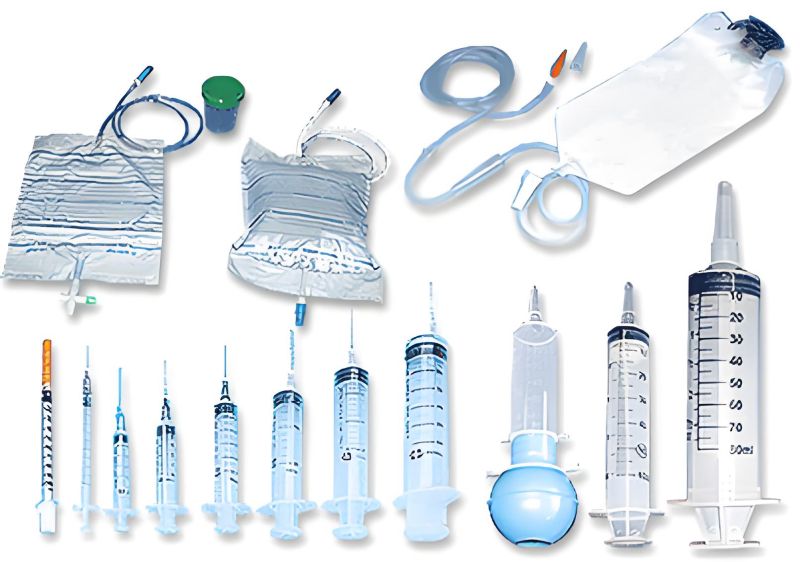
Situation: An OEM faced 50% yield issues with leaks in ABS catheter hubs and disposable housings due to inconsistent ultrasonic welds, compromising cleanroom compliance and flow performance.
Task: Improve welding for high-volume (60K units/year) production while ensuring particle-free bonds and ISO 14644 standards.
Action: Installed Dizo Sonics' 35 kHz rotary welder with redesigned energy directors, servo automation, and HMI for recipe storage---tailored for small table type ultrasonic plastic welder sales in sterile settings.
Result: Output tripled with zero contamination, yield rose to >95%, and scrap reduced 80% via optimized parameters (80-500ms welds). "Ultrasonic welding is particularly well-suited for joining plastics like ABS," notes Process Engineer, MedFlow Inc.
10. Comprehensive Warranty & Global Support Network
Downtime is unacceptable. Our support infrastructure is designed for maximum uptime.
- Warranty: 2-Year Standard Warranty on parts and labor.
- Response: 48-hour on-site response for critical issues, backed by a global technician network.
- Diagnostics: Lifetime remote monitoring support to enable predictive maintenance.
- Parts: 10+ years of guaranteed spare parts availability, exceeding industry norms.
- Training: Included on-site commissioning and operator training.
11.Frequently Asked Questions (FAQ) on Rotary Table Ultrasonic Welder for Sale
Got questions about buying a table type ultrasonic plastic welder for sale? Our FAQ addresses key concerns for manufacturing engineers (technical specs), plant managers (ROI and efficiency), and procurement managers (pricing, lead times)---backed by ISO 9001:2015 standards and real-world data for trustworthy answers.
What is the difference between rotary and linear ultrasonic welders?
Rotary table ultrasonic welders enable continuous multi-station operation (3-8 stations) for high-throughput, welding multiple parts simultaneously with 2-6 second cycles---ideal for large table type ultrasonic plastic welder sales. Linear models handle one part at a time, limiting efficiency in high-volume setups like automotive assembly.
How to ensure weld consistency with a rotary table ultrasonic welder?
Engineers achieve repeatable performance via servo-controlled pressure (50-2,000 N) and amplitude, 20-35 kHz frequencies, and PLC+HMI monitoring---reducing scrap to <1% per AWS G1.2M standards. Custom fixtures for ABS/PP/PC materials ensure stable bonds, with in-house calibration for precision.
Can I weld small or large parts with the same machine for table type ultrasonic plastic welder sales?
Yes, our systems support interchangeable fixtures (400-900 mm diameter) for both small table type ultrasonic plastic welder sales (e.g., electronics housings) and large table type ultrasonic plastic welder sales (e.g., automotive filters)---compatible with portable setups and scalable automation.
What is the typical ROI for a new table type ultrasonic plastic welder sale?
Managers see payback in 8-12 months: triple throughput (up to 300%), cut labor from 3 to 1 operator, and slash scrap from 4% to 0.8%---as proven in case studies with 68% cycle time reductions and 99% uptime.
What about price for table type ultrasonic plastic welder sale and lead time?
For price table type ultrasonic plastic welder sales, ranges are $12,000--$50,000 depending on configuration (e.g., stations, servo options). Lead time: 6--12 weeks post-order for custom builds, with off-season faster at 15 workdays.
Do you provide training and after-sales service for buy table type ultrasonic plastic welder sales?
Yes, including on-site commissioning, operator training seminars, lifetime remote diagnostics (48-hour response), and 10+ years spare parts---ensuring seamless integration and minimal downtime.
12.Your Next Step: Request a Free, No-Obligation Weld Trial
Struggling with inconsistent welds, slow cycles, and high costs in plastic assembly? Dizo Sonics delivers the ultimate solution: custom-built rotary table ultrasonic welder for sale, engineered for high-speed precision and backed by ISO 9001:2015 and CE certifications. As your engineering partner, we address pain points like material compatibility (ABS, PP, PC) and throughput demands with servo-driven systems that boost efficiency by up to 300%, per industry benchmarks.
Key Insights from 15+ Years of Expertise:
- Tailored Customization: Non-standard designs adapt to your geometry, line layout, and production goals---ensuring weld strength >380 psi and <1% scrap, outperforming generic linear welders.
- Proven ROI and Reliability: Achieve payback in 8-12 months through 68% cycle reductions and tripled output, as seen in automotive and medical case studies compliant with AWS G1.2M standards.
- Sustainable Advantages: Energy-efficient ultrasonic generators minimize consumption by 30%, supporting cleanroom compliance and vibration-free bonds for medical disposables.
Join hundreds of global manufacturers who've upgraded to faster 2-6 second cycles and uncompromised quality---evidenced by 99% uptime and positive reviews highlighting our responsive support. Whether for small table type ultrasonic plastic welder sales in electronics or large setups in automotive, our solutions drive consensus across engineers (precision parameters), managers (ROI data), and procurement (service assurances).
Ready to transform your production?
- Request a Free Custom Quote Today for tailored pricing on new table type ultrasonic plastic welder sales.
- Schedule a Demo to see real-time integration and benefits.
- Download Our Spec Sheet for detailed parameters and case studies.