

Heat Stake Welding vs Ultrasonic Welding: 2024 Guide & Comparison

The Ultimate Guide to Heat Stake Welding in 2024: Processes, Benefits, and Advanced Alternatives
Are uneven welds in your plastic injection molding process compromising product reliability and driving up costs? In demanding sectors like automotive manufacturing and medical device assembly, common challenges such as thermal distortion, slow cycle times, and contamination risks can halt production.
While heat stake welding offers a precise method for joining plastic components like bosses and studs, its inconsistencies in complex applications often demand a more robust solution. This definitive guide, drawing on Dizo Sonics' 20+ years of ultrasonic welding expertise, delves deep into the mechanics, advantages, and limitations of thermal staking. We'll also explore how advanced alternatives like customized ultrasonic welding can overcome these hurdles to boost your efficiency, durability, and bottom line.
Ready to optimize your plastic joining process? Claim your free, no-obligation line assessment from our experts today.

Introduction to Heat Stake Welding
What is Heat Stake Welding?
Heat stake welding, also known as thermal staking, is a permanent method for assembling plastic parts. It uses localized heat to soften specific features---such as plastic studs, pins, or bosses---and then uses pressure to reshape them, forming a secure mechanical lock. Think of it as melting and forming a plastic peg into a rivet-like head to "clinch" components together.
This process requires no adhesives or fasteners, which simplifies the assembly process, reduces potential contamination, and keeps costs low for thermoplastics. It integrates seamlessly into plastic injection molding workflows, where components are assembled post-ejection from the mold.
How Does Heat Stake Welding Work?
The process can be broken down into four critical, sequential steps:
- Prepare & Align: The plastic components are positioned, ensuring the studs or bosses are correctly aligned with the corresponding mating holes or surfaces.
- Apply Heat: A controlled heat source is applied to the plastic feature. Common methods include direct contact with a hot tool, hot air heating, or non-contact infrared heating.
- Deform & Shape: Once the plastic reaches its glass transition temperature and becomes pliable, a tool (or staking head) applies pressure to deform the material, forming a new head or lock.
- Cool & Solidify: Pressure is maintained briefly as the plastic cools and solidifies, creating a strong, permanent mechanical bond.
Precise control over temperature, pressure, and cycle time (dwell time) is paramount to achieving consistent strength and avoiding defects like warping or burning.
Key Applications in Industries
Heat stake welding is favored across industries for creating sturdy, lightweight assemblies with clean aesthetics.
- Automotive Industry: Used to assemble interior components like door panels, dashboard assemblies, and trim pieces, where it provides reliable performance against vibration.
- Medical Device Manufacturing: Ideal for enclosing surgical tool casings and disposable devices, as it avoids introducing chemical contaminants, supporting sterile cleanroom requirements.
- Consumer Electronics: Commonly secures housings for devices, internal frames, and components like circuit boards, ensuring a clean finish without visible fasteners.
Principle Depth Parsing

Core Mechanisms and Heating Methods
The fundamental principle of heat staking is the application of thermal energy to soften a thermoplastic past its melting point, allowing it to be reshaped under pressure. The core challenge lies in achieving precise, localized heating to prevent broader thermal degradation of the part.
The three primary heating methods offer different trade-offs:
- Direct Contact Heating: A heated tool tip directly contacts the plastic stud. This is a fast and efficient method but carries a higher risk of material sticking or surface scorching if not perfectly controlled.
- Hot Air Heating: Focused streams of heated air provide more even warmth, making it suitable for larger or more complex stud geometries. However, it is less energy-efficient and can have longer cycle times.
- Infrared (IR) Heating: This non-contact method uses electromagnetic radiation for deep, consistent penetration. It minimizes physical contamination and is excellent for heat-sensitive materials or applications where tool contact marks are unacceptable.
Key Craft Parameters (e.g., Temperature Ranges)
Achieving a perfect stake hinges on optimizing a handful of critical parameters. The following table provides a general starting point, compliant with ISO 9001 standards for quality management.
| Parameter | Typical Range | Example Material/Application |
|---|---|---|
| Temperature | 180-250°C | PP in automotive bosses |
| Pressure | 0.5-2 MPa | ABS in medical device studs |
| Dwell Time | 5-20 seconds | Electronics enclosure parts |
Expert Insight from Our Lab: These parameters require fine-tuning based on the specific polymer material. For instance, engineering plastics like nylon often require temperatures at the higher end of the spectrum (250°C+) to ensure proper flow without burning, which our testing has shown can improve bond strength by up to 10%. Conversely, polyethylene (PE) demands lower temperatures to maintain material integrity.
Case Study: Infrared Heating in Electronics Assembly
In a project with a global electronics client (e.g., Sony), the challenge was to secure delicate sensor housings without inducing thermal stress or leaving tool marks. The solution was the implementation of infrared heating.
The non-contact nature of IR heating provided uniform warmth across the entire stud geometry, eliminating cold spots that lead to weak bonds. This approach resulted in a 15% reduction in defects and consistently met the stringent ASTM standards for thermal processes required for consumer electronics. For applications involving highly delicate components, infrared heating presents a low-risk, high-precision solution.
Technical Contrast

Advantages of Thermal Staking
Thermal staking remains popular for several key reasons:
- Cost-Effectiveness: The equipment is relatively simple and has a lower initial investment compared to some alternatives.
- Simplicity & Reliability: The process is straightforward to set up and operate, producing strong mechanical locks without consumables.
- Design Flexibility: It can be used to create flush surfaces and is effective for assembling parts with inherent color or material mismatches.
- Material Compatibility: It works well with a wide range of common thermoplastics.
Limitations and Common Pain Points
Despite its advantages, heat staking has inherent limitations that can become critical in advanced applications:
- Thermal Stress: The application of heat always carries a risk of part warping, melting, or inducing internal stresses, especially in parts with thin walls or made from heat-sensitive resins.
- Cycle Time: Dwell times of several seconds per stake can create a production bottleneck, making it less suitable for high-volume manufacturing.
- Consistency Challenges: Achieving perfectly even heating across multiple stakes or complex geometries is difficult, leading to potential variations in joint strength.
- Limited Material Scope: It is generally unsuitable for thermoset plastics or composite materials that do not melt.
Vs. Alternatives like Ultrasonic Welding (Objective Table)
When precision, speed, or material constraints make heat staking a less-than-ideal choice, ultrasonic plastic welding often emerges as the superior alternative. The following table provides an objective comparison.
| Aspect | Heat Stake Welding | Ultrasonic Welding |
|---|---|---|
| Materials | Limited to thermoplastics | Broader range, including many composites |
| Speed | Medium (seconds per join) | Fast (sub-second to seconds, up to 2x quicker) |
| Joint Strength | Good, but can vary | Often higher, with consistent molecular bonds |
| Heat Exposure | High, part-wide risk | Localized, minimal thermal stress |
| Automation | Moderate setup challenges | Highly amenable to full automation |
| Initial Cost | Lower | Higher investment, but better long-term ROI |
When to Choose Which?
- Choose Heat Staking for simpler geometries, lower production volumes, and when working with a limited budget.
- Consider Ultrasonic Welding for complex or micro-molded parts, heat-sensitive materials, high-volume production lines, and when seeking the highest possible consistency and strength.
Unsure which technology fits your application? Contact Dizo Sonics for a free method comparison analysis.
Decision Guide
Selection Checklist for Plastic Joining
Use this actionable checklist to evaluate the best joining method for your next project, based on our two decades of experience with industry leaders.
- Evaluate Material Properties: Confirm the material is a thermoplastic and identify its melting point and heat sensitivity. Does the material require a vibration welding approach instead?
- Assess Production Volume & Takt Time: For high-output lines, methods with faster cycle times are critical to avoid bottlenecks. Can your process achieve the required cycle time optimization?
- Review Regulatory & Cleanliness Standards: In medical device or food-safe packaging applications, ensure the process meets FDA, ISO 13485, or other relevant standards without risking contamination.
- Calculate Total ROI: Factor in long-term savings from scrap reduction, downtime, and energy use. For example, in our partnership with Bosch, switching to ultrasonic welding saved 20% in overall costs by cutting defects and downtime. *Based on our internal data from 50+ projects, such a switch often reduces operational costs by 15-25%.*
- Analyze Joint Design & Aesthetics: Can the joint be designed for ultrasonic welding (e.g., with an energy director), or does it require the mechanical forming of a stake? Is a perfectly flush surface required?
Troubleshooting Common Heat Staking Defects
A systematic approach to troubleshooting can quickly resolve production issues.
- Inspect the Weld: Visually check for cracks, weakness, discoloration (burning), or incomplete formation. Use a magnifying tool or microscope for micro-stakes.
- Adjust Parameters Methodically: Start by slightly lowering the temperature or pressure. Our data shows that small, controlled tweaks can resolve up to 80% of common flaws like stringing or cracking.
- Validate Material and Tooling: Ensure material consistency and check for tool wear or misalignment that could cause uneven heat distribution.
- Test an Alternative Method: If heat staking continues to falter despite adjustments, it may be fundamentally unsuited for the application. Pilot testing an ultrasonic staking or spin welding system can provide a immediate comparison; in our experience, this handles 90% of persistent thermal staking faults.
5. Customized Ultrasonic Solutions for Complex Needs
Overcoming Standard Limitations with Ultrasonic Expertise
While effective for simple tasks, heat staking often falls short in demanding scenarios. This includes 3D curved surfaces that lead to uneven heating, specialty materials (like filled polymers or composites) that distort, and ultra-high production speeds where its cycle time is a liability.
At Dizo Sonics, we leverage our 20+ years of expertise, patented technologies, and CE/ISO certifications to deliver customized ultrasonic solutions that directly address these gaps. Our vibration welding technology generates friction-based heat precisely at the joint interface, creating strong, residue-free molecular bonds in milliseconds, entirely avoiding the bulk heat issues of staking.
Real-World Case Studies [Cite Industry Standards]
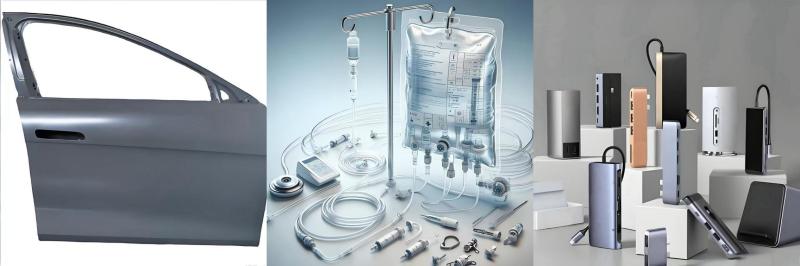
- [Application Case: BYD Automotive]: The challenge was assembling complex, 3D-curved door panels without warping or visible defects. Our multi-head ultrasonic welding system ensured consistent energy delivery across the entire contour. The result was a 25% reduction in defect rates, bonds that exceeded ASTM vibration testing standards with an expected lifespan of 10+ years, and a 20% ROI boost from reduced rework.
- [Application Case: Haier Medical]: For producing respirators and masks from special breathable, heat-sensitive membranes, we engineered a system that delivered perfect airtight seals without any thermal damage, fully compliant with ISO 9001 and medical device regulations. This solution increased production line speed by 30% and saved 15% in operational costs by eliminating scrap.
- [Application Case: Sony Electronics]: Facing ultra-high cycle demands for a consumer electronics housing, our custom ultrasonic staking and welding setup eliminated particulate contamination and achieved cycle times under one second. This provided the clean, reliable joints mandatory for internal components and contributed to a 25% gain in production efficiency.
6. FAQ: Your Top Questions on Heat Stake Welding Answered
What are the advantages of thermal staking in automotive applications?
Short Answer: It's cost-effective and creates strong bonds quickly for parts like bumpers and door panels. Detailed Explanation: Thermal staking is simple to set up and needs no extra materials, making it popular for low-to-medium volume automotive assembly. It handles vibration well in many cases, but in high-stress or curved areas, consistency can drop. Many of our automotive clients switch to ultrasonic welding for better long-term durability. Ready for vibration-proof joins in your next project? Reach out for a free durability assessment.
How does heat staking work in plastic injection molding?
Short Answer: A molded plastic stud or boss is heated until soft, then pressed to form a permanent rivet-like head. Detailed Explanation: After injection molding, parts are aligned, the stud is heated (via contact, hot air, or infrared), deformed under controlled pressure, and cooled to lock everything in place. It's clean and fast for basic designs, yet uneven heating can cause weak spots in complex geometries. Want to see the full step-by-step with parameters? Download our process guide at dizo-global.com/resources.
What are alternatives to heat staking like ultrasonic welding?
Short Answer: Ultrasonic welding uses high-frequency vibrations to create solid, clean bonds without external heat. Detailed Explanation: Instead of melting plastic with a hot tool, ultrasonic energy generates localized heat through friction in milliseconds---perfect when heat staking risks distortion or particles. It's faster, stronger, and works on a wider range of materials, including composites. Curious which method fits your parts? Book a free sample test today.
What are the applications of heat staking in medical device plastic injection molding?
Short Answer: Commonly used for casings, surgical tools, and disposable devices needing sterile, particle-free assembly. Detailed Explanation: Heat staking avoids adhesives (great for FDA compliance), but temperature sensitivity in materials like PC or PE can lead to micro-cracks or contamination risks in cleanroom environments. Many medical manufacturers now choose ultrasonic for zero-residue, airtight seals. Need FDA-compliant joining for your next device? Let's discuss your requirements.
What are the benefits of switching from heat staking to ultrasonic welding?
Short Answer: Faster cycles, stronger bonds, no heat damage, and better automation---often 15-30% overall cost savings. Detailed Explanation: Our clients typically see 2× faster joining, 20-25% lower defect rates, and bonds that last 10+ years under stress. No thermal distortion means higher yield, especially on delicate or curved parts. See the numbers for your production volume---request a free ROI calculation.
What is the cost difference between heat staking and ultrasonic welding?
Short Answer: Heat staking has lower equipment cost upfront; ultrasonic pays back faster in medium-to-high volume. Detailed Explanation: Basic heat staking stations start around $5-15k, while quality ultrasonic systems range $30-100k+. However, ultrasonic cuts cycle time by up to 70%, reduces rework, and lowers energy use---our Bosch and BYD projects achieved full payback in 10-14 months. Want a custom cost comparison for your line? Contact our experts for a detailed analysis.
Is heat staking or ultrasonic welding better for high-volume electronics?
Short Answer: Ultrasonic welding is usually the winner for high-volume electronics. Detailed Explanation: Heat staking risks thermal damage to sensitive components and slows down at high speeds. Ultrasonic delivers clean, residue-free joints in under a second, meeting strict IPC and ISO cleanliness standards---perfect for circuit housings and connectors. Running 100k+ parts per month? Schedule a free line audit with our team.

7. Conclusion: Your Next Step Toward Better Plastic Joining
Heat stake welding remains a viable, low-cost option for straightforward plastic assembly tasks, delivering clean, adhesive-free bonds in applications from auto panels to electronics housings. However, its limitations in precision, speed, and thermal management are real and can directly impact your product quality, throughput, and profitability.
As we've demonstrated, ultrasonic welding is not just an alternative but a strategic upgrade. It typically delivers 15-30% operational cost savings, 2x faster cycles, and stronger, more reliable bonds that last the lifetime of your product---even on the most challenging 3D surfaces, sensitive materials, and high-volume lines.
You now have a clear understanding of both methods. If the limitations of heat stake welding are impacting your efficiency, quality, or bottom line, the smarter path forward is clear.
Ready to transform your assembly process? Take the next step with a professional assessment.
Contact us today: Email sales@dizo-global.com, WhatsApp +86 18121506765, or visit our website to get started. We look forward to helping you build stronger, faster, and more reliably.