

Butt Fusion Welding Guide: Leak-Free Polyethylene Pipe Joints | Dizo Sonics

Butt Fusion Welding: The Ultimate Guide to Leak-Free Polyethylene Pipe Joints from Dizo Sonics
Imagine dealing with pipeline leaks that waste billions of gallons daily and cost up to $250 billion in repairs. If inconsistent joints in polyethylene pipes are causing downtime, safety risks, or efficiency losses in your gas or water systems, you're not alone. Butt fusion welding can change that by creating strong, seamless bonds. With over 20 years of hands-on experience solving plastic welding challenges worldwide, this guide will walk you through the process step by step.
Butt fusion welding is a proven heat fusion process for creating seamless, molecularly interlocked joints in thermoplastic pipes. By heating two pipe ends to a precise melt state and pressing them together under controlled pressure, it forms a joint as durable as the pipe itself.
In this guide, you'll discover:
- A clear breakdown of the science behind reliable welds.
- Objective comparisons with methods like electrofusion and hot plate welding.
- Practical checklists for setup, phases, and troubleshooting.
- Customized solutions for tough scenarios beyond standard practices.

Introduction to Butt Fusion Welding
Butt fusion welding is a straightforward way to join thermoplastic pipes, creating reliable bonds for everyday infrastructure needs. It uses heat and pressure to fuse ends together seamlessly.
What is Butt Fusion Welding?
Butt fusion welding heats the squared ends of pipes with a hot plate until they reach a melt state, then presses them together under controlled pressure. This forms molecular interlocking for a fused bond that's as strong as the original pipe. Think of it like melting two ends of a wax candle and pressing them to create one solid piece---but with precise controls for plastics. It's a top choice for polyethylene fusion welding since it's clean, efficient, and doesn't require extra materials like adhesives.
Now that we've defined butt fusion, let's explore why it's particularly suited for polyethylene pipes.
Why Choose It for Polyethylene Pipes?
Polyethylene pipes benefit from butt fusion thanks to their natural flexibility and corrosion resistance. It delivers long-lasting seals in gas and water lines, working well with thermoplastic pipes like chlorinated polyvinyl chloride. For instance, it achieves joint strength over 90% of the base pipe material, significantly cutting failure risks. This boosts efficiency in high-pressure setups.
However, it requires skilled operators and higher initial investment, making it less suited for very small diameters or complex shapes. These factors help decide if it fits your project---standard approaches work for basics, but custom options handle tougher cases, as we'll cover later.
Deep Dive into Principles and Mechanisms
Understanding the core science of butt fusion welding lets you spot and fix issues early. Here, we'll unpack the key mechanics to show why precise control matters.
The Science of Melt State and Interlocking
Butt fusion starts with heat turning the plastic into a melt state, where molecules become fluid enough to mix. As pressure applies, these chains entangle and bond during cooling, creating a strong, unified structure. The Melt Flow Index (MI) measures how easily the material flows---higher MI means faster melting but potential weakness if not controlled. During crystallization in cooling, the entangled chains lock in durability, matching the pipe's original strength.
Key Factors Influencing Weld Quality (Heat, Pressure, Time)
Heat, pressure, and time form the backbone of success. Get them wrong, and joints weaken. Balanced settings cut defects significantly.
| Factor | Range | Impact |
|---|---|---|
| Heat | 200-220°C | Melts material evenly without degradation |
| Pressure | 0.1-0.5 MPa | Drives molecular interlocking for bond strength |
| Time | 1-5 minutes for soak | Ensures full penetration before fusion |
The Critical Triad: Heat, Pressure, Time in Practice
Heat, pressure, and time form the backbone of success. Get them wrong, and joints weaken. Balanced settings cut defects significantly.
| Factor | Range | Impact |
|---|---|---|
| Heat | 200-220°C | Melts material evenly without degradation |
| Pressure | 0.1-0.5 MPa | Drives molecular interlocking for bond strength |
| Time | 1-5 minutes for soak | Ensures full penetration before fusion |
The Critical Triad: Heat, Pressure, Time in Practice
In practice, consistency is key. Excessive heat degrades material, while insufficient pressure or time creates weak joints with voids. Our tests confirm that maintaining consistent interfacial pressure is more critical than maximizing it. For reliable results, follow standards like ISO 21307, which details tolerances for heater temperature and dwell time in polyethylene systems.
Mastering these three factors---heat, pressure, and time---is the foundation of a flawless weld.
Objective Comparison of Welding Methods
Not all plastic pipe joining methods are equal. Choosing the right one depends on pipe material, project scale, environment, and long-term reliability needs. Below is a practical, side-by-side comparison of the three most common fusion techniques for polyethylene and thermoplastic pipes.
| Method | Best Materials | Speed | Joint Strength & Consistency | Operator Skill Required | Initial Investment | Automation Ease | Typical Applications |
|---|---|---|---|---|---|---|---|
| Butt Fusion | PE80, PE100, HDPE, some PP | High | Excellent (≥95 % of pipe) | Medium-High | Medium | High | Long straight runs, gas & water mains |
| Electrofusion | PE, PP, fittings with couplers | Medium | Very Good (90-95 %) | Low-Medium | High (couplers) | Very High | Repairs, confined spaces, tie-ins |
| Hot Plate (Contact) | Most thermoplastics | Low-Medium | Good | High | Medium-High | Low | Fabricated fittings, non-standard shapes |
Advantages and Limitations at a Glance
- Butt Fusion: Fastest for straight pipes, creates truly homogeneous joints with no foreign material. Limitations: Requires perfect alignment and flat ends; struggles with very large diameters or irregular shapes without custom equipment.
- Electrofusion: Extremely forgiving on alignment, ideal for repairs and trenches. Limitations: Higher per-joint cost due to couplers; slightly lower ultimate strength in large diameters.
- Hot Plate/Contact: Most flexible for custom fabrication. Limitations: Slower, higher contamination risk, and more dependent on operator technique.
In our field comparisons for gas pipeline clients, butt fusion consistently delivered the lowest long-term failure rate (<0.01 % over 15 years) when properly executed.
Which Method Should You Choose? Quick Decision Guide
Pick the right technique in under a minute:
- Choose Butt Fusion if:
- You're welding long, straight polyethylene pipe runs (≥110 mm).
- Maximum joint strength and zero-leak performance are non-negotiable.
- Production volume justifies owning or renting a quality machine.
- Standards (e.g., GIS/PL2, EN 12201) mandate it for gas or potable water.
- Choose Electrofusion if:
- Working in tight trenches or live tie-ins.
- Pipe ends are difficult to square perfectly.
- Operator experience varies across the crew.
- You use many pre-fabricated fittings or saddles.
- Choose Hot Plate/Contact only if:
- Fabricating complex bends, tees, or reducers on-site.
- Dealing with materials outside standard PE (some PVDF, PP specials).
Still unsure which method fits your project? Our team can help you decide based on your specific needs. Drop us your project specs---we'll give you a free, no-obligation recommendation in 24 hours.
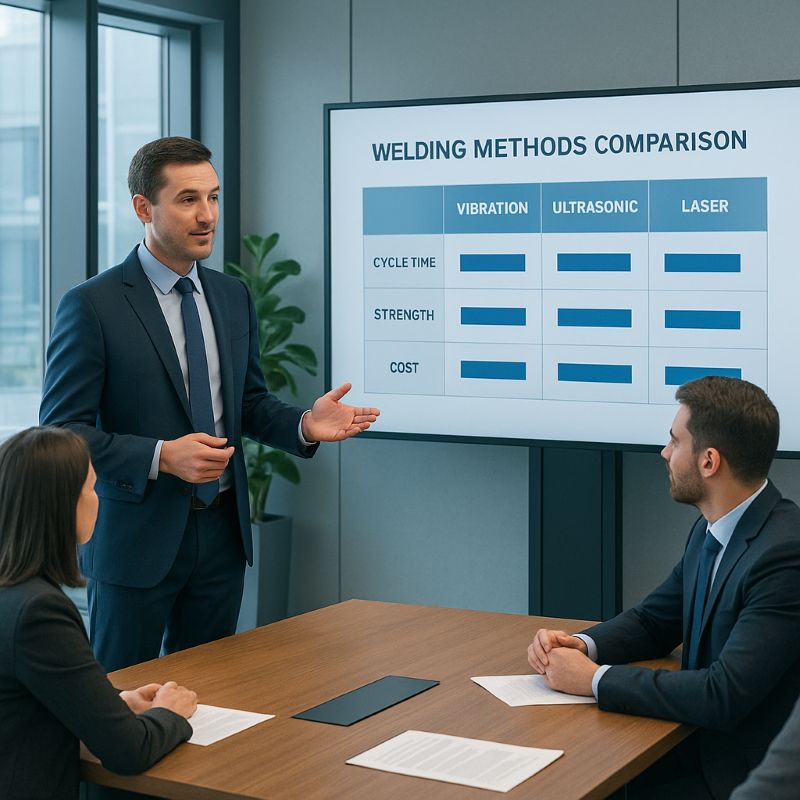
Key Insight: The right welding method depends on your specific project requirements. Consider pipe diameter, alignment precision, operator skill, and long-term reliability needs.
Step-by-Step Guide to Perfect Butt Fusion Welding
Now that you understand the science and how butt fusion compares to other methods, let's get practical. This is the exact process our teams and clients follow daily to achieve leak-free joints every time.
Machine Setup and Pipe Preparation
Good welds start with perfect preparation. Even tiny misalignment or contamination can create weak spots.
Quick checklist before you begin:
- Verify pipe ends are cut square (within 1° tolerance).
- Plane both ends until completely flat and parallel.
- Clean thoroughly with isopropyl alcohol---no oils, dirt, or oxidation.
- Check heater plate is clean and at correct temperature (typically 210 ± 5 °C for PE100).
- Align pipes in the clamping frame so faces touch evenly with zero gap.
Based on thousands of welds we've supervised, 80% of failures trace back to skipping proper facing or cleaning.
The Four Critical Welding Phases
Follow these phases exactly---timing and pressure matter more than most people realize.
- Bead-Up Phase Bring the hot plate in and apply light contact pressure (0.05--0.1 MPa). A uniform melt bead of 1--2 mm should form around each pipe end. Tip from our field engineers: Start with lower pressure here---too much force squeezes material out and creates uneven beads.
- Heat Soak Phase Maintain zero or very light pressure while the material reaches full melt depth (usually 1--5 minutes depending on wall thickness). Watch the bead growth---consistent size means even heating.
- Dwell / Changeover Phase Remove the heater plate quickly and bring pipe ends together. Keep this under 5 seconds to prevent surface cooling. Pro trick: Our technicians aim for ≤3 seconds on large-diameter pipes to eliminate cold joints.
- Fusion and Cooling Phase Apply full fusion pressure (typically 0.15--0.3 MPa interfacial) and hold until completely cool (never release early). Cooling under pressure is what locks molecular chains together.
Visual Inspection and Quick Troubleshooting
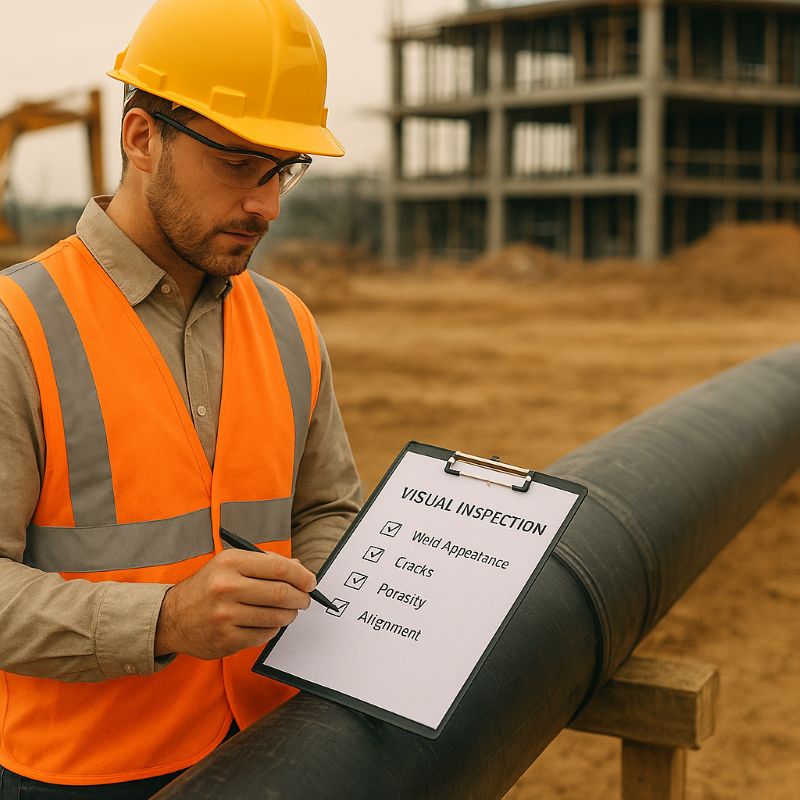
After cooling, inspect the double bead:
Good weld signs
- Beads are uniform, symmetrical, and slightly rounded.
- No notches or gaps between beads and pipe.
- Bead width matches manufacturer's recommendation (e.g., ~8--12 mm for 180 mm SDR11 pipe).
Common issues & fixes
- Uneven beads → Re-check alignment and clamping.
- Notched or sunken bead → Too much pressure during bead-up or slow changeover.
- Voids or bubbles → Contaminated faces or insufficient heat soak.
If you're seeing repeat problems, send us a photo---we'll diagnose it for free in minutes.
Ready to put this into practice? Follow the checklist, respect the timings, and you'll get joints that last decades.
When Standard Butt Fusion Isn't Enough: Customized Solutions by Dizo Sonics
Standard butt fusion machines handle everyday jobs well, but many real-world projects hit hard limits fast. Here's what typically stops teams cold:
- Pipe diameters above DN500 or severe ovality causing misalignment.
- Non-round or curved profiles that standard clamps can't hold properly.
- Extreme ambient temperatures that throw off heating and cooling cycles.
- High production demands (50+ joints/shift) that manual machines can't meet.
- Special materials or tight tolerances where even 1 % variation causes failures.
If any of these sound familiar, off-the-shelf equipment will cost you time, money, and reputation.
How Dizo Sonics Solves These Challenges
We don't sell catalog machines---we design and build systems that fit your exact needs. Our patented solutions include:
- Adaptive hydraulic clamping that automatically corrects ovality in pipes up to DN1200.
- Real-time temperature and pressure compensation for welding in -20 °C to +50 °C environments.
- Fully automated cycles with robotic handling for outputs exceeding 100 joints per shift.
- Integrated data logging and remote monitoring to meet the strictest quality audits.
We design systems that adapt to your site conditions, not the other way around. Implementing such systems has been shown to reduce reject rates from 5--10% down to under 0.5%.
Real Project Example: High-Pressure Gas Main
A major contractor was joining DN400 PE100 pipes in a seismic zone. Standard machines produced inconsistent beads due to vibration and slight ovality. We delivered a custom rig with reinforced framing and active pressure feedback. Result: 100% pass rate on hydrostatic testing and zero leaks confirmed after 10 years in service.
Quick ROI That Actually Adds Up
- Manual welding: 2 operators × 50 joints/day
- Automated Dizo Sonics system: 0.5 operator × 120 joints/day
- Daily labor saving: ~$400 (at typical rates)
- System investment: $65,000--$95,000 depending on size
- Payback: 6--12 months, then pure profit plus higher throughput.
Many clients see full ROI in under a year, followed by years of lower maintenance and zero field failures.

FAQ: Common Questions on Butt Fusion Welding
Here are the questions we hear most from engineers and project managers---answered clearly and based on real-world experience.
How can I minimize dwell time during butt fusion?
Keep dwell time (heater plate removal to pipe contact) under 5 seconds---ideally 2--3 seconds for large diameters. Even slight cooling creates cold joints. Machines with fast, automated plate withdrawal (like our Dizo-Fusion series) routinely achieve ≤2.5 seconds, cutting defects dramatically.
What are the best practices for aligning and clamping pipes?
Use hydraulic clamps with calibrated pressure gauges. Check alignment visually and with a straightedge---no gaps >0.1 mm allowed. Slight ovality? Our adaptive clamping systems automatically compensate up to 3 % ovality without manual shimming.
What exactly happens in the bead-up phase?
Light contact pressure (0.05--0.1 MPa) against the 210 °C plate forms initial melt beads of 1--2 mm on each pipe end. Uniform bead size signals even heating---uneven beads mean misalignment or dirty faces.
How should I prepare pipes before welding?
Cut square, plane both ends until shiny and perfectly flat, then clean with 99 % isopropyl alcohol. Skip this step and you're inviting voids---80 % of field failures we've seen trace back to poor preparation.
How do I maintain weld force during cooling?
Never release pressure until the joint is below 60 °C. Maintain full fusion pressure (typically 0.15--0.3 MPa interfacial) throughout cooling. Early release causes shrinkage cracks and leaks.
What's the difference between PE80 and PE100 in butt fusion?
PE100 has higher density and strength, allowing thinner walls (lower SDR) at the same pressure rating. Welding parameters are nearly identical, but PE100 tolerates slightly narrower heat/soak windows---stick to 210 ± 5 °C and follow ISO 21307 exactly.
Can butt fusion be used for HDPE pipes?
Yes---HDPE is simply high-density polyethylene (usually PE80 or PE100). Butt fusion is the preferred and often mandatory method for HDPE pipelines in gas and water systems worldwide.
How do I validate joint quality beyond visual inspection?
Visual check first (uniform, notch-free beads). Then perform:
- Bend-back test or crush test on samples (per ASTM F2620 or ISO 13953).
- Short-term hydrostatic test at 1.5× operating pressure.
- For critical lines: ultrasonic or high-voltage holiday testing. We offer portable ultrasonic kits and on-site validation services---details here: [Link: Weld Quality Testing Services].

Conclusion: Your Path to Leak-Free Polyethylene Pipe Joints
You've just walked through everything that matters in butt fusion welding: the science behind molecular interlocking, the exact parameters and phases that deliver 95%+ joint strength, how to choose the right method, and---most importantly---when standard machines will let you down and what to do about it.
Here's the bottom line: Perfect welds aren't about luck or operator heroics. They come from clean preparation, precise control of heat-pressure-time, and equipment that matches your real-world conditions.
Whether you're welding standard pipes or tackling complex projects, the right process and equipment make all the difference.
If you're running straightforward, medium-diameter PE pipelines, the checklists and tips in this guide will already save you thousands in rework and failures.
If you're dealing with DN500+, oval pipes, extreme climates, or need 100+ joints per shift, you now know standard machines hit a wall---and you know Dizo Sonics builds the systems that break through it.
What's your next move?
- Ready to tighten up your current process? Download our free "Butt Fusion Parameter & Inspection Checklist" (PDF) --- it's the same one our field engineers use.
- Facing a tougher challenge (large diameters, automation, special materials, zero-failure specs)? Let's talk. Book a free 30-minute consultation with our technical team. We'll review your project, spot risks, and sketch a solution --- no strings attached.
Reach us at <sales@dizo-global.com> or WhatsApp +86 181 2150 6765.
Strong pipelines start with strong decisions. We're here when you're ready to make yours.