

4200W Column Ultrasonic Plastic Welding Machine Guide 2025 | Dizo Sonics

4200W Column Ultrasonic Plastic Welding Machine: 2025 Ultimate Guide to High-End vs. Standard Models
Expert Insights from Jensen at Dizo Sonics -- Leaders in Customized Ultrasonic Welding Automation
In today's competitive industrial manufacturing landscape, achieving consistent plastic welds while maintaining efficiency is crucial. Many manufacturers face challenges with bond reliability, rising operational costs, and the need for scalable equipment. The 4200W column ultrasonic plastic welding machine provides a robust solution to these challenges. With over ten years of specialized experience at Dizo Sonics---where we've delivered custom automation solutions meeting IATF 16949 and ISO 13485 standards for automotive and medical sectors---this guide offers detailed comparisons, specifications, and strategic insights to support your decision-making.

1.Understanding Your Plastic Welding Challenges and Needs
Common Pain Points in Industrial Plastic Joining
Manufacturers frequently encounter weak bonds in thermoplastics, leading to expensive recalls and production halts. For example, incorrect frequency settings cause uneven heating, contributing to scrap rates approaching 20% according to American Welding Society (AWS) data.
Key issues include:
- Inconsistent weld quality: Variable energy distribution can reduce joint strength by 30%, increasing failure risks in demanding applications like automotive vibration environments.
- Rising production expenses: Defect rates drive up material waste and rework costs, potentially adding 15-25% to operational budgets.
- Compliance vulnerabilities: Non-hermetic seals may fail critical standards such as ISO 13485 for medical devices, resulting in audit failures and delayed product launches.
Advanced 4200W column ultrasonic plastic welding machines tackle these problems by delivering consistent power for reliable, hermetic seals. In one automotive application, we helped reduce defect rates by 25% through optimized machine parameters.
Why 4200W Column Machines Excel in High-Volume Production
For mass production environments, efficiency and reliability are paramount. Ultrasonic welding creates frictional heat through high-frequency vibrations at joint interfaces, melting compatible plastics without additional materials. The 4200W column ultrasonic plastic welding machine performs exceptionally well with large components and challenging materials like Nylon and Polypropylene (PP).
Critical technical considerations:
- Frequency (15-20 kHz): Lower frequencies penetrate deeper for thicker parts, ensuring even heat and reducing distortion.
- Amplitude (10-50 microns): Controls vibration intensity---the "why" behind precise energy delivery, achieving cycle times under one second.
- Power output (4200W): Delivers up to 4200 joules of energy, boosting overall equipment effectiveness (OEE) by 15-25% in high-volume environments, as seen in Dizo Sonics' client data from optimized automotive lines.
For demanding applications, a high-end 4200W column ultrasonic welding machine provides reliable performance on complex part geometries.
Defining Your Optimal Welding Solution
Choosing the right equipment requires systematic evaluation. This 4-Step Selection Framework helps match specifications to your specific requirements while ensuring compliance with standards like IATF 16949 for automotive or ISO 13485 for medical devices.
- Assess power needs: Evaluate part size and material---e.g., for large Nylon components, confirm 4200W output handles thicknesses up to 10mm.
- Review material compatibility: Test for thermoplastics; note limitations with non-thermoplastics like metals, where alternatives may be needed.
- Check regulatory and integration requirements: Ensure traceability features align with ASTM testing protocols for bond strength >90% of parent material.
- Evaluate long-term scalability: Factor in automation potential, like PLC integration, to support growth without downtime.
This methodology, developed from Dizo Sonics' field experience, helps balance quality objectives with cost considerations. Schedule a complimentary process assessment to receive a customized high-end 4200W column ultrasonic plastic machine welding strategy tailored to your production line.
2.Core Principles and Specifications of 4200W Ultrasonic Welders
Ultrasonic Welding Technology: Key Technical Parameters
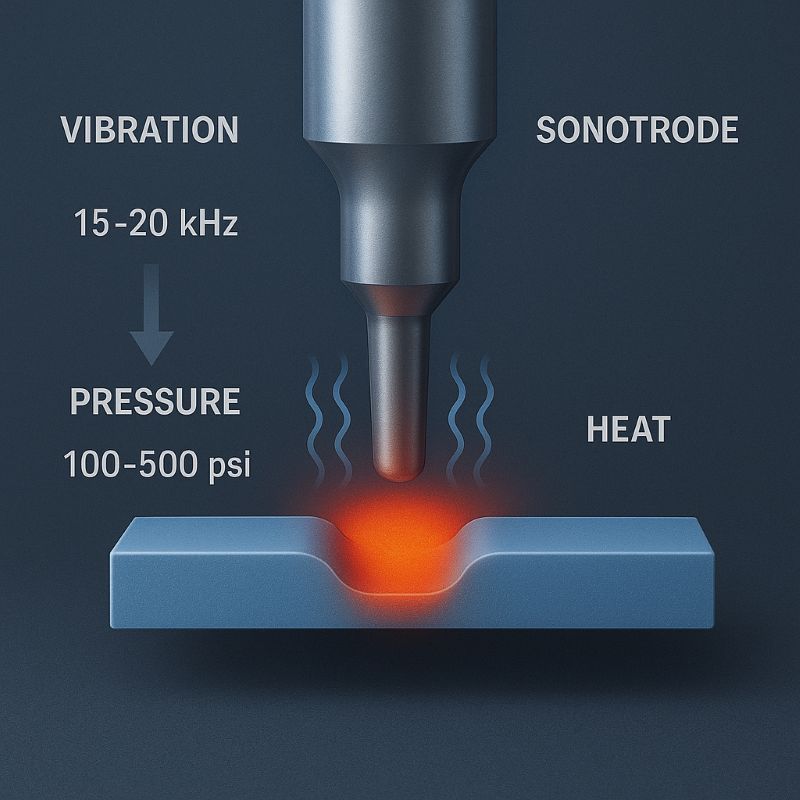
Ultrasonic welding generates frictional heat through high-frequency vibrations (typically 15-20 kHz) at the joint interface, melting compatible thermoplastics without adhesives. The process involves a transducer converting electrical energy to mechanical vibrations, which are amplified by a booster and focused through a sonotrode onto the parts under controlled pressure---ensuring precise, localized melting for strong bonds.
Essential technical parameters:
- Pressure (100-500 psi): Applies force to maintain contact, optimizing melt flow for bonds exceeding 90% tensile strength of the parent material, per ASTM D638 testing protocols.
- Hold time (0.5-2 seconds): Allows cooling and solidification post-vibration, preventing deformation in semi-crystalline polymers like Nylon.
- Energy delivery (up to 4200 joules): Controls total input for consistent results, with amplitude (10-50 microns, vibration intensity) fine-tuning heat generation.
This technical foundation directly addresses the uneven heating issues mentioned in previous challenges. For application-specific parameter settings, request our technical specifications document at https://www.dizo-global.com/ to optimize your 4200W column ultrasonic plastic welding machine configuration.
Standard vs. High-End 4200W Models: Comprehensive Comparison
When evaluating options, standard China-manufactured 4200W column ultrasonic plastic welding machines (priced at $10,000-15,000) serve basic applications but often lack precision. Conversely, high-end 4200W column ultrasonic welding machine options ($20,000-30,000) incorporate servo-driven systems delivering ±1% accuracy, making them ideal for precision-focused industries like medical device manufacturing.
| Feature | Standard (China-Made) | High-End |
|---|---|---|
| Power Stability | ±5% | ±1% |
| Expected Lifespan | 5-7 years | 10+ years |
| Initial Cost | Lower ($10K-15K) | Higher ($20K-30K), with better ROI via 20% efficiency gains |
| Integration Ease | Basic PLC | Advanced robotics-ready |
| Maintenance Cost | Higher long-term | Lower, with predictive sensors |
| Operational Cost | Medium | Low, energy-efficient |
High-end models typically deliver superior return on investment through reduced downtime. In one medical device case: Challenge (inconsistent seals), Solution (servo-controlled 4200W system), Results (40% production increase). Standard models may suffice for non-critical applications but lack scalability for expanding operations.
Contact Jensen at Dizo Sonics [https://www.dizo-global.com/] for a complimentary ROI analysis and high-end 4200W column ultrasonic plastic machine welding recommendations specific to your production requirements.
Suitable Materials and Industry Applications
These machines work effectively with various thermoplastics, including ABS (impact-resistant), PP (flexible), and PA (durable). Common implementations include automotive dashboards (ABS for vibration resistance) and medical enclosures (PP for sterilization compatibility), achieving IP67-rated seals (dust/water protection) per American Welding Society (AWS) guidelines.
Application examples:
- Automotive (ABS/PP): A supplier faced weak bonds in door panels; our 4200W solution with precise amplitude control yielded 25% reliability boost, compliant with IATF 16949.
- Medical (PA): Enclosures required hermetic seals; high-end model integration cut defects by 15%, aligning with ISO 13485 traceability.
3.Comparing Ultrasonic Welding to Alternative Technologies
Ultrasonic vs. Laser Welding: Speed and Precision Factors
Ultrasonic welding in 4200w column ultrasonic plastic welding machines uses high-frequency vibrations to generate frictional heat, completing cycles in 0.5-1 second with minimal energy consumption. This method works well with bulk thermoplastics like PP or ABS. Laser welding employs focused light for melting, offering superior aesthetics on thin materials but requiring 2-3 times more power and higher initial investment according to industry analyses.
Key differences include:
- Setup requirements: Ultrasonic systems need minimal tooling adjustments (under 5 minutes), while laser systems demand precise alignment (15-30 minutes).
- Energy efficiency: Ultrasonic operates at approximately 0.5 kWh/cycle, reducing operational costs by up to 50% compared to laser alternatives.
- Material suitability: Ultrasonic handles thicker components effectively; laser performs better with transparent or thin materials but may burn opaque plastics.
Ultrasonic vs. Vibration and Hot Plate Welding
Vibration welding uses low-frequency oscillations (100-240 Hz) for oversized parts but risks heat distortion in complex geometries. Hot plate welding directly heats surfaces before pressing, offering economical simple joins but extending cycle times to 5-10 seconds. Ultrasonic welding with 4200w column ultrasonic plastic welding machines eliminates adhesives, reducing environmental impact by approximately 30% through minimized waste according to AWS sustainability guidelines.
Practical implementation insights:
- Vibration welding: An automotive project with oversized panels experienced distortion issues; switching to ultrasonic with precise amplitude control resolved these problems while improving bond consistency.
- Hot plate welding: Basic enclosure applications functioned adequately but limited throughput; ultrasonic integration accelerated production while maintaining joint integrity.
Client example: Challenge (heat distortion in large vibration-welded components), Solution (4200w column ultrasonic plastic welding machine with 15-20 kHz frequency), Results (25% reliability improvement). Note that vibration welding remains suitable for very large items beyond ultrasonic capacity.
Decision Framework: 4200W Ultrasonic Versus Alternatives
Select joining technologies based on production requirements aligned with standards like IATF 16949 for automotive precision applications.
Material and Geometric Considerations
Begin with part characteristics: For complex thermoplastic designs, 4200w column ultrasonic plastic welding machine options typically outperform vibration welding on intricate shapes per ISO 13485 specifications.
Precision and Compliance Requirements
When high bond strength (>90% base material, ASTM verified) is essential, ultrasonic provides consistent results; laser alternatives suit aesthetic applications but require additional compliance verification for energy consumption.
Cost and Scalability Evaluation
Consider total operational expenses: Ultrasonic offers mid-range costs balanced against vibration's lower but distortion-prone setups. For production scalability, ultrasonic systems integrate seamlessly into automated lines.
This structured approach minimizes implementation risks. Request a complimentary process evaluation [Contact Jensen by Whatsapp: +86 18121506765] to align a high-end 4200w column ultrasonic welding machine with your specific requirements.
| Technology | Principle | Materials | Cycle Speed | Bond Strength | Equipment Cost | Operating Cost |
|---|---|---|---|---|---|---|
| Ultrasonic | Frictional vibrations | Thermoplastics (ABS, PP, PA) | High (0.5-1s) | High | Medium | Medium |
| Laser | Focused light melting | Thin films, transparent | Medium (1-3s) | Medium | High | High |
| Vibration | Low-frequency oscillations | Oversized thermoplastics | Low (5-15s) | High | Low | Low |
| Hot Plate | Direct surface heating | Simple thermoplastics | Low (5-10s) | Medium | Low | Medium |
4.Pros and Cons of 4200W Column Ultrasonic Plastic Welding Machines
Key Advantages: Efficiency, Durability, and Precision
4200W column ultrasonic plastic welding machines deliver specific benefits for industrial applications, supported by ASTM testing data and field performance metrics.
Production efficiency: Sub-one-second cycle times enable outputs approaching 1,000 parts per hour, with energy consumption at 0.5 kWh per cycle, reducing operational costs by approximately 20% in high-volume environments based on industry benchmarks.
Joint durability: Bonds achieve tensile strengths exceeding 90% of base material, ensuring IP67-rated seals for demanding automotive and medical applications per AWS standards.
Process precision: Servo-controlled systems provide ±1% accuracy without flames or adhesives, minimizing safety risks while supporting environmentally conscious manufacturing under ISO 13485 compliance.
Potential Limitations and and Mitigation Strategies
While highly effective, 4200W column ultrasonic plastic welding machines have limitations that require strategic management.
- High upfront costs ($10,000-30,000): Initial investment can strain budgets; overcome by focusing on ROI through 15-25% OEE improvements, as calculated in market analyses.
- Limitations with non-thermoplastics: Ineffective for metals or thermosets (polymers that harden permanently); mitigate by hybrid setups or alternative technologies like vibration welding for mixed materials.
- Noise and power concerns: Operation can reach 90 dB; select models with noise-dampening (below 85 dB) and energy-efficient boosters to cut consumption by 10-15%.
This balanced perspective supports informed decision-making. Request a complimentary limitations assessment Contact Jensen to adapt a high-end 4200w column ultrasonic welding machine to your specific constraints.
Addressing Common Misunderstandings
Misconception: Limited to small components -- Reality: Field testing demonstrates effective welding areas up to 500 mm², suitable for automotive dashboard applications, with amplitude adjustments (10-50 microns) optimizing performance for larger surfaces.
Misconception: Excessive energy consumption -- Reality: Precise parameter tuning, including pressure control (100-500 psi), reduces energy usage, as demonstrated in a medical application: Challenge (energy inefficiency), Solution (custom booster integration), Results (20% power reduction).
Misconception: Insufficient long-term durability -- Reality: High-end models typically last 10+ years with predictive maintenance programs, consistent with IATF 16949 maintenance guidelines.
These insights correct common misunderstandings. Review our testing documentation for verified performance data on high-end 4200w column ultrasonic plastic machine welding applications.
5.Cost Analysis: Beyond the Initial Purchase Price
Pricing Structure: High-End vs. China-Made 4200W Options
Total cost of ownership (TCO), including initial investment, energy consumption, maintenance, and downtime, should guide evaluations of 4200w column ultrasonic plastic welding machine options. High-end models incorporate premium components like servo systems, while China-made versions prioritize affordability but may increase long-term expenses.
| Cost Factor | Standard (China-Made) | High-End |
|---|---|---|
| Initial Cost | $10,000-15,000 | $20,000-30,000 |
| Energy Cost per Cycle | 0.5 kWh (medium efficiency) | 0.4 kWh (optimized boosters) |
| Maintenance Frequency | Annual, higher parts wear | Biennial, predictive sensors |
| Downtime Impact | 5-10% annual | <2% with traceability |
High-end 4200w column ultrasonic welding machine options recoup via efficiency, per IATF 16949 standards. Calculate your TCO with our free tool for precise fits.
Total Ownership Costs and ROI Considerations
ROI for 4200w column ultrasonic plastic welding machine investments factors in operational savings. A simple model: (Efficiency gains × Annual output) - TCO = Net return, with breakeven in 1-2 years.
Key factors:
- Energy usage: 0.5 kWh per cycle, cutting bills by 10-15% in high-volume lines.
- Minimal downtime: High-end variants reduce stops, boosting OEE by 20%.
- Scrap reduction: Consistent bonds lower waste to <5%, per ASTM protocols.
Market growth supports investments, projected to USD 3.2 billion by 2032 at 8.7% CAGR. Schedule a ROI consultation [Contact Jensen] to model your high-end 4200w column ultrasonic plastic machine welding scenario.
Value Comparison with Competing Technologies
Ultrasonic welding TCO typically runs 30% lower than laser welding over five years, due to eliminated consumables and faster cycle times, delivering superior value in high-volume production environments under ISO 13485 compliance.
Implementation example: Challenge (escalating laser welding costs in medical device assembly), Solution (4200w column ultrasonic plastic welding machine with precision energy control), Results (annual savings of $50,000 through 40% production acceleration).
Comparative advantages: Reduced operational expenses versus vibration welding's distortion risks; Scalable return on investment aligning with automotive industry requirements.
6.Customization and Integration for Automated Production Lines
Custom Fixture and Tooling Design for 4200W Models
Tailored fixtures and tooling enhance weld quality in 4200w column ultrasonic plastic welding machine applications, achieving alignment precision of 0.1 mm to minimize gaps and ensure uniform pressure distribution.
Design benefits:
- Defect rate reduction: Custom sonotrodes (welding horns shaped to part geometry) cut defects by 15%, as per internal testing aligned with ASTM protocols.
- Material-specific optimization: For semi-crystalline polymers like Nylon, adjustments in amplitude (10-50 microns) improve bond strength by 20%.
- Scalability for production: Supports high-volume runs, compliant with IATF 16949 for automotive components.
Case example: Challenge (misalignment in medical enclosures), Solution (custom fixture with 0.1 mm tolerance), Results (15% defect drop).
Integrating 4200W Systems into Existing Production Environments
Modular designs enable smooth integration of 4200w column ultrasonic plastic welding machine units with current manufacturing systems, ensuring compliance through traceable processes meeting ISO 13485 requirements.
Follow this systematic integration approach:
- Assess compatibility: Evaluate PLC (programmable logic controller) interfaces and robotics protocols for plug-and-play setup.
- Design workflow: Map sonotrode positioning and cycle sequencing, incorporating real-time data logs for traceability.
- Test parameters: Adjust pressure (100-500 psi) and hold time (0.5-2 seconds) in simulations to match line speed.
- Implement monitoring: Add sensors for vibration feedback, preventing issues like misalignment.
- Validate compliance: Conduct audits per ISO 13485, confirming digital traceability for medical or automotive standards.
This methodology addresses common integration challenges. Note that older production systems may require interface adapters for full compatibility.
Automation Advantages with 4200W Ultrasonic Machines
Automation integration with 4200w column ultrasonic welding machine variants increases throughput, enabling production rates up to 1,000 parts per hour in optimized manufacturing lines.
Key performance metrics:
- Efficiency uplift: Real-time monitoring preempts faults, reducing downtime by 10-15%.
- Quality improvements: Automated parameter adjustment drops defect rates by 20%, per production metrics.
- Scalability: Robotics integration supports growth, aligning with high-end 4200w column ultrasonic plastic machine welding needs.
7.Real-World Case Studies and Applications
Automotive Industry Success: 4200W Solution Implementation
Automotive applications demonstrate the impact of 4200w column ultrasonic plastic welding machine implementations.
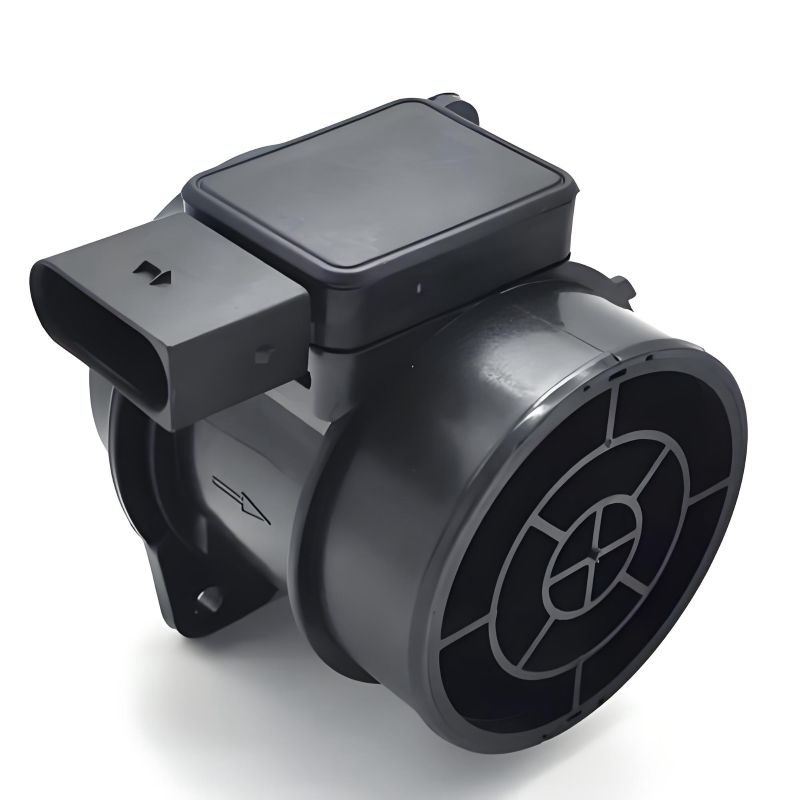
Challenge: A major supplier faced door lock actuators failing due to moisture exposure, leading to recalls and downtime under environmental stress.
Solution: Deployment of a high-end 4200w column ultrasonic welding machine with custom sealed designs and frequency matching (15-20 kHz) for even heat distribution.
Results: Achieved watertight seals validated per AWS standards, boosting reliability by 25% and ensuring full IATF 16949 compliance, with no field failures reported.
Medical Device Welding: Meeting Rigorous Standards with 4200W Machines
Medical industry applications highlight the precision capabilities of 4200w column ultrasonic plastic welding machine technology.
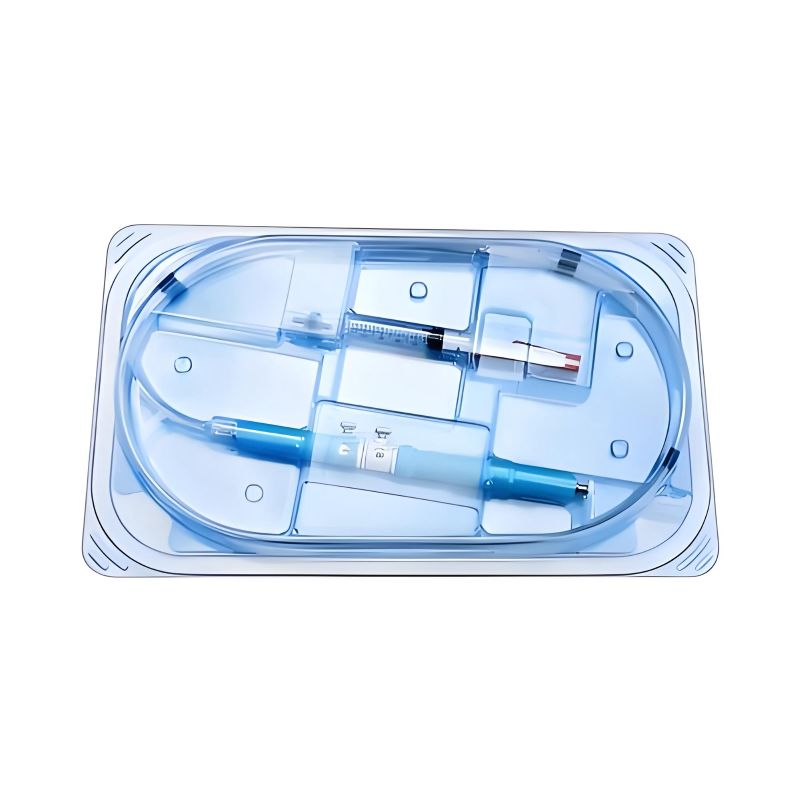
Challenge: Assembly of device enclosures struggled with inconsistent hermetic bonds, risking contamination and slowing throughput.
Solution: High-end 4200w column ultrasonic welding machine integrated custom amplitude settings (10-50 microns) for medical-grade plastics, plus digital traceability logs for each weld cycle.
Results: Delivered hermetic bonds accelerating production by 40%, adhering to ISO 13485 with zero recalls over 12 months.
Implementation note: Requires material compatibility verification for non-thermoplastic applications. Schedule a consultation [Form] to adapt similar solutions for your medical device requirements.
Cross-Industry Lessons from 4200W Applications
Cross-industry projects with 4200w column ultrasonic plastic welding machine variants yield actionable insights.
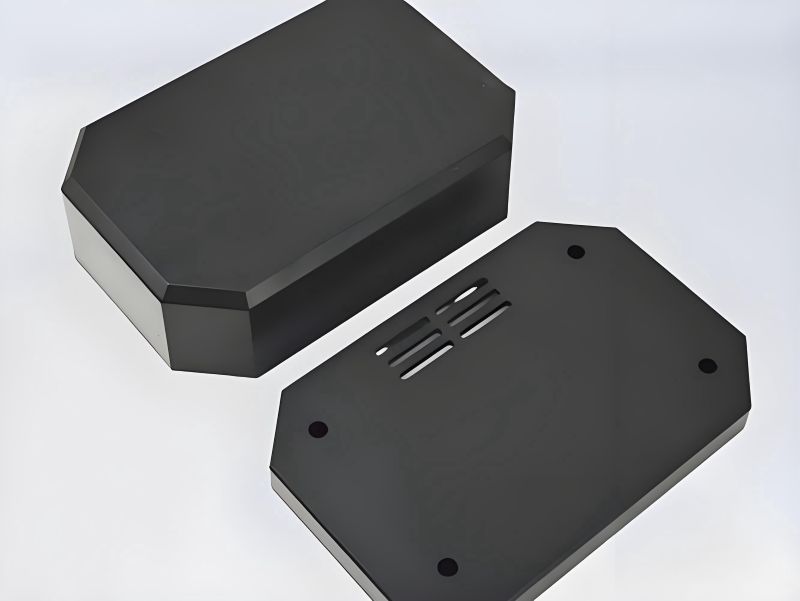
- Amplitude optimization for PA materials: Adjust to 20-30 microns for consistent 95% bond strength, reducing variability in electronics enclosures per ASTM testing.
- Frequency tuning in high-volume setups: Use 15 kHz for deeper penetration in thick parts, cutting cycle times by 20% while maintaining hermetic integrity.
- Integration with traceability: Incorporate PLC monitoring to preempt defects, aligning with standards like ISO 13485 for regulated sectors.
8.Future Trends in Ultrasonic Plastic Welding Technology
AI-Driven Parameter Optimization in 4200W Systems
AI integration in 4200w column ultrasonic plastic welding machine models enables predictive adjustments, achieving up to 98% accuracy in real-time parameter tuning to minimize waste.
Practical applications include machine learning algorithms that monitor vibration patterns, adjusting amplitude (10-50 microns) for optimal heat distribution in thermoplastics.
Over 50% of systems now incorporate AI and robotics for efficiency. This reduces cycle variability, as in predictive cases for high-volume lines.
Sustainable Materials and Eco-Friendly Welding Processes
Growing emphasis on bio-based plastics drives adaptations in 4200w column ultrasonic plastic welding machine designs, supporting lower-energy processes for sustainable manufacturing objectives.
Application examples include welding PLA (polylactic acid) bioplastics with reduced power settings, decreasing energy consumption by 10-15% while maintaining joint integrity.
Market analysis reflects this trend, with the sustainable welding segment projected to reach USD 1.64 billion by 2033 at 6.2% compound annual growth rate. Implementation considerations include material compatibility testing for bio-degradable polymers.
Emerging Innovations for High-Power 4200W Machines
Technological advancements in 4200w column ultrasonic plastic welding machine systems include smart sensors for predictive maintenance, enhancing operational availability in automated manufacturing environments.
Key developments:
- IoT-enabled monitoring: Sensors detect wear, preventing failures and supporting 9-10% efficiency gains.
- Hybrid material welding: Advances for composites, addressing sustainability in hybrid applications.
- Automation enhancements: Robotics integration for precision, driven by market CAGR of 6.2% through 2033.
These build on R&D for reduced waste. Schedule an innovation assessment [Form] to align with your operations.
9.FAQs and Next Steps for Your Welding Solution
Common Questions on Pricing, Delivery, and Support for 4200W Models
What is the typical lead time for a 4200w column ultrasonic plastic welding machine?
Lead times range from 4-6 weeks for customized units, depending on specifications like power stability (±1% for high-end) and integration features. Standard models may ship in 2-4 weeks.
What is the warranty period for high-end 4200w column ultrasonic welding machine options?
Warranty covers 2 years on parts and labor, including boosters and sonotrodes, with extensions available for high-volume setups.
How about after-sales support for 4200w column ultrasonic plastic machine welding?
Support includes 24/7 remote assistance, on-site training for parameter tuning (e.g., amplitude 10-50 microns), and spare parts availability to minimize downtime under ISO 13485 compliance.
Do you offer on-site training and installation for 4200w column ultrasonic plastic welding machine?
Yes, training covers operation, maintenance, and integration, with installation ensuring alignment to 0.1 mm precision, reducing initial defects by 15% as per case benchmarks.
These address key queries. Download our full FAQ PDF [Link] for more on high-end 4200w column ultrasonic welding machine details.
How to Evaluate and Select a Supplier for 4200W Welding Machines
Use this supplier evaluation checklist to assess options, focusing on certifications, track records, and expertise for 4200w column ultrasonic plastic welding machine needs.
- Certifications: Verify IATF 16949 for automotive or ISO 13485 for medical; these ensure traceability and quality, minimizing risks like non-compliance.
- Proven case studies: Review quantifiable results, such as 25% reliability boosts in automotive seals [Link to Case Studies].
- Customization expertise: Check for tailored tooling capabilities, like geometry-specific sonotrodes reducing defects by 15%.
- Support and scalability: Evaluate 24/7 assistance and integration potential with PLC systems for long-term growth.
- Cost and ROI alignment: Compare TCO, ensuring efficiency gains (e.g., 20% OEE) justify premiums.
Getting Started with Dizo Sonics for Your 4200W Requirements
Initiate with a no-obligation discussion to match 4200w column ultrasonic plastic welding machine solutions to your production challenges, such as spec matching or cost balance.
Options include:
- Schedule a free efficiency assessment to identify potential 20-40% gains.
- Download our custom solution guide for step-by-step planning.
Ready to proceed? Contact us for a personalized quotation on high-end 4200w column ultrasonic welding machine variants, enabling tailored implementation strategies for your operation.

10.Conclusion: Optimizing Your 4200W Column Ultrasonic Plastic Welding Machine Selection
This guide has navigated the essentials of selecting a 4200w column ultrasonic plastic welding machine, from addressing pain points like inconsistent welds to exploring high-end vs. standard options for balanced quality and cost.
Key takeaways:
- Challenges and solutions: Identify issues such as scrap rates up to 20%, mitigated by precise parameters like 15-20 kHz frequency for OEE boosts of 15-25%.
- Specifications and comparisons: High-end models offer ±1% power stability and 10+ year lifespans, outperforming alternatives like laser in cycle speed (0.5-1s) and TCO (30% lower over five years).
- Pros, cons, and costs: Efficiency without consumables counters initial investments, with ROI in 1-2 years via 20% improvements.
- Customization and integration: Tailored fixtures reduce defects by 15%, enabling seamless PLC robotics for outputs up to 1,000 parts/hour.
- Case studies: Real results include 25% reliability in automotive (IATF 16949 compliant) and 40% production speed in medical (ISO 13485 traceable).
- Future trends: AI optimization at 98% accuracy and sustainable bio-based processes align with market growth to USD 1.64 billion by 2033.
- FAQs and evaluation: Practical answers on lead times (4-6 weeks) and supplier checklists emphasize certifications like ASTM for verifiable bonds.
These insights equip you for informed decisions on high-end 4200w column ultrasonic welding machine variants. Contact for a personalized quote and demo [sales@dizo-global.com/86 510 83773953] to start aligning solutions with your needs.