

Ultrasonic Welding for Solid-State & 4680 Batteries | 2025 Guide

Ultrasonic Welding for Next-Gen Batteries: The 2025 Master Guide to Solid-State & 4680 Cell Production
In the high-stakes arena of next-generation battery manufacturing, the transition to solid-state batteries and advanced formats like the 4680 cylindrical cell is fraught with technical landmines. Conventional welding technologies, a backbone of traditional battery assembly, are becoming a critical bottleneck. Thermal degradation, intermetallic compound formation, and inconsistent joint integrity are driving scrap rates beyond 20% in pilot lines, directly jeopardizing the scalability and economic viability of the entire electric vehicle (EV) revolution.
This 2025 Master Guide, authored by Jensen Li, a Senior Applications Engineer with over 12 years of tenure at Dizo Sonics, is engineered to be your definitive resource. Drawing from a proprietary database of 200+ successful deployments and deep collaboration with top-10 global EV and battery OEMs, we dissect the engineering principles, deliver uncompromising cost analysis, and provide a actionable, step-by-step framework. Our goal is to empower you to select, integrate, and optimize the ideal ultrasonic welding machine for your solid-state battery production and 4680 battery cell lines, enabling you to achieve >99.5% first-pass yield and accelerate your time-to-market with unwavering confidence.

1. Critical Challenges in Solid-State and 4680 Battery Welding: A Deep Dive
The evolution in battery chemistry and design introduces a new class of manufacturing hurdles that demand a paradigm shift in joining technology.
The Solid-State Conundrum: Sensitivity and Precision
Extreme Thermal Sensitivity: Solid electrolytes (e.g., sulfides, oxides) are notoriously fragile. Exposure to temperatures even slightly above their threshold---a common occurrence in laser welding and resistance welding---can cause crystallization, cracking, or catastrophic interfacial reactions, rendering the cell useless.
Lithium Metal Anode Challenges: The use of thin, reactive lithium metal foils necessitates a cold-joining process. Any localised heating can cause dendrite formation initiation or uneven current distribution, severely impacting cycle life and safety.
Hermetic Sealing Imperative: Solid-state pouch cells require perfect, leak-proof seals to protect the sensitive internal components from moisture and oxygen, a task for which traditional thermal sealing is often too aggressive.
The 4680 Cylindrical Format: Scalability and Mechanical Stress
Multi-Layer Tab Welding: The Tesla 4680 cell's defining feature is its large-diameter tab, often comprising over 100 layers of thin foil. Achieving a uniform, low-resistance bond across this entire stack without delamination or "cold welds" is a monumental challenge.
Torsional and Shear Forces: The cylindrical format and tab design subject the weld joint to unique mechanical stresses during operation, requiring a bond with exceptional fatigue resistance and peel strength.
Gigafactory Throughput Demands: With production targets in the millions of units per week, cycle times must be pushed below 0.5 seconds without compromising quality, creating a relentless pressure on production engineering teams.
The Ultrasonic Welding Solution: A Foundation of Solid-State Physics
Ultrasonic metal welding (USMW) is a solid-state joining process that eliminates the fundamental issue of melting. It utilizes high-frequency (typically 20-40 kHz) mechanical vibrations under a controlled clamping force (100-500 N) to create a metallurgical bond through atomic diffusion and plastic deformation.
Why it's indispensable for next-gen batteries:
Inherently Cold Process: Bulk material temperatures remain far below melting points, preserving solid electrolyte integrity and lithium metal anode morphology.
Superior Joint Properties: The process produces a fine-grained, recrystallized microstructure at the interface, resulting in:
- Exceptionally Low and Stable Electrical Resistance (< 0.1 mΩ)
- High Mechanical Strength (Peel strength > 50 N/cm)
- Excellent Fatigue and Creep Resistance
Material Agnosticism: It brilliantly joins dissimilar materials (e.g., Aluminum to Copper, Copper to Nickel), which is critical for multi-material battery designs, without forming brittle intermetallic phases.
2. Core Ultrasonic Welding Technologies: A Comparative Engineering Analysis
Selecting the correct ultrasonic variant is not a matter of preference, but of physics. Here's a detailed breakdown.
Standard Linear Ultrasonic Spot Welding
This is the most prevalent form, where a piezoelectric transducer generates linear vibrations parallel to the welding surface.
Mechanism: The "scrubbing" action cleans surfaces and facilitates atomic-level bonding.
Best Suited For: Prismatic cell busbars, pouch cell tab connections, and general battery R&D applications where joint geometry is relatively simple.
Limitations: Can induce high shear stresses at the weld periphery, which may be detrimental for very brittle materials or large-diameter joints.
Advanced Torsional Ultrasonic Welding for 4680 Cells
This technology represents a significant evolution, specifically designed for the challenges of cylindrical cell formats.
Mechanism: Instead of linear motion, the horn undergoes a rotational oscillation, applying a torsional force to the workpiece.
Key Advantages for 4680 Cells:
- Even Energy Distribution: Eliminates "hot spots" and ensures a uniform bond across the entire tab area.
- Reduced Shear Stress: Lowers stress concentrations by up to 30%, virtually eliminating edge cracking.
- Enhanced Tooling Life: The motion profile often results in less wear on the horn (sonotrode) compared to high-amplitude linear systems.
Key Welding Parameters: The Levers of Process Control
Achieving Six Sigma quality requires precise command over these interdependent variables:
| Parameter | Typical Range | Physical Effect | Optimization Tip |
|---|---|---|---|
| Frequency | 20 - 40 kHz | Determines energy penetration depth. | Use higher frequencies (35-40 kHz) for foils <0.1mm to minimize through-thickness damage. |
| Amplitude | 10 - 50 μm | The peak-to-peak displacement of the horn. Governs frictional energy. | Start low and increase until bond strength is achieved; excessive amplitude causes particle ejection and foil tearing. |
| Weld Force | 100 - 500 N | The static force applied to couple the parts. | Must be high enough to facilitate energy transfer but low enough to prevent crushing delicate cell components. |
| Weld Time | 0.1 - 0.8 s | The duration of ultrasonic energy application. | For highly conductive materials like Cu, shorter times with higher amplitude are often better to minimize heat conduction. |
| Trigger Force | 50 - 80% of Weld Force | The force threshold at which ultrasonics initiate. | Critical for consistent part seating, especially in automated lines with part variation. |
3. Head-to-Head Technology Comparison: An Unbiased Data-Driven Perspective
For procurement managers and engineers, the following detailed comparison provides a clear rationale for technology selection, grounded in data and physical principles.
| Criterion | Ultrasonic Welding | Laser Welding | Resistance Welding |
|---|---|---|---|
| Fundamental Principle | Solid-State Friction | Keyhole Melt & Solidification | Resistive Heating & Nugget Formation |
| Heat Input | Very Low (Confined to interface) | Extremely High (Localized) | Very High (Diffuse) |
| Microstructure | Fine-grained, wrought-like | Cast, dendritic (prone to cracking) | Cast nugget with large Heat-Affected Zone (HAZ) |
| Joint Properties | Ductile, high fatigue strength | Brittle, prone to hot cracking | Variable, often with porosity |
| Dissimilar Metals | Excellent (No intermetallics) | Poor (Pronounced intermetallic zone) | Very Poor (Uneven heating) |
| Cycle Time | < 0.5 seconds | ~1 second (including galvo movement) | 2 - 5 seconds |
| Equipment Cost (CapEx) | Medium ($50k - $150k) | High ($100k - $300k+) | Low - Medium ($30k - $100k) |
| Operational Cost (OpEx) | Very Low (Electricity only) | High (Gas, optics, high power) | Medium (Electrode dressing/replacement) |
| Skill Required | Medium (Parameter optimization) | High (Beam manipulation, programming) | Low (Simpler setup) |
| Environmental Footprint | Low (Energy efficient, no emissions) | Medium (High energy, fume extraction) | Medium (Energy intensive) |
4. Real-World Applications and Validated Case Studies: Proof in Production
Case Study 1: Ramping 4680 Cell Production for a Global EV Leader
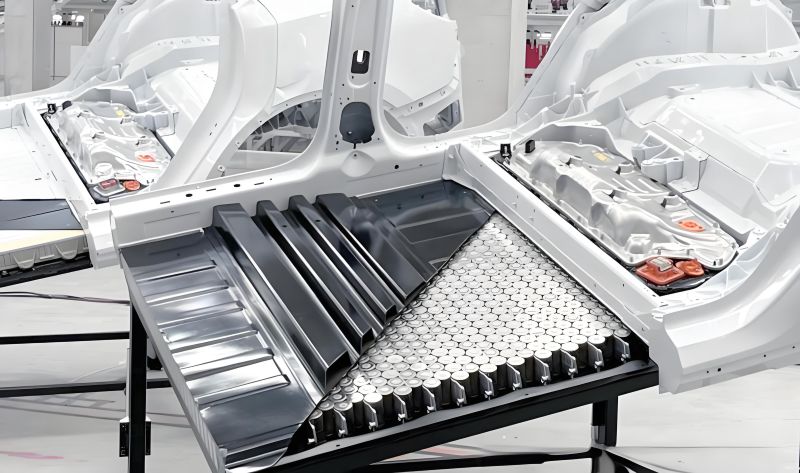
The Client: A Tier-1 battery manufacturer supplying a major North American EV OEM.
The Precision Challenge: Achieving a consistent positive tab weld on the 4680 cylindrical cell. The client was facing a 15% scrap rate due to intermittent high resistance and tab lift-off, threatening a critical vehicle launch.
The Dizo Sonics Solution: We deployed a fully automated station centered on a 3.5 kW Torsional Ultrasonic Welder. The solution included:
- Custom, self-aligning fixturing to accommodate cell can tolerance.
- Integrated LVDT (Linear Variable Differential Transformer) for real-time weld collapse depth measurement.
- A SCADA-integrated data logging system that recorded every weld parameter (energy, time, peak power, depth) for full traceability, compliant with IATF 16949 requirements.
The Quantifiable Result: The system achieved a first-pass yield of 99.7%, reduced the cycle time to 0.55 seconds, and provided complete data for every cell produced. This eliminated over $200,000 in annual scrap and rework costs and secured the client's production timeline.
Case Study 2: Enabling a Solid-State Battery Startup's Path to Pilot Production
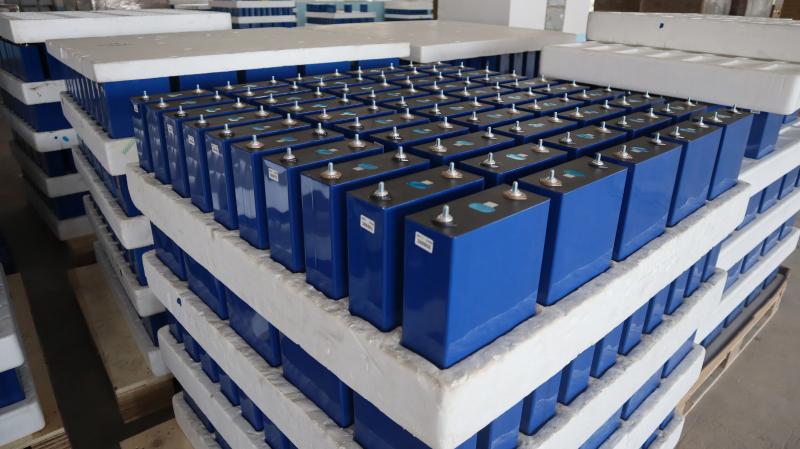
The Client: A venture-backed startup developing a revolutionary sulfide-based solid-state battery.
The Sensitivity Challenge: Joining a thin lithium metal anode to an aluminum current collector without forming detrimental phases or causing lithium flow. Their initial attempts with low-power laser welding resulted in electrolyte darkening and a 70% failure rate in cycle testing.
The Dizo Sonics Solution: We provided a glovebox-integrated ultrasonic welding system with a specially designed flat horn.
- The entire welding process was conducted in an argon atmosphere with <0.1 ppm O₂ and H₂O.
- Parameters were meticulously optimized to use the minimum amplitude and energy required for a strong bond.
The Quantifiable Result: The startup achieved a 100% success rate in creating electrically and mechanically sound anode joints. Post-weld analysis showed zero damage to the solid electrolyte layer. This breakthrough allowed them to secure their Series B funding by demonstrating a viable pilot production process.
5. Total Cost of Ownership: A Comprehensive Financial Model for Procurement
The true cost of a welding system is not its purchase price, but its total impact on the cost per unit produced.
Detailed CapEx and OpEx Breakdown
| Cost Component | Ultrasonic Welding | Laser Welding | Resistance Welding |
|---|---|---|---|
| Initial Equipment Cost | $50,000 - $150,000 | $100,000 - $300,000+ | $30,000 - $100,000 |
| Installation & Training | $5,000 - $15,000 | $10,000 - $25,000 | $5,000 - $10,000 |
| Annual Energy Cost | ~$500 (1 kWh/hr) | ~$3,000 (6+ kWh/hr) | ~$2,000 (4 kWh/hr) |
| Annual Consumables | $0 | $5,000 - $15,000 (Gas, lenses, nozzles) | $2,000 - $5,000 (Electrodes) |
| Annual Maintenance Contract | $2,000 - $5,000 | $7,000 - $20,000 | $3,000 - $7,000 |
| Estimated 5-Year TCO | $65,000 - $195,000 | $150,000 - $475,000+ | $50,000 - $150,000 |
Calculating Return on Investment: A Practical Example
Scenario: A mid-volume solid-state battery line producing 100,000 cells per year.
Investment: $120,000 in a custom ultrasonic welding system.
Savings Drivers:
- Yield Improvement: Reducing scrap from 15% to 1% on a $100 cell value saves: (0.15 - 0.01) * 100,000 units * $100 = $1,400,000
- Throughput Increase: A 20% speed increase can be translated into deferred capital investment or increased revenue.
- Rework Elimination: Saves 3 FTE (Full-Time Equivalent) technicians at $60,000/year = $180,000.
Total Annual Savings: ~$1,580,000 (dominated by yield improvement)
ROI and Payback: Payback = $120,000 / $1,580,000 ≈ < 1 Month. ROI is effectively >1000% in the first year.
This example starkly illustrates that for high-value products, the driving financial factor is not the equipment cost, but its impact on yield.
6. A Proven 5-Step Framework for Selecting and Integrating Your Welding Solution
This actionable framework, refined through hundreds of client engagements, will guide you from concept to production.

Step 1: Rigorously Define Application Requirements
Go beyond basic materials. Create a detailed specification document that includes:
- Material Stack-Up: Exact types, thicknesses, and coatings of all layers.
- Joint Geometry: Detailed drawings of the weld area.
- Quality Metrics: Target resistance, peel strength, and visual acceptance criteria.
- Production Volume: Shift patterns, target uptime (OEE), and future scalability needs.
- Regulatory Compliance: Required standards (e.g., IATF 16949, ISO 13485).
Step 2: Engage in Technical Deep-Dive with Suppliers
Your discussions with potential suppliers like Dizo Sonics should be highly technical. Key questions to ask:
- "Can you show me case studies with material stack-ups similar to mine?"
- "What is your methodology for horn design and how do you validate its performance?"
- "How does your system provide real-time quality monitoring? What parameters do you track?"
- "What is your spare parts lead time and what level of remote diagnostics do you offer?"
Step 3: Conduct a Comprehensive Validation Trial
A lab demo is not enough. Insist on a Production Validation Trial.
- Provide Production Samples: Send components from your actual production stream, with all their natural variation.
- Run a Statistical Batch: Conduct a minimum of 100-500 welds to gather statistical data on process capability (Cp/Cpk).
- Witness the Trial: Have your production and quality engineers on-site or remotely connected to assess ease of use and integration.
Step 4: Finalize the Integration Plan
Work with the supplier to develop a detailed integration plan covering:
- Facility Requirements: Power, air, data connections.
- Automation Interface: PLC code, robot handshaking, and MES integration (e.g., SECS/GEM, OPC UA).
- Operator and Maintenance Training: A train-the-trainer program is essential.
Step 5: Establish a Long-Term Performance Partnership
The relationship shouldn't end at installation. Partner with a supplier who offers:
- Performance Audits: Regular check-ups to ensure the system is still performing at its peak.
- Software Upgrades: Access to the latest features and data analytics improvements.
- Process Optimization Support: Continuous improvement services to further enhance yield and throughput.
7. The Future is Now: AI, Digital Twins, and Sustainable Manufacturing
The next wave of innovation in ultrasonic welding is already here, focused on predictive and sustainable manufacturing.
AI and Machine Learning for Zero-Defect Manufacturing
We are moving from monitoring to prediction. Our latest systems use machine learning algorithms to analyze the power signature during the weld.
Anomaly Detection: The AI can detect subtle deviations that signal a potential weak weld---such as a slight contamination on the foil---before it becomes a reject, enabling predictive quality control.
Self-Optimization: In closed-loop systems, the AI can automatically adjust amplitude or pressure to compensate for material lot variations, holding the weld quality constant over millions of cycles.
The Digital Twin: De-Risking Process Development
For solid-state battery R&D, we now offer digital twin technology. A virtual model of the welding process simulates the interaction of parameters and predicts the resulting joint microstructure and properties. This allows our engineers to optimize the weld schedule in silico before a single physical test is conducted, dramatically reducing development time and cost.
Sustainability and The Circular Economy
Ultrasonic welding is the most sustainable joining method available.
Ultra-Low Energy Consumption: It is 60-80% more efficient than laser welding.
No Consumables or Emissions: It requires no process gases, generates no fumes, and uses no filler materials.
Designed for Disassembly: The solid-state welds in certain configurations can be more easily separated for battery recycling, supporting the creation of a true circular economy for critical materials.
8. Frequently Asked Questions (FAQ)
Q1: We are concerned about horn wear and maintenance. What is the typical lifespan and cost?
A: Horn (sonotrode) life is a function of the material and amplitude used. With proper design from an experienced provider like Dizo Sonics, a horn can last for 2-5 million cycles in a standard battery application. We design horns with replaceable tips or offer refurbishment services, making maintenance a predictable and manageable operational expense, not a surprise.
Q2: How does ultrasonic welding perform with coated materials, such as coated copper foil?
A: This is a common and critical question. Ultrasonic welding is often superior for coated materials. The process mechanically disrupts and disperses thin, non-conductive coatings, allowing metal-to-metal contact. Laser welding, by contrast, can burn the coating, creating impurities. We have extensive experience in optimizing parameters for various coatings and can validate performance through cross-section analysis.
Q3: Is the process noisy, and what are the safety considerations?
A: Modern ultrasonic welders are designed with full acoustic enclosures that reduce noise to well below 80 dB at the operator position, compliant with OSHA standards. Primary safety considerations are related to automated part handling and pinch points, which are mitigated with light curtains and safety interlocks as part of the system integration.
Q4: Can you achieve a hermetic seal on a solid-state pouch cell?
A: Yes, absolutely. Ultrasonic pouch cell sealing is a well-established process. It uses a continuous seam weld to create a hermetic seal on the foil-laminate packaging material. The cold process is ideal as it prevents the delamination of the multi-layer pouch material that can occur with excessive heat.
Q5: What kind of data output can we expect for our Quality Management System?
A: Our systems are built for Industry 4.0. Every weld is logged with a full suite of data, including Weld Energy, Time, Peak Power, Absolute Distance, and Collapse Depth. This data can be output via CSV, streamed via MQTT, or integrated directly into your MES (Manufacturing Execution System) for full traceability and SPC (Statistical Process Control).

9. Next Steps: Partnering for Custom Ultrasonic Welding Solutions
The journey to mastering next-generation battery production is complex, but the path for joining technology has never been clearer. Ultrasonic metal welding, with its foundation in solid-state physics, is not merely an alternative; it is the enabling technology for overcoming the thermal, mechanical, and scalability challenges of solid-state and 4680 battery manufacturing.
The evidence, from fundamental principles to financial models and real-world case studies, is unequivocal. The question is no longer if you should adopt ultrasonic welding, but how quickly and effectively you can integrate it into your roadmap.
Your Next Strategic Steps with Dizo Sonics
- Leverage Our Exclusive Expertise: Schedule a dedicated, no-obligation strategy session with our senior engineering team. We will analyze your specific cell design and production goals to provide a preliminary technical and business case analysis.
- Access Our Resource Library: Download our in-depth technical white papers, including "Overcoming 5 Common Ultrasonic Welding Pitfalls in Battery Production" and "A Framework for MES Integration of Welding Data."
- Initiate a Validation Project: The most decisive step is to see the results for yourself. Let's define a scope for a production-representative trial using your components. We will provide a comprehensive data report showing the achievable weld quality and consistency.
The competitive landscape in the battery industry is being defined today by those who are making strategic, long-term investments in foundational manufacturing technologies. Partner with Dizo Sonics to ensure your technology is not limited by your welding process.
Contact us today through our website https://www.dizo-global.com/ or email us sales@dizo-global.com to schedule your strategic consultation and begin your journey to flawless, scalable battery production.
Contact Dizo Sonics TodayMore Reading
- Ultrasonic Battery Welder Guide 2025: Boost Yield & Cut Scrap Rates
- Lab Ultrasonic Battery Spot Welder Guide 2025 | Dizo Sonics®
- Automatic Welding Machines for Plastics: The Definitive Guide
- Welding Machine Distributor: Find Reliable Suppliers Today
- Ultrasonic Plastic Welder Guide: Benefits, Uses & Tips